NVIDIA Earnings Report Approaches, South Korean Stock Market Under Pressure
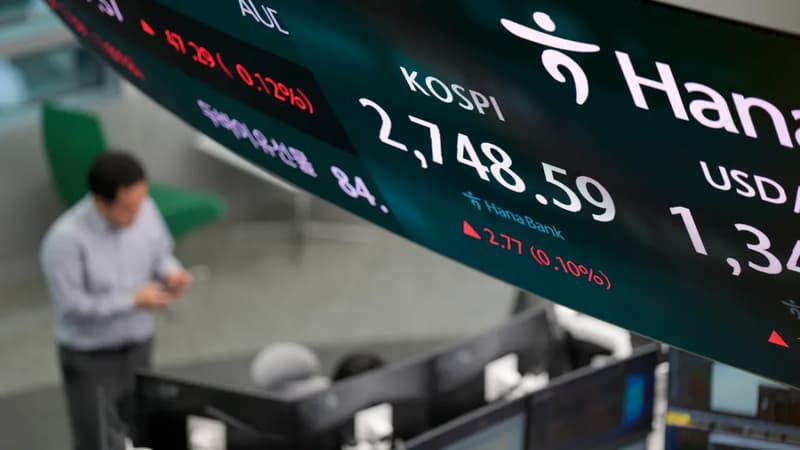
South Korean stocks weakened significantly on Tuesday morning. The KOSPI index's intraday decline widened to 1.2%, primarily influenced by a broad downturn in tech stocks. With U.S. chip giant NVIDIA set to release its quarterly earnings, the market has become cautious about the technology sector's overall outlook, as South Korean supply chain companies face selling pressure first.
Traders noted that NVIDIA's stock decline in the previous U.S. trading session swiftly impacted the Asian tech chain, with leading South Korean semiconductor and battery companies becoming the first to come under pressure. This has resulted in a weak overall performance of the KOSPI and a significant reduction in investor risk appetite.
Supply Chain Companies Lead Decline, Increased Caution Over Tech Sector Outlook
In the South Korean market, key NVIDIA supply chain companies were the main contributors to dragging down the index:
- SK Hynix, regarded as a core partner of NVIDIA as the world's second-largest HBM supplier, saw its stock price drop sharply;
- LG Energy Solution also experienced a notable decline in its battery business, affected by the overall weakness in tech stocks;
- SK Square and Hanmi Semiconductor, companies involved in chip manufacturing and testing, were similarly sold off.
Analysts pointed out that if NVIDIA's current earnings report fails to provide sufficiently positive growth signals, it could trigger a new round of sell-offs in tech stocks, with South Korean companies being among the first to react due to their deep integration with its supply chain.
The technology and financial sectors have been the main pressures on the KOSPI's decline, with the weakness in these two heavyweight sectors further amplifying index volatility.
Startup Index Simultaneously Under Pressure, Contrasted by Speculative Stock Activity
South Korea's startup index, Kosdaq, also weakened, with its intraday decline widening to 1.5%. Growth tech stocks faced selling pressure due to negative expectations, yet the market still showed localized speculative signals.
Notably, Pinkfong Co., known for its "Baby Shark" IP, saw its share price soar by 62% on its first day of listing on Kosdaq, attracting substantial short-term capital participation. Analysts believe that this strong performance is more indicative of speculative trading driven by liquidity, starkly contrasting with the overall market pressure, and reflecting investors' rapid shifts in risk preference between different sectors.
Rising Investor Caution, Market Focus on Upcoming Data and U.S. Market Guidance
With NVIDIA's earnings report imminent, the South Korean market is showing a clear wait-and-see sentiment. Investment institutions generally state that the tech sector's performance this week will heavily depend on the earnings results of leading U.S. companies and subsequent guidance directions.
If the NVIDIA report shows that demand for high-end AI chips remains strong, the Korean tech chain is expected to rebound; however, if growth expectations are lowered or cost pressures rise, the KOSPI may face further pressure.
Meanwhile, the global focus on the Federal Reserve's policy direction continues to grow, as changes in interest rate expectations will also affect asset pricing in the South Korean capital market. The simultaneous pullback in the financial sector highlights investors' sensitivity to macro uncertainties.
Ongoing Volatility in Tech Chain, South Korean Market Expected to Remain Unstable Short-term
Overall, the South Korean stock market faces dual disruptions from tech chain sentiment and macroeconomic expectations in the short term. Analysts believe that before NVIDIA releases its earnings report, risk appetite will remain low, and tech stocks may continue to be pressured.
If earnings from U.S. tech giants convey positive signals, the Korean supply chain could see a recovery. Conversely, if not, the KOSPI's recent decline may further deepen. In general, the Korean market is expected to maintain a volatile stance this week, and investors need to closely monitor movements in U.S. tech sectors and global capital flows.