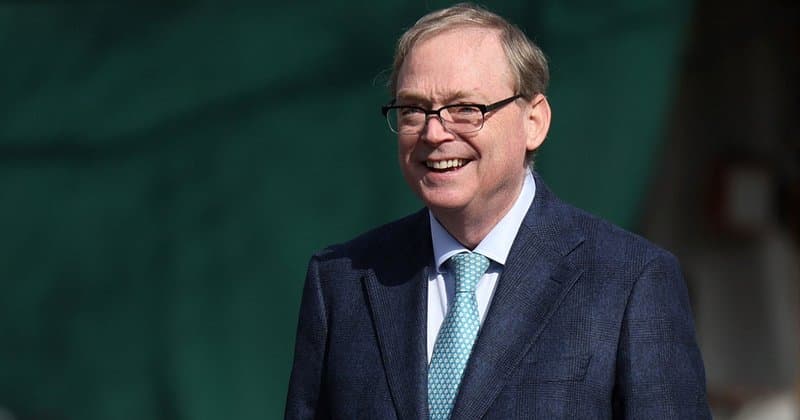
Hassett Becomes the Focus in Washington Again, His Economic Views Attracting Market Attention
As the White House's discussions about the future leadership of the Federal Reserve intensify, the policy stance of Kevin Hassett, the Director of the National Economic Council, has once again become a market topic. Hassett has long served as an economic advisor in Republican administrations, contributing to the formulation of various fiscal and regulatory policies. In recent years, he has gained attention for frequently expressing clear views on monetary policy in public.
During the Trump administration, Hassett was seen as a key driver of major economic issues, including the tax reform framework and adjustments to certain regulatory policies. His frequent appearances as an official economic voice have given him a high degree of recognition in economic policy circles.
Advocating for Looser Policies, Standing in Contrast with the Federal Reserve
In recent public comments, Hassett has repeatedly expressed dissatisfaction with the current interest rates. He believes that the Federal Reserve should decisively adjust policies when there are signs of economic slowdown, rather than maintaining a relatively tight interest rate environment. His straightforward speaking style often emphasizes that monetary policy must synchronize with actual economic dynamics and should not overly focus on short-term fluctuations in inflation targets.
Analysts point out that Hassett's policy attitude is clearly dovish, leaning towards quick rate cuts to stimulate growth. This stance stands in stark contrast with some Federal Reserve officials who insist on maintaining higher rates to consolidate inflation reduction achievements.
The market generally believes that if Hassett plays a more pivotal role in decision-making in the future, the Federal Reserve's policy inclination might become more accommodative than it currently is.
Market Reaction: Dollar Under Pressure, Gold Benefits
Hassett's dovish stance has been interpreted by investors as a signal of potential policy inclination, strengthening expectations of rate cuts. The recent weak performance in the US dollar index is partly due to the strengthening of accommodative expectations, diminishing the appeal of dollar assets.
A low-interest-rate environment typically supports interest-free assets, thus gold prices have concurrently strengthened, with short-term momentum gaining. Market observers indicate that once the rate cut path becomes clearer, gold prices may continue to move to higher levels.
However, there are views that if the future Federal Reserve leadership eventually opts for a member with more neutral policies, the market might need to reinterpret the prior expectations.
FOMC Composition Uncertain, Leadership Changes Spark Speculation
There is currently no clear direction on whether Hassett might enter the Federal Open Market Committee (FOMC). Unlike current Federal Reserve Board members, Hassett is not a current committee member, so his appointment as Federal Reserve Chairman would imply structural adjustments within the FOMC.
Incumbent Chairman Powell's term as a board member lasts until 2028, adding uncertainty to possible future position adjustments. Although his chairmanship term ends in 2026, he has yet to comment on whether he will seek to leave early.
Institutional analysis suggests that the choice of the next Federal Reserve Chairman will not only influence policy direction but also affect the financial market's overall pricing of risk assets.
Policy Direction and Personnel Arrangement Jointly Influence Market Expectations
Overall, Hassett's public statements and long-term policy preferences are prompting an external reevaluation of the Federal Reserve's future leadership structure. As inflation, employment, and the global economic environment still face various uncertainties, potential policy adjustments are likely to become a key source of future market volatility. Investors are closely observing the interaction between the White House and the Federal Reserve to gauge the direction of economic and monetary policies in the coming months.