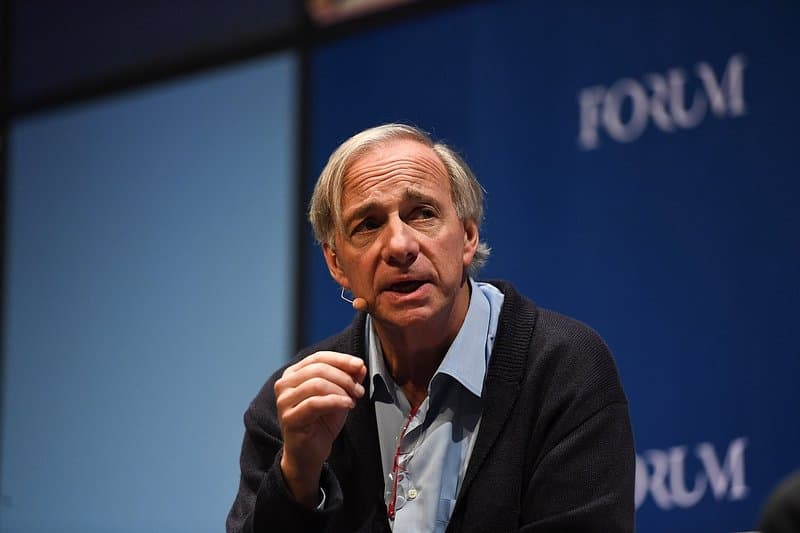
Global Fiscal Deficit Continues to Expand as Dalio Worries About Systemic Crisis Intensifying
Renowned investor and Bridgewater Associates founder Ray Dalio has recently reiterated his concerns about deep-rooted issues in the global economic system. In his view, governments around the world are continuing to increase deficit spending without effective revenue support, pushing the world economy towards a potential “debt storm.” Dalio believes this is not just a cyclical fluctuation but a structural risk that is gradually eroding the stability of the global financial system.
Dalio points out that the fiscal models of major economies such as the United States are deviating from a sustainable path. Long-term budget deficits, rising debt burdens, and climbing interest costs are putting multiple pressures on economic growth and capital markets. If this trend continues, it may trigger a systemic adjustment that goes beyond a financial crisis.
Surge in Debt Interest Share Severely Erodes Fiscal Flexibility
The total U.S. debt has now surpassed $37 trillion, facing significant refinancing pressure in the coming year. With the Federal Reserve maintaining high interest rates, treasury interest expenditures have become the fastest-growing part of the federal budget. Dalio warns that fiscal resources are being rapidly “squeezed” into debt repayment, encroaching on critical spending for social security, healthcare, and infrastructure.
This not only weakens the government's policy adjustment capability but also gradually changes the market's perception of sovereign credit. Dalio likens this phenomenon to an “economic circulatory system blockage,” vividly illustrating how debt burden forms a “sediment” within the system, obstructing the normal flow of economic vitality.
Fiat Currency Credibility Questioned, Gold Gains Strategic Favor
In the face of expanding monetary issuance and credit inflation, Dalio has repositioned gold as a strategic asset. He points out that in the current global environment, gold not only possesses anti-inflation characteristics but also serves as a value anchor reflecting the degradation of government credibility. Unlike fiat currency, gold cannot be created at will; thus, its scarcity confers long-term store-of-value functionality.
Dalio believes investors should build a “neutralized asset portfolio” to cover various potential risks. In his view, about 15% of assets could be allocated to gold to hedge against currency depreciation, credit risk, and capital flow restrictions.
Gold Surpasses Euro to Become the World's Second Reserve Currency
According to Dalio, central banks and institutional investors worldwide have quietly incorporated gold into their core reserves. This year, gold's share in global reserve assets has climbed steadily, surpassing the euro to become the world's second-largest reserve asset after the dollar. This trend signifies that at the sovereign level, preparations are also underway for potential monetary system adjustments.
For ordinary investors, this could be a release of strategic signals. Dalio cautions market participants not to view gold solely as a traditional safe-haven asset but as a “core participant in the repricing of monetary systems.”
From Inflation to Monetary Rebalancing, Future Uncertainty is Accumulating
Dalio's warnings are not only about the current economic situation but also point to a deeper turning point—the world is moving towards a stage of restructuring currency and credit relationships. He emphasizes that the main risk in the future lies not in the pace of economic growth but in the “revaluation” of trust: whether public confidence in government debt repayment ability, currency purchasing power, and financial system stability can be sustained.
In Dalio's view, history doesn't simply repeat, but patterns often recur. He reflects on the systemic shocks of the 1930s and 1970s, reminding investors to prepare for a potential “monetary paradigm shift,” with gold possibly becoming the “ballast” in the evolution of the financial order once again.