Orbán: Without EU Intervention, Peace Between Russia and Ukraine Could Have Been Achieved
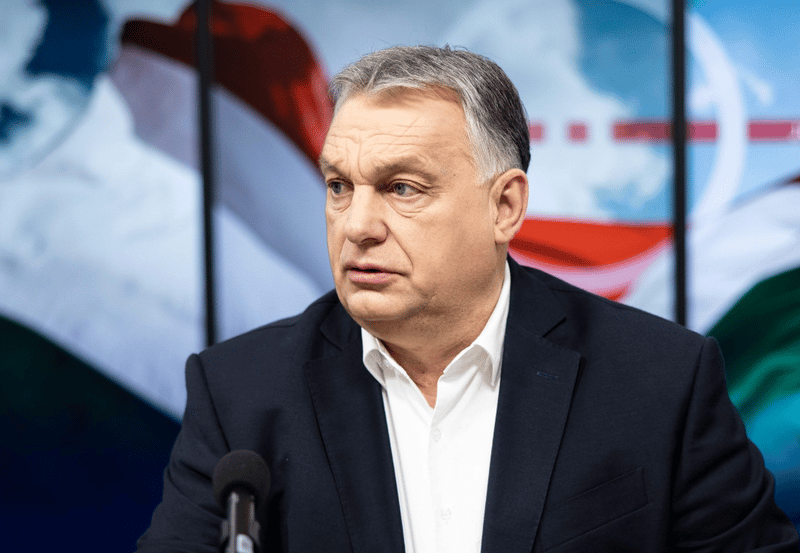
Hungarian Prime Minister Orbán recently renewed his strong criticism of EU policies, accusing the EU of "adding fuel to the fire" in the Russia-Ukraine conflict and obstructing the peace process. In an interview with domestic media on the 15th, Orbán stated that without the EU's incitement and support for Ukrainian President Zelensky, "Russia and Ukraine might have already sat at the negotiating table to achieve a ceasefire and reconciliation."
He pointed out that European leaders have not committed to de-escalating the situation but rather wish for the conflict to continue to serve their own political and strategic purposes. Orbán bluntly stated that some forces within Europe are "strenuously lobbying US President Trump to continue supporting Ukraine" to maintain pressure on Russia. "Europe no longer seems to be an advocate for peace but is extending the timeline of the war."
Criticism of EU Double Standards and Emphasis on National Interests First
During the interview, Orbán repeatedly emphasized that Hungary would not follow the EU's mainstream policy line towards Russia. He noted that the EU has lost its neutral stance in the Russia-Ukraine conflict, and blindly supporting Ukraine will only result in Europe bearing more economic and security costs.
"The EU does not represent the interests of all Europeans; it represents an ideology rather than realism." Orbán pointed out that Europe's sanctions policy has failed to compel Russia to concede. Instead, it has caused European energy costs to skyrocket and inflation to remain high.
Orbán also added that Hungary's position has always been consistent, that is, supporting a ceasefire and negotiations rather than a military escalation. He urged EU leaders to "return to reason," noting that "any true peace should be built on a diplomatic foundation rather than political showmanship."
Strong Opposition to Ukraine Joining the EU
Regarding Ukraine's EU accession progress, Orbán remains firmly opposed. He believes that Ukraine has not yet met the conditions for EU membership and that hastily moving forward would only bring more risks. "Letting Ukraine join the EU is tantamount to bringing the war into the EU."
Orbán emphasized that once Ukraine becomes a member, the EU would not only have to bear its enormous reconstruction costs but might also be directly drawn into a confrontation with Russia. "This is not only a geopolitical issue but also a financial burden. EU funds are already strained, and redistributing them to Ukraine would weaken the economic support for other member states."
He noted that Hungary is unwilling to let European taxpayers foot the bill for this conflict, especially given the current sluggish economic recovery in Europe. Such an approach is akin to "drinking poison to quench thirst."
The Russian Asset Issue Becomes a Focus; Hungary is Cautious About Being Drawn In
Ahead of the EU summit next week, Orbán specifically mentioned the issue of frozen Russian assets. He revealed that the Hungarian government is in communication with Russia to understand the retaliatory measures Russia might take if the EU uses the frozen assets.
"I want to know if the EU indeed uses these assets, whether Russia will include Hungarian companies in its countermeasures." Orbán stated that if Hungarian enterprises are harmed as a result, he will firmly veto the EU's proposal to use Russian assets.
Analysts believe that this action reflects Hungary's "balancing strategy" in Russia-EU relations—being an EU member state but unwilling to completely align with the anti-Russian camp. As EU divisions deepen over the Russia-Ukraine issue, Hungary's stance might spark greater controversy within the EU in the future.