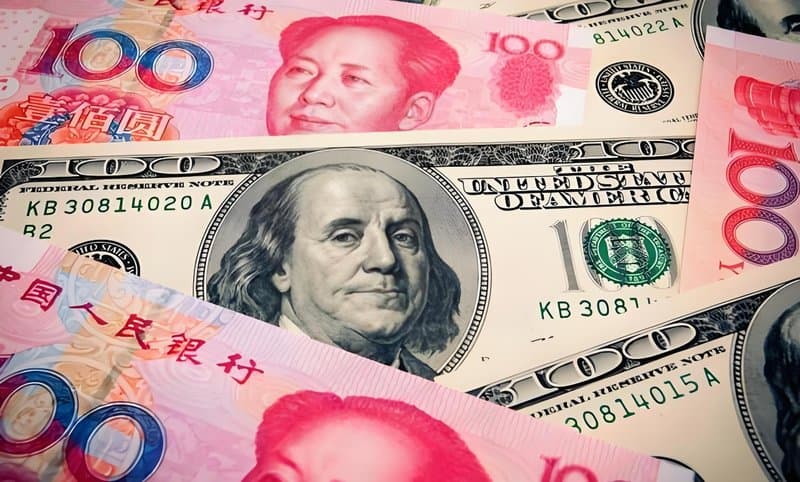
Marginal Adjustment in Central Parity but Overall Strengthened Trend
On November 11, the central parity rate of the RMB against the US dollar was set at 7.0866, a slight decrease of 10 basis points from the previous day. Although the rate has slightly declined, since breaking through 7.10 in mid-October, the RMB's central parity rate against the dollar has maintained a characteristic of "stable yet relatively strong," with its phases of strength unchanged. Several institutions have noted that recent pricing, focused on a basket of currencies, has shown more resilience, and short-term disturbances have not disrupted the existing pace.
Basket Indicators Rise to Highlight Broad Stability
Looking at the currency basket, which better reflects RMB's external value, the CFETS, BIS, and SDR RMB indices have all reached new highs since mid-April, indicating that the RMB maintains an appreciation or robust stance against multilateral currencies. Experts interpret this as a shift in the emphasis of stabilizing the exchange rate more towards maintaining relative stability against a basket of currencies, which helps ensure predictability of the domestic financial environment amid escalating external uncertainties.
External Environment: Limited Upside for the Dollar
Externally, the Federal Reserve's interest rate cut expectations and tariff policies potentially slowing US growth are limiting the dollar index's upside. Despite ongoing short-term rebounds, given the year's accumulated weakening, the dollar's ability to "adapt" to negative factors has improved, enhancing its resilience, and its volatility is expected to converge. For the RMB, external pressures are relatively controllable, conducive to sustaining a pattern of minor inverse volatility with the dollar.
Internal Support: Fundamental and Policy Coordination
Domestically, timely enhancement of counter-cyclical policies may sustain growth resilience in the fourth quarter. Although exports are affected by external cycles, structural optimization continues, and domestic demand recovery and industrial upgrading provide a stronger "fundamental base" for the exchange rate. Under a framework emphasizing market supply and demand coupled with expectations management, the coordinated effort of central rate guidance and cross-cyclical adjustments makes the RMB exchange rate operate more smoothly within its range, significantly reducing impulse-like fluctuations.
Market Impact: Balancing Costs and Expectations
A "stable yet relatively strong" exchange rate environment helps enterprises effectively manage dollar-denominated import costs and avoids the squeeze of unilateral appreciation on external demand and export price competitiveness. Banks maintain rational intentions for foreign exchange settlement and sales, and corporate hedging interest, keeping market liquidity stable. Short-term volatility is more driven by data and sentiment, challenging the formation of trend amplification.
Stability Focused, Range-Bound Movement
Considering internal and external factors, the short-term RMB exchange rate will remain primarily stable. Operationally, the strength of central parity adjustments and the marginal changes in the dollar index will be the two key factors to watch for subsequent paths. Under current conditions, the probability of significant unilateral RMB appreciation or depreciation is low, with a more likely continuation of narrow-range bidirectional fluctuations. For companies and investors, aligning with trends and strengthening hedging and duration management remain the main strategies to address phase disturbances.