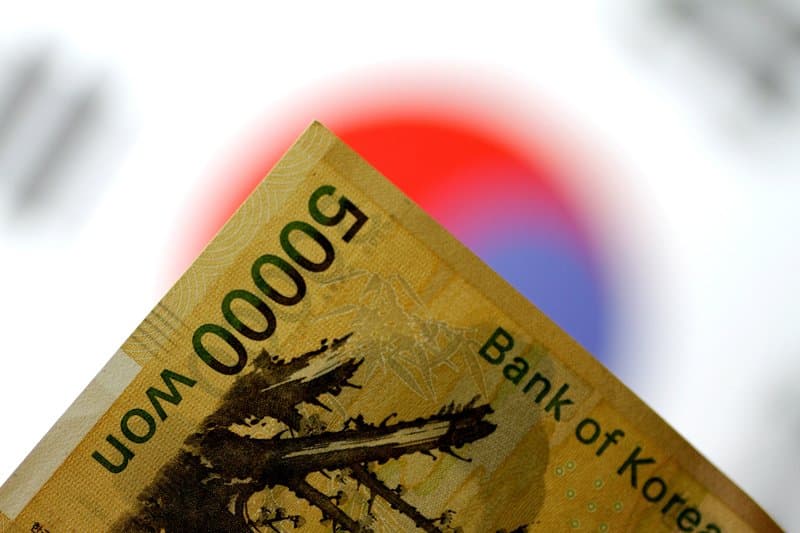
On Wednesday during the Asian trading session, the Korean won weakened again, as market focus on stabilizing exchange rate policies intensified. Intraday, the won fell to around 1479.3 against the dollar, extending its decline for ten consecutive trading days, just a step away from the low range seen since March 2009.
Warning Signal: Record Declines, Lagging Performance This Year
Driven by a "unilateral trading" sentiment, the Korean won has depreciated by over 2.6% this year, being described as one of Asia's weakest currencies. The direct impact of falling exchange rates includes rising import costs and increased inflationary pressures, which might depress consumer spending and corporate profits.
Where Is the Dollar Demand Coming From: Capital Outflows and Import Purchasing
The core of this depreciation pressure lies in strong dollar demand. According to data from the Korea Securities Depository, by January 13, Korean retail investors purchased approximately $2.2 billion in U.S. stocks this year; simultaneously, importers concentrated on purchasing foreign exchange for external payments, which temporarily boosted dollar demand. Foreign investment selling off Korean stocks exacerbated the local currency's weakness in a "tailwind" effect.
External Variables Adding Pressure: Strong Dollar, Weak Yen, and Oil Price Concerns
Besides capital flows, the external environment is also not favorable: Strong U.S. data supports the dollar; news related to Japanese elections unsettles the yen, indirectly dampening regional currency sentiments; concerns about rising oil prices due to Middle Eastern tensions also make exchange rates and inflation chains more sensitive for energy-import-dependent Korea.
What Authorities Are Doing: Beyond Verbal Intervention, Discussing Quicker Measures
In recent weeks, Korea has intensified verbal intervention and implemented measures including reducing related foreign exchange stabilization costs for banks, but the short-term decline has not been reversed. The latest development is that Korea's finance minister announced the rapid introduction of measures to address exchange market fluctuations, partially attributing recent supply-demand imbalances to the expansion of overseas securities investments; central bank researchers also noted that the won above "1,400" does not match economic fundamentals, and market sentiment might be excessively pessimistic.