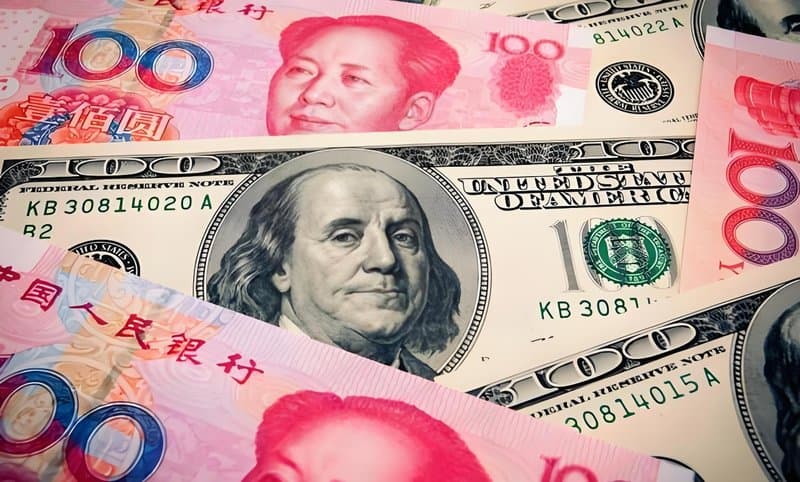
The Central Parity Rate Raised to the Highest Since October, RMB Continues its Phase of Rise
On December 4th, data released by the China Foreign Exchange Trade System showed that the central parity rate of RMB against the US dollar was raised to 7.0733, reaching the highest level since mid-October 2024. This increase of 21 basis points continues the recent stable upward trend of the RMB exchange rate.
Traders stated that as expectations of the external interest rate environment change and internal confidence improves, both onshore and offshore markets have demonstrated firmer performance of the RMB, with short-term fluctuations significantly converging. The recent decline in the US dollar index has also created conditions for the RMB's phase strengthening.
Strengthened Expectation of Fed Rate Cut Signals Changes in Global Monetary Environment
Derivative market trends indicate the expectation of the Federal Reserve's interest rate cut in December's meeting has intensified. According to the CME's FedWatch Tool, the probability of a 25 basis point rate cut has risen to 89%, significantly higher than previous levels.
Meanwhile, traders estimate that the Federal Reserve may continue to adjust the policy path early next year, with varying expectations of the cumulative rate cut, but the market generally leans toward the belief that US monetary policy is approaching a turning point.
Analysts believe that the heightened expectation of the Fed's rate cut has suppressed the US dollar yield, weakening its momentum and thereby indirectly improving the performance of Asian currencies, with RMB noticeably benefiting.
The Central Bank Emphasizes Improving Exchange Rate Formation Mechanism, Maintaining Stable Expectations Remains a Policy Focus
Maintain Exchange Rate Flexibility and Market Leadership, Strengthen Macro-Regulatory Role
Pan Gongsheng, governor of the People's Bank of China, recently published an article emphasizing that the RMB exchange rate formation mechanism will continue to be market-oriented in the future, enhancing rate flexibility, and better reflecting supply-demand relations and economic fundamentals.
The article notes that as a large open economy, China must fully utilize the exchange rate's role in macroeconomic management and balance of payments adjustment to ensure a higher degree of independence and effectiveness of monetary policy.
Meanwhile, the article reiterated the principle of "market-determined exchange rate," implying that the central bank will rely more on market forces to maintain exchange rates at reasonable and balanced levels.
Strengthen Expectation Management, Preventing Excessive Fluctuations is Paramount
While emphasizing rate flexibility, the central bank also clearly stated the need to enhance policy communication, stabilize market expectations, and prevent irrational exchange rate fluctuations.
Experts believe this reflects the central bank's "dual-track management" approach: allowing exchange rates to reflect market changes while avoiding excessive short-term cyclical behavior causing disturbances, ensuring the stable operation of the foreign exchange market.
The recent steady pace of RMB appreciation also reflects the effectiveness of the policy in maintaining stable expectations, guiding the market to more rational behavior to some extent.
Interwoven Internal and External Factors May Increase Exchange Rate Volatility
Although the RMB has shown notable strength recently, analysts caution that with uncertainties remaining in the global macro environment, including fluctuations in US economic data, geopolitical factors, and differing policy paces of major economies, the RMB's trend may still be influenced by external factors.
Moreover, China's economic recovery status and export environment will continue to affect the market's judgments on the RMB's long-term trend.
Deepening Exchange Rate Reform, RMB Expected to Operate in a Stable Framework
Overall, the RMB has shown stable growth recently, benefiting from changes in global interest rate expectations and clear domestic policy signals. In the future, as the exchange rate formation mechanism is continuously improved, the RMB is expected to operate within a more stable and resilient framework, providing clearer expectations and a more stable environment for domestic and international economic entities.