
SoftBank Invests in Intel, Gaining Crucial External Support
SoftBank Group announced a $2 billion investment in Intel, making it the fifth-largest shareholder of the chip manufacturer. Market experts widely believe this move not only provides financial support for Intel but also sends a strategic signal: at a pivotal moment in the reshaping of the semiconductor and AI industry chain, SoftBank is accelerating its influence through capital allocation.
Intel's Challenges and Transformation
In recent years, Intel has faced multiple pressures in high-end chip development and expansion of its foundry business. Although it remains the only U.S. company capable of producing the most advanced process chips, its foundry division has struggled to secure major client orders, hampering its capital expenditure plans. Meanwhile, competitors have intensified their assault on the AI chip and data center market, making Intel's strategic adjustments more urgent.
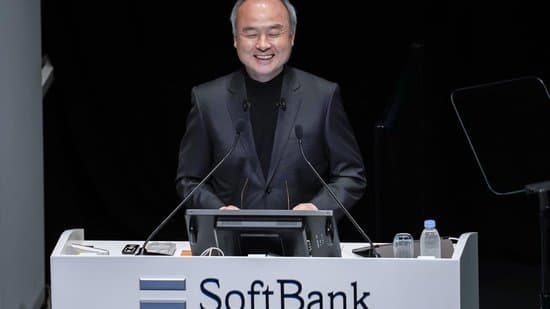
Masayoshi Son’s Global Chip Strategy
The investment in Intel is just another step in SoftBank’s expansion of its global semiconductor footprint. Since acquiring Arm in 2016, SoftBank has continually strengthened its influence in chip design, AI infrastructure, and the data center ecosystem through mergers, acquisitions, and capital operations. Recent major funding for OpenAI and involvement in the "Star Gate" AI project show that Masayoshi Son is trying to establish a strategic hub in AI computing power and hardware systems.
Market Reaction and Stock Price Boost
After the investment announcement, Intel's stock price rose in after-hours trading, reflecting a positive market interpretation of external funding involvement. Investors broadly view SoftBank's investment as not only relieving Intel's short-term financial pressure but also potentially bringing clients and strategic partners to its foundry business. For Intel, which is striving to restore investor confidence, this investment holds significant symbolic meaning.
The Intersection of Politics and Industrial Structure
Intel's strategic moves have long surpassed the corporate level, becoming a key focus for the U.S. government. Amid geopolitical competition, the U.S. urgently needs to solidify its domestic chip manufacturing capabilities. Market sources suggest that the government might consider directly taking a stake in Intel, with SoftBank's capital addition further highlighting the complex interactions between international capital and national strategies.
Strategic Significance Behind the Investment
Analysts indicate that SoftBank's move is not merely a financial investment but part of its positioning in the global competition of AI and semiconductors. By investing in Intel, SoftBank is likely to gain an advantage in future supply chain collaboration, AI hardware standards, and expansion into emerging markets. This investment also sends a signal to the global market: amid the ongoing escalation in U.S.-China technological competition, capital is actively seeking core enterprises with strategic significance.
Looking Ahead
In the coming years, whether Intel can leverage external capital and strategic collaboration to achieve business reversal will determine if it can maintain a key role in the global semiconductor supply chain. For SoftBank, this investment is not just a financial bet but a systematic layout focused on AI, chip design, and infrastructure. If the partnership deepens, it might reshape the global technology and industry landscape.









