

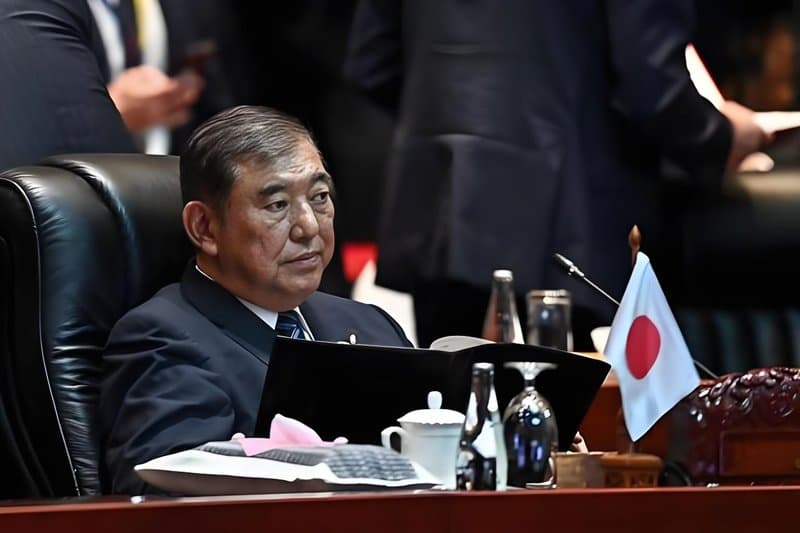
Political Deadlock Intensifies, Market Sentiment Under Pressure
Japan's political arena has recently been trapped in a power transition stalemate. With the prime ministerial election process repeatedly delayed, the uncertainty in Tokyo's political landscape is rapidly spreading to financial markets, leading to increased volatility in the yen's exchange rate. Investors worry that the political deadlock will weaken the government's ability to execute its policies and delay the implementation of economic measures.
After losing the support of his long-standing ally, the Komeito Party, LDP head Sanae Takaichi is struggling to form a new governing coalition. Due to the complex power dynamics within the parliament, different factions are repeatedly negotiating over cabinet positions and policy dominance, pushing the prime ministerial voting date from the initially planned October 15th to the 20th or even later. Analysts point out that this rare political stalemate has shaken investor confidence.
Foreign Exchange Market Fluctuations, Yen Struggles to Find Direction
Amid political chaos, the forex market's reaction to the yen is evident. Over the past week, the dollar-yen exchange rate slid from 152.5 to 150.5, showing clear fluctuations. Traders generally think that the market is hesitant to establish new positions before the prime ministerial election results are out.
Tokyo foreign exchange dealers indicate that if Sanae Takaichi successfully gains new alliance support and takes office smoothly, the market will interpret it as a sign of strong policy continuity, and the yen may remain weak, with the dollar-yen potentially rising back toward the 152 level. Conversely, if the opposition coalition succeeds in having Yuichiro Tamaki elected, it might trigger a short-term capital inflow, pushing the yen to quickly rebound to around 148.
A report by Nomura Securities analyzes, "Political uncertainty has weakened the sustainability of risk aversion. In the short term, the yen's volatility might remain in a high range until the parliamentary vote results are conclusive."
Policy Vacuum Drags on Economic Expectations
The side effects of the political deadlock are gradually emerging. As the new cabinet struggles to form, several important economic policies have stalled, including fiscal stimulus plans and corporate tax reform proposals. Economists worry that this could undermine Japan's growth momentum in the fourth quarter.
The Japanese Cabinet Office had previously intended to introduce a package of stimulus measures to address sluggish consumption and export pressures, but without political consensus, the plan has temporarily been shelved. A government advisor noted, "The policy vacuum is currently the biggest risk, especially against the backdrop of persistent inflation pressure and weakening external demand."
Meanwhile, the Bank of Japan also faces policy constraints. In its September meeting, the BOJ hinted at maintaining an accommodative policy, but if political risks drag down market confidence, a depreciation in exchange rates might force the BOJ to reconsider its interest rate path.
Trump's Visit to Japan as a Key Variable
There is a widespread belief that Trump's upcoming visit to Japan at the end of the month could be an opportunity to break through the political deadlock. It is reported that the US and Japan are expected to discuss trade, semiconductor cooperation, and regional security issues. If Japan manages to elect a new prime minister before the meetings, it will help restore market confidence and stabilize its diplomatic stance.
However, if Japan is still without a prime minister at that time, not only will diplomatic activities be limited, but it could also affect Tokyo's ability to coordinate policy on the international stage. Investors fear that such uncertainty might further diminish the appeal of the yen.
Market Awaits Power Restructuring
As political negotiations continue, the Tokyo market remains cautiously observant. Analysts predict that if the parliament reaches a compromise within the next week, the yen may undergo a temporary rebound; otherwise, if the deadlock persists, overseas capital may continue to flow toward the dollar and gold as safe-haven assets.
Mizuho Bank's foreign exchange department noted in a report, "The current political deadlock is not just a factor of short-term volatility but also exposes the vulnerabilities of Japan's political structure. Unless there is a clear policy direction, the yen's weak trend will likely persist."
Caught between a power vacuum and economic pressure, the yen may struggle to escape its volatile fate in the short term. The Tokyo financial market is focused on the imminent prime ministerial election results and the deeper political restructuring behind them.








