
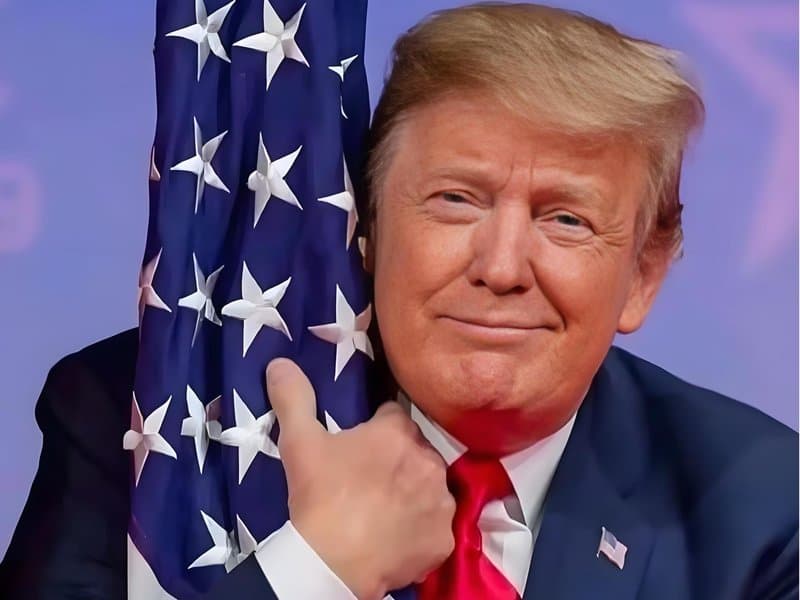
Shift in Chip Policy May Trigger New Global Tensions
The U.S. government is set to announce the results of its investigation into chip imports within two weeks, intertwining national security with trade policy once again. Although the results have not been released, President Trump has repeatedly signaled a "tax increase" in public, suggesting the semiconductor industry will be at the core of a new wave of protectionism.
This policy potentially alters the geopolitical landscape of the global chip industry, posing a substantial pressure particularly on Asian and European chip manufacturers that heavily rely on the U.S. market. Should tariffs be implemented, the entire pricing chain of chips may rise, ultimately impacting not just consumer electronics but also smart vehicles, communication infrastructure, and the defense industry.
Reinvoking Section 232, National Security Becomes a Trade Tool
The Trump administration has once again invoked Section 232 of the Trade Expansion Act of 1962 for an investigation. This section, originally designed to restrict imports of critical resources when national security is threatened, is now frequently used in the economic domain, scrutinizing strategic materials like pharmaceuticals, semiconductors, copper, and lumber.
The frequent use of this legal tool indicates that the Trump administration is systematically framing "economic security" as an extension of "national security." While this approach has certain political support within the U.S., it is intensifying trade conflicts internationally. Especially against the backdrop of already tight global chip supply and demand, this move is likely to trigger a chain reaction.
EU Caught Off Guard, Von der Leyen Treads Carefully
In talks with Von der Leyen, Trump stated that chip tariffs are almost ready to be imposed, while the EU gained temporary exemption through concessions. Although Von der Leyen has not disclosed the details of the negotiations, subsequent statements suggest that the EU must accept a unified 15% tariff on automobiles to avoid immediate tariffs on chips.
Such "quid pro quo" diplomatic maneuvers also prompted criticism within the European Parliament, with some members questioning whether the EU is gradually losing the initiative in trade negotiations with the U.S. If the chip tariffs proceed in the coming weeks, the EU may face renewed negotiation challenges.
Semiconductor Manufacturing Returning to the U.S.? Challenges Remain
Trump asserts that several chip manufacturers are planning to establish facilities in the U.S. to avoid potential tariffs. This claim upholds his policy of "manufacturing reshoring," yet actual implementation faces obstacles in terms of technology, capital, and talent.
Currently, while the U.S. leads in chip design, it significantly relies on Asia for wafer manufacturing and packaging, especially benefiting from the advanced capacities of TSMC and Samsung. Even though Intel has announced expanded investments in the U.S., fully replacing import systems will take time, and cost pressures will be transmitted downstream.
Trade Policy Uncertainty Jeopardizes the Foundation of Global Cooperation
Although the U.S. emphasizes national interest priorities, frequent tariff adjustments and investigative measures are also eroding international trust in cooperation. The global semiconductor industry depends on a complex international collaboration network, with wide distribution across research, manufacturing, and distribution stages. Any unilateral change in trade environment by a country will impact the entire ecosystem.
Market analysts point out that if the Trump administration imposes new tariffs on chip products, it could not only lead to retaliatory measures but also reshape the direction of global supply chains. Against the backdrop of intensified geoeconomic competition, chips have become the forefront battleground in international strategic engagements.









