

Major Adjustments in Electric Vehicle Business
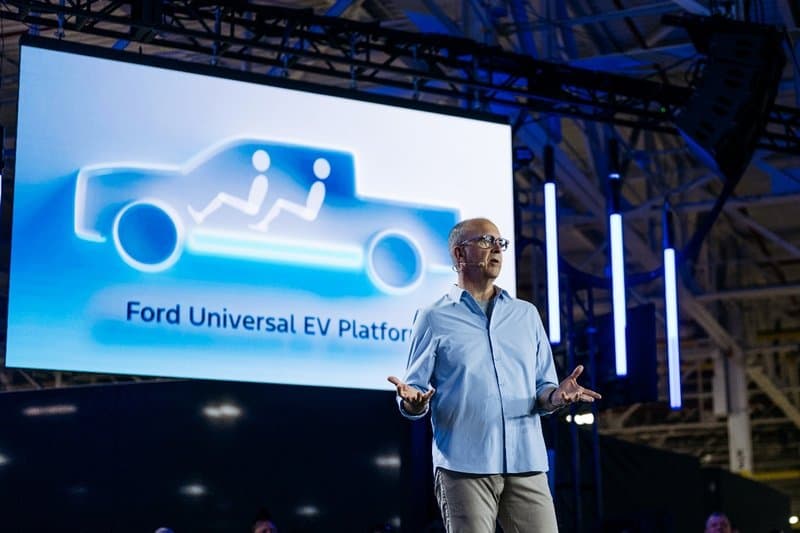
Ford Motor Company recently announced a systemic restructuring of its long-term loss-making electric vehicle (EV) business, with a one-time charge of up to $19.5 billion. This decision marks a significant shift in Ford's electrification strategy and reflects the real pressure traditional automakers face in the global EV market competition. The company stated that most of the restructuring costs will be included in the soon-to-be-released fourth-quarter financial report, significantly impacting short-term performance.
This restructuring is not a single project adjustment but involves a comprehensive reassessment of product planning, capacity layout, and capital allocation. Ford clarified that it will reassess the previous overly aggressive pace of pure electric expansion to reduce the drag of continued losses on overall financial health.
Slowing Pure Electric, Turning to Hybrid
As part of the specific measures, Ford plans to cancel some of the previously planned full-electric vehicle projects, including the much-anticipated all-electric F-series pickup truck plan. Meanwhile, the company will adjust the technical route for the F-150 Lightning, originally positioned as a full-electric vehicle, to a hybrid form to balance range performance and cost control.
Management believes that hybrid and extended-range models are more feasible under the current market conditions. On the one hand, these products can alleviate consumers' anxiety about range and charging infrastructure; on the other hand, their manufacturing costs and profit models are closer to Ford's traditional strengths.
Rebalancing Battery Capacity and Asset Structure
The restructuring also involves a reconfiguration of batteries and related assets. Ford plans to convert a facility originally used for EV battery production to produce energy storage battery products, addressing the previous issue of overbuilt and underutilized battery capacity. This move is seen as Ford's return to rational market demand assessment for electric vehicles.
By taking substantial impairment and write-off charges, Ford effectively acknowledges the significant mismatch between capital investment and return in the EV sector. The company hopes this will help clear historical burdens and pave the way for future business adjustments.
Profit Pressure and Policy Environment Impact
Ford's EV department has faced continuous losses in recent years, with last year's losses exceeding $5 billion. Management expects that with the current market competition and cost structure, losses will remain unavoidable in the short term. Ford executives emphasized that it is not rational to continue investing resources in projects that clearly cannot achieve profitability, and restructuring is driven by considerations of long-term sustainability.
Additionally, changes in the US policy environment are also considered to add uncertainty to the EV business. Adjustments in subsidy policies, trade environments, and regulatory orientations pose higher risks to certain pure electric projects, further prompting Ford to tighten its focus.
Market Reaction and External Evaluation
The capital market reacted relatively rationally to Ford's strategic shift. After the announcement, Ford's stock price rose in after-hours trading, indicating that some investors approve of its decision to actively cut losses and reshape its growth path. Analysts note that Ford's focus on developing hybrid models at this stage can help improve cash flow performance in the coming years.
Industry observers believe this adjustment does not signify Ford abandoning electrification but rather revising its pace and path. Hybrid and extended-range technologies are considered transitional solutions that help maintain competitiveness in the electrification trend.
New Positioning Towards 2030
Ford stated that by 2030, about half of its global sales will come from hybrid, extended-range, and pure electric vehicles, a significant increase from the current levels. This means that despite the short-term contraction in pure electric investments, the company still views electrification as a long-term direction.
In the increasingly competitive global automotive market, Ford is attempting to rebuild profitability through a more pragmatic product mix and cost control strategy. This restructuring may become a critical turning point in its electrification transformation.








