Weak Employment Becomes a Turning Point in Policy
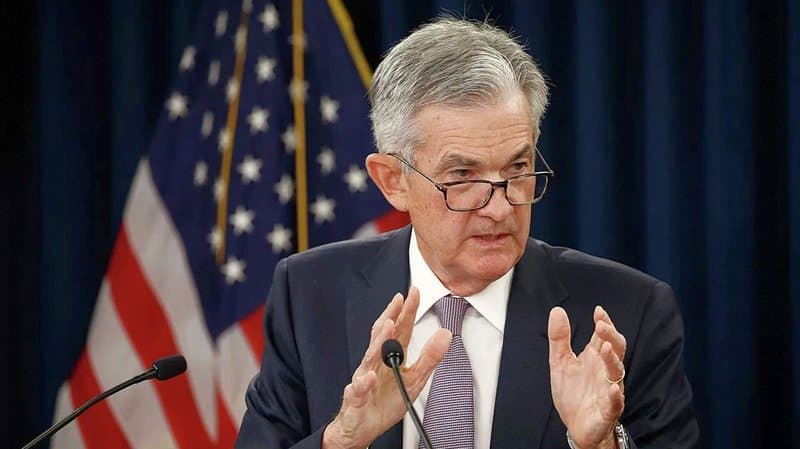
Federal Reserve Chairman Jerome Powell recently highlighted in a public speech that the weakness in the U.S. labor market has become a crucial factor in monetary policy adjustments. With a significant reduction in new job creation, downward pressure on both supply and demand in employment forces the Federal Reserve to reassess the economic outlook. Against this backdrop, last week's decision to cut interest rates was not only aimed at alleviating the pressures of economic slowdown but also served as a direct response to employment risks.
Persistent Inflation Pressure
Despite the noticeable cooling of employment, inflation remains above the Federal Reserve's target of 2%. Powell specifically mentioned that in the short term, tariff policies have increased prices, making the process of inflation reduction highly uncertain. The Federal Reserve currently expects the PCE price index to remain close to 3%, indicating that price pressures have not fully eased. Finding a balance between employment risks and inflation risks has become a critical challenge for the Federal Reserve's decision-making.
Challenges Under the Shadow of Stagflation
Powell emphasized that while the current U.S. situation has not reached the severe stagflation state of the 1970s, it exhibits similar characteristics: economic growth is slowing while prices remain high. This dual-risk scenario means that any policy choice entails costs. If further easing is pursued, inflation might rebound; if high interest rates are maintained, the job market could deteriorate rapidly. This dilemma highlights the complexity the Federal Reserve faces in executing its "dual mandate."
Internal Disagreements and External Pressures
During policy formulation, significant internal disagreements have emerged within the Federal Reserve. At the recent Federal Open Market Committee meeting, the pace and extent of interest rate cuts became a focal point of debate. Some board members advocate more aggressive easing measures to prevent employment from worsening further, while others worry that too rapid a relaxation could lead to recurring inflation. Simultaneously, political pressure from the White House is testing the Federal Reserve's independence again. The tariff policies pushed by the Trump administration add more uncertainty to the economy, and the Federal Reserve must remain cautious in its response.
Future Policy Outlook
In his speech, Powell indicated that the Federal Reserve still retains the possibility of further rate cuts. He emphasized that the current policy stance is in a "moderately restrictive" range, which allows room for maneuver in responding to changes. Meanwhile, other officials, like board member Bowman, caution that responding too slowly could lead to increased instability in the labor market. Going forward, every adjustment by the Federal Reserve will be highly influenced by employment and inflation data.
Conclusion
The U.S. economy is entering a sensitive phase where risks coexist. The intertwining of employment downturn and inflation pressure tests the Federal Reserve's flexibility and independence in monetary policy. Powell's statement shows that the Federal Reserve is striving to find a delicate balance amid the pull of its "dual mandate," but the path forward remains fraught with uncertainty.