

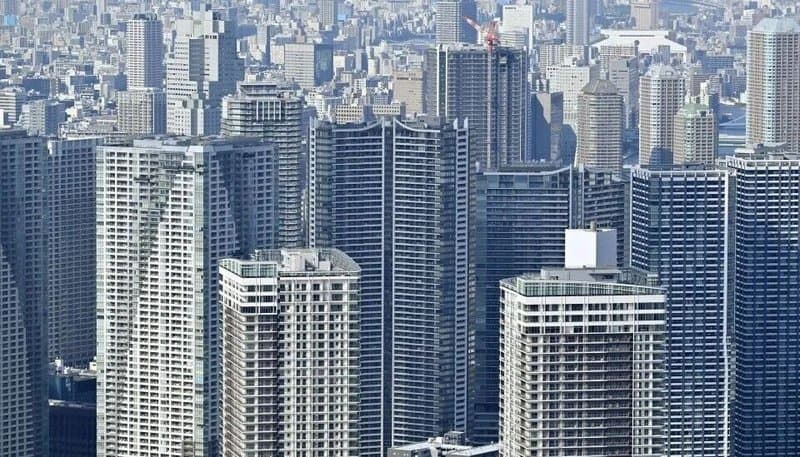
Significant Increase in Overseas Buyers in Metropolitan Areas
A recent residential transaction survey released by Japan's Ministry of Land, Infrastructure, Transport and Tourism shows that foreign funds are entering Japan's real estate market at an unprecedented rate. In core metropolitan areas such as Tokyo and Osaka, the proportion of new residential transactions involving overseas residents has risen significantly, marking the most notable structural change since the survey began.
Although the overall proportion remains relatively low, the rapid increase has caught the attention of the government and the real estate industry. Data compiled from official registration records show that in the first half of 2025, buyers with addresses registered overseas accounted for 3.0% of new homes in Tokyo, doubling from the previous year. Particularly in the core six districts of Tokyo, including Chiyoda, Chuo, and Minato, this figure surged to 7.5%, highlighting that the high-end residential market is the area most active with foreign funds.
Outside the capital region, the proportion of overseas home purchases has also increased in Sapporo and Kanagawa Prefecture. Industry insiders point out that the depreciation of the yen and the enhanced cost-effectiveness of Japanese real estate assets compared to major global cities have quickly strengthened the presence of overseas buyers in the housing market.
High-End Real Estate in Demand; Speculation Risks in Focus
Currently, overseas buyers are mainly involved in purchasing new apartments in Japan's urban centers, especially small-sized or high-end residential projects in prime locations. Some developers report that certain new projects have seen concentrated reservations from overseas clients during pre-sale stages, with some buyers viewing real estate as a means for value retention or investment.
However, an increase in transactions does not mean the absence of risks. Multiple market observers believe that if foreign funds flow in primarily for investment and short-term profits, it could create upward pressure on prices in supply-constrained metropolitan areas, exacerbating the housing burden on local residents.
A Tokyo real estate analyst pointed out, “Not all such purchases indicate a demand for settlement. If this proportion increases further, the market may experience a structural risk where prices deviate from actual housing demand.”
Government Issues Warnings, Will Study Measures to Curb Speculation
In response to the new trend, the Japanese government has begun to adopt a more proactive stance. Minister of Land, Infrastructure, Transport and Tourism, Tetsuo Saito, stressed at a regular press conference that Japan does not encourage speculative real estate transactions of any kind, whether the buyers are domestic or foreign. He noted that the government will collaborate with developers, industry organizations, and local governments to explore whether curbing tools are needed for speculative home purchases.
Since Japan does not use “nationality” as a field for real estate registration, this survey primarily relies on residence addresses to determine whether buyers are foreign. Although the data does not reflect investment purposes, its upward trend is already seen as an important signal for policy discussions.
Industry and Experts Call for Improved Monitoring Mechanisms
Real estate industry professionals suggest that Japan should establish a more regular data tracking system to allow timely measures to be taken at the early stages of market changes. Some experts have noted that amid the continued high liquidity of global funds, the appeal of Japanese real estate as a safe haven asset may continue to increase, with the proportion of foreign buyers potentially continuing to expand in the future.
Economists analyze that if Japan wishes to avoid a long-term disconnect between housing prices and income growth, it should simultaneously advance efforts in strengthening regulations, expanding housing supply, and enhancing market transparency.








