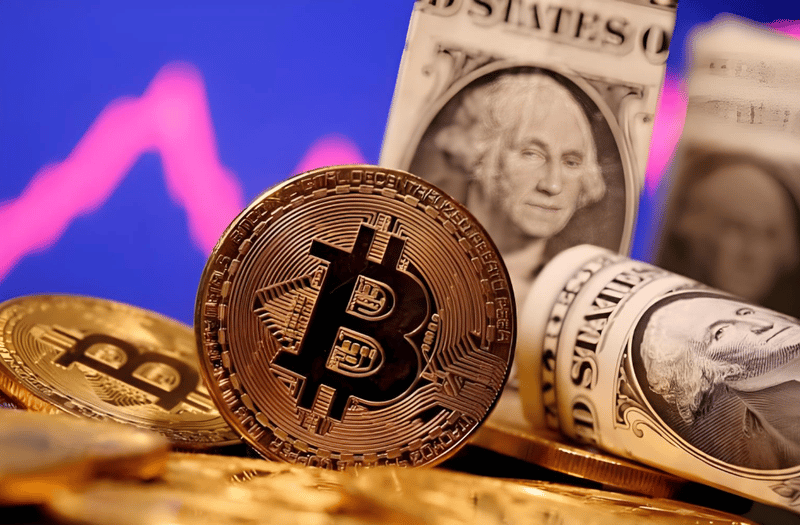
Bitcoin Experiences Rare Flash Crash on Christmas Eve, Affecting Specific Trading Pairs
As traditional financial markets basked in year-end festivities, the cryptocurrency market was overshadowed on Christmas Eve. On Wednesday evening, during the U.S. trading session, Binance, the world's largest crypto exchange, experienced a shocking "flash crash." In the Bitcoin to USD1 trading pair (a stablecoin supported by the Trump family), the price plummeted from $87,600 to $24,100 in mere seconds, a staggering drop of over 70%. Although the price quickly rebounded to normal levels, this severe technical fluctuation not only alarmed investors but also highlighted the vulnerability of emerging trading pairs in the early stages of liquidity construction.
Liquidity Shortage Causes Dramatic Price Swings
Regarding the unusual volatility, market analysts generally believe it was due to insufficient liquidity in specific trading pairs. Since USD1 is a nascent stablecoin, its trading depth is shallow, lacking enough market makers to provide dense bid and ask quotes. In such an environment, a large market sell order or system-triggered automated trading can easily break through a weak order book, causing the price to deviate instantly from its fair market value. Analysts point out that this "flash crash" phenomenon is a stern warning against excessive leverage, especially during geopolitical uncertainties and low trading volume periods when liquidity fluctuations can be exponentially magnified.
Bitcoin Misses Out on Christmas Rally, Stuck in Worst Quarter in Three Years
In contrast to the eagerly anticipated "Christmas rally" of previous years, this year's Bitcoin performance has been disappointing. Currently, Bitcoin prices are trapped in a narrow range between $85,000 and $90,000, hovering around $87,000. Since retreating from its all-time high in October, Bitcoin has fallen by 30%, erasing all gains for the year and recording a cumulative drop of over 7%. This sluggish trend marks its worst quarterly performance since the TerraUSD collapse in 2022. Even as traditional financial markets rebound, this notoriously volatile asset has unexpectedly stalled, indicating a marked cooling of speculative sentiment at year-end.
Traditional Assets Repeatedly Hit Record Highs, Highlighting Divergence in Digital Gold's Performance
Bitcoin's sluggish performance sharply contrasts with traditional safe-haven and risk assets. On December 24, the S&P 500 index hit another record high, with momentum trading in tech stocks bringing substantial year-end returns for retail investors. Meanwhile, spot gold prices also showed strength, briefly reaching an all-time high of $4,525 per ounce, the best annual increase since 1979. The significant year-end divergence between gold and Bitcoin reflects a shift in capital back to traditional physical and mainstream equity assets in the face of geopolitical risks and macroeconomic uncertainties. Bitcoin's status as "digital gold" is now facing a stern market test.