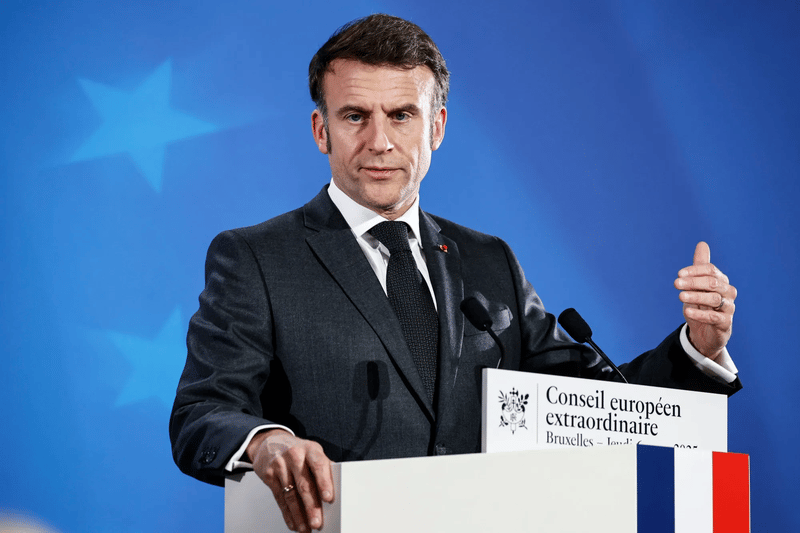
Macron Calls for ECB to Update Policy Framework
French President Macron recently reiterated in a media interview his call for the European Central Bank to revisit its traditional monetary policy framework, especially given the rapidly changing economic environment. He pointed out that the Eurozone, facing slowed growth, employment challenges, and global monetary competition pressures, must redefine policy goals to ensure the region's economy possesses greater resilience and competitiveness.
Macron emphasized that the ECB's current excessive focus on controlling inflation might unintentionally overlook the importance of economic growth and employment, both of which are key foundations for driving the EU's overall vitality. He believes that monetary policy is not only a tool for controlling prices but should also be a means to promote long-term economic stability.
Eurozone Faces Policy Rebalancing Pressure Amid Multiple Challenges
In recent years, the Eurozone's growth momentum has noticeably weakened, with some member states facing structural employment pressures, compounded by weak external demand, leading to a clear imbalance in the region's economy. Macron pointed out that in this context, if monetary policy remains overly reliant on a single goal, it may not effectively respond to a complex and changing economic environment.
He emphasized that the European internal market has a high savings rate and enormous consumption capacity, but if policies cannot fully activate these advantages, regional growth potential will be weakened. Furthermore, given the reality that the dollar and the yuan are widely used in international economic games, Europe needs to enhance its currency's strategic function.
Fiscal policy experts interpret this proposal as reflecting member states' urgent need for more flexible monetary policy, especially in the context of intensifying global economic competition.
Central Bank Independence Becomes a Discussion Focus Again
Macron's remarks have drawn widespread attention within the Eurozone and touched upon a long-sensitive issue: central bank independence. Eurozone leaders typically avoid making direct statements on monetary policy to prevent questioning the central bank's independent operation. However, Macron's public call shows a governmental layer questioning the functionality of current policy tools.
The European Central Bank has always emphasized its responsibility to maintain price stability, and considering growth and employment goals could dilute policy focus and even impact inflation expectation management. Policy observers believe this discussion represents a rethink of policy missions within the Eurozone, reflecting multiple countries' hopes for central bank decisions to more closely respond to economic realities.
Bond Market Operations May Trigger Long-Term Rate Risks
Regarding the European Central Bank's continued reduction of its balance sheet, Macron expressed particular concern. He believes that continuing to sell a large number of government bonds might raise long-term borrowing costs, thereby exacerbating financing pressure on businesses and households, which could in turn dampen economic activity. He also warned that if long-term rates continue to rise, it may lead to euro appreciation, posing additional challenges to export competitiveness.
Market analysts say that once monetary policy tightening and lackluster growth coincide, the Eurozone might face a more severe policy dilemma, thus the discussion on whether the policy direction needs adjustment has a realistic background.
Future Policy Direction Remains Disputed, but Discussion is Now on the Table
While it may be difficult for the European Central Bank to significantly adjust its policy mission in the short term, Macron's comments could prompt deeper discussions at the Eurozone level. Some economists believe that given the rapid changes in global economic structures, diversifying monetary policy goals has become an international trend; others warn that weakening the inflation target might undermine the central bank's credibility.
Overall, the debate on whether monetary policy should include more economic goals may become a significant topic in Eurozone policy debates over the coming years.