

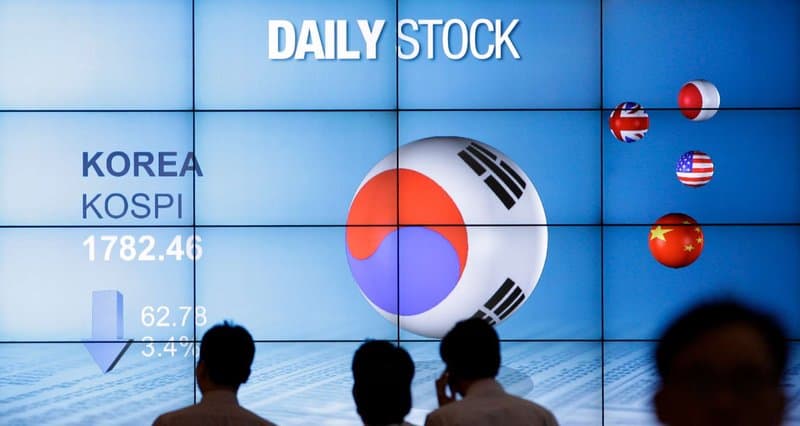
Kospi Index Breaks 3900 Points, Sets New Record
On Thursday (October 24th), the Korea Composite Stock Price Index (Kospi) surged strongly, rising by 1.5% at one point, breaking through the 3900-point mark and setting a new all-time high. Investors returned to the market, significantly boosted by the technology and new energy sectors, lifting market sentiment notably.
By the close, the Kospi index's gains narrowed to 1.2%, closing at 3896.7 points, still marking the highest close of the year. Meanwhile, the KOSDAQ index, which is primarily small-cap stocks, also rose by 1%, demonstrating solid performance. Market observers generally believe that this rise signals South Korea's stock market is re-entering a strong phase after several months of consolidation.
Tech Stocks Lead Market, Focus on Semiconductor and Energy Sectors
The core driving force behind the surge in Korean stocks comes from the technology sector. Semiconductor giant SK Hynix surged nearly 4%, becoming the largest weight-lifting the index. Samsung Electronics' stock price also increased by about 3%, recording the largest single-day gain since August.
LG Energy Solution rose by more than 2%, benefiting from the growth in global new energy demand and an increase in electric vehicle battery orders. Analysts pointed out that with the rising global demand for AI chips and energy storage systems, the Korean tech supply chain is ushering in a new boom cycle.
Over the next few months, the market's focus will be on the third-quarter earnings performance of Korean companies and the Federal Reserve's policy movements. Investors expect that if global interest rate cut expectations continue to heat up, Korean export companies are likely to benefit further.
Continued Inflow of Overseas Funds, Foreign Buying Hits Six-Month High
Data from the Korea Exchange showed that foreign investors had a net purchase of approximately $780 million in stocks that day, marking the largest net inflow in six months. Funds mainly flowed into the semiconductor, clean energy, and technology manufacturing sectors.
Analysts believe that the Korean market's attractiveness to foreign funds is mainly due to its unique position in AI and high-end manufacturing within the tech supply chain. Morgan Stanley's Asia-Pacific strategist Lee Min-ho said, "Korea has both technological advantages and stable policies, and current valuations remain in a reasonable range, indicating the trend of foreign capital returning may continue."
In addition, the stable won exchange rate also provides confidence for foreign investment. The won remained stable against the dollar this week, closing at 1378.9, which reduces foreign exchange risks for investors.
Government and Central Bank Policies Boost Market Confidence
The South Korean government has recently introduced several capital market reform measures, including expanding corporate buyback plans, tax reduction policies, and easing restrictions on retail investors. These steps have boosted market sentiment to some extent.
Meanwhile, in its latest statement, the Bank of Korea reiterated its stance to maintain an accommodative monetary policy to support economic growth. Analysts believe that the low-interest-rate environment helps enhance corporate profitability and stock market valuations.
Jung Ho-jin, an analyst at the Financial Market Research Institute, stated: "Despite the global economic uncertainties, the stability of South Korea's domestic policies and the resilience of corporate earnings provide a solid basis for the market to sustain its rise in the short term."
KOSDAQ Index Rises In Sync, Small-Cap Stocks Active
The small-cap market is equally active. The KOSDAQ index rose by 1% during the day, closing above 870 points, led by tech, pharmaceutical, and green energy companies. Improved investor sentiment has led to a significant increase in trading volume, with stock activity reaching a quarterly high.
The strong performance of small and medium-sized enterprise stocks reflects investors' confidence in Korea's innovative economy. Analysts point out that the government's "SME Innovative Financing Plan" will be an important factor supporting the long-term growth of this sector.
Technology Cycle and Export Recovery as Future Main Themes
Looking ahead, market analysts generally believe that the Korean stock market is likely to maintain upward momentum. The semiconductor, artificial intelligence, clean energy, and electric vehicle battery industries will continue to be the main driving forces behind the index's rise.
If the Federal Reserve confirms the start of an interest rate-cutting cycle before the end of the year, the appreciation of the won and the rebound in exports may further drive capital inflows. Economists predict that the Kospi index is expected to stabilize above 3900 points by the end of the year and challenge the 4200-point mark before 2026.
Overall, the strong performance of the Korean stock market not only reflects improved corporate profits but also highlights the country's strategic position in the global technology competition landscape.








