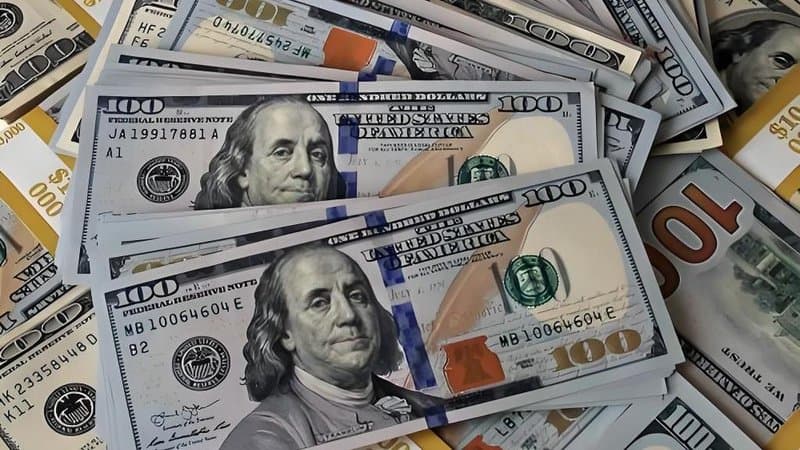
After meetings between US and South Korean officials this week, market expectations for the US government to potentially push for a "weak dollar policy" quickly intensified, leading the dollar to fall against several major currencies. This development evoked memories of policies similar to the "Plaza Accord," with investor sentiment becoming noticeably cautious.
US-South Korea Exchange Rate Talks Draw Market Attention
According to media reports, South Korea's Vice Minister of Strategy and Finance Choi Ji-rong met with Robert Kaproth, US Assistant Secretary for International Finance, at the Milan meeting on May 5. The two sides discussed exchange rate policies and planned to "continue related dialogues." Although a spokesperson for the South Korean Ministry of Finance confirmed the meeting, no further comments were made about specific details.
Following this news, the US dollar's exchange rate against the Korean won dropped by more than 1.3% in one day, and it also fell by over 1% against the Japanese yen. The dollar index, which measures the US dollar against a basket of major currencies, fell for the second consecutive day, dropping below the 101 mark, approaching the key psychological level of 100. Investors widely viewed this meeting as a signal from the US to devalue its currency.
Trump Administration Again Shows "Weak Dollar" Stance
Analysts believe that although the intentions of the US-South Korea talks were not made explicit, the underlying policy direction is likely towards a "weak dollar." Scotiabank of Canada noted that this bilateral communication reinforced market speculations of a shift in US monetary policy. The Trump administration has consistently expressed strong dissatisfaction with the devaluation of Asian currencies and had repeatedly voiced its discontent with a strong dollar in the past.
The US had previously placed countries such as South Korea and Japan on the foreign exchange manipulation watch list. South Korea also briefly intervened to stabilize the won amidst market turmoil caused by domestic political events late last year. These background factors made the recent talks particularly noteworthy.
"Mar-a-Lago Agreement" Concept Sparks Wide Discussion
This move has been termed by some in the market as a prototype of the "Mar-a-Lago Agreement," echoing the historical precedent of the 1985 "Plaza Accord," which prompted a systematic devaluation of the dollar. The term originates from a concept by Trump's economic advisor, Stephen Miller, proposing that the US could demand that foreign countries swap their short-term US debt for ultra-long-term bonds, applying interest rate pressure based on currency appreciation, while threatening tariffs and security policy sanctions for non-compliance.
Although the "Mar-a-Lago Agreement" is still a concept, JPMorgan Private Bank has pointed out that its practical implementation is highly unlikely. This is because the current international monetary structure is vastly different from that of the 1980s, and large-scale intervention in the dollar exchange rate could weaken the dollar's international status, increase long-term US borrowing costs, and run counter to government objectives.
Softening Dollar Remains a Market Theme, Risks Persist
Analysts note that although the recent easing of US-China trade relations provides short-term support for the dollar, the chaotic policy orientations of the Trump administration and potential currency interventions remain major uncertainties for the dollar's outlook. Analysts Win Thin and Elias Haddad of Brown Brothers Harriman conclude that if tariff measures weigh on the US economy, the dollar may face downward pressure in the medium to long term.
Overall, the market is re-evaluating the direction of US exchange rate policy. In the short term, the risk of a "policy-cued devaluation" of the dollar is increasing, with investors closely watching the results of future US discussions with major economic entities like South Korea and Japan, as well as potential policy statements.