Trump Expresses Strongest Stance Yet
U.S. President Donald Trump publicly stated on Sunday that he is ready to move into the "second phase" of sanctions against Russia. Although specific measures were not disclosed, this is his most direct signal yet indicating that the U.S. may increase pressure on Russia's homeland and its oil buyers in the coming weeks. These remarks suggest that U.S.-Russia relations might reach a new point of tension.
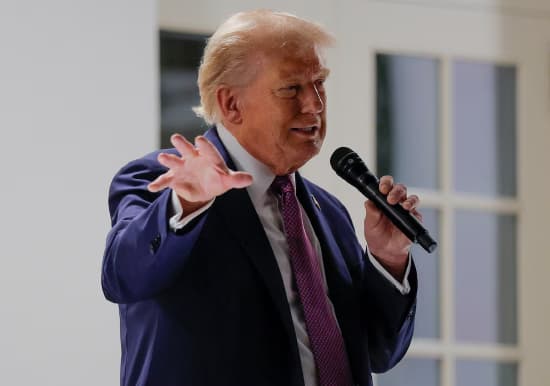
Facing the media at the White House, when asked if he was ready to proceed with sanctions, Trump briefly replied, "Yes, I am ready." However, he did not elaborate, leaving significant uncertainty.
Background: From Promoting Talks to a Firm Stance
Since taking office in January, Trump has repeatedly emphasized his ability to end the Russia-Ukraine conflict swiftly and has signaled intentions to promote negotiations. However, as the conflict remains deadlocked and a ceasefire remains elusive, the White House's stance has become increasingly firm.
Last Wednesday, Trump defended actions already taken against Russia, stressing that imposing tariffs on Indian goods exported to the U.S. indirectly hit Russia, as India is a significant buyer of Russian energy. He even claimed that this measure cost Russia "hundreds of billions of dollars."
Nevertheless, most observers believe these measures are insufficient to change the dynamics of the conflict. Therefore, what Trump refers to as "second phase" sanctions will likely involve more targeted restrictions on energy, finance, or trade.
Sanctions May Target Oil Buyers
U.S. Treasury Secretary Scott Baisant said on Sunday that the U.S. and the EU are considering the possibility of imposing secondary tariffs on countries buying Russian oil. He warned that if this measure is implemented, it would severely undermine Russia's energy revenue and could even push the Russian economy to the brink of collapse.
Analysts point out that "secondary sanctions" could be more destructive than directly targeting Russia's own land. Should pressure be applied to third-country buyers, the stances of energy giants like India and China will be crucial, testing the U.S. and EU's ability to balance diplomacy and the energy market.
Global Energy Dynamics in Flux
If a new round of sanctions is implemented, the global energy market could be in for a severe jolt. Currently, Western buyers have significantly reduced their imports of Russian oil, with countries like India benefitting from low-cost purchases. Should "secondary tariffs" come into effect, this trade pattern could be completely upended.
There are market concerns that the sanctions will push up international oil prices and exacerbate supply uncertainties. Some energy research institutions predict that if the U.S. and EU jointly sanction oil buyers, global crude prices could rise by 10% to 15% in the short term.
Increased Diplomatic Pressure
Trump's statements not only affect energy markets but also stir up diplomatic waters. Russia has long warned that U.S. sanction policies are a "source of instability," and any new measures will be met with "reciprocal responses."
Meanwhile, there are differences within the U.S. and EU regarding the extent and scope of sanctions. Some European countries are concerned that energy dependency may cause "backlash" on their own economies. Whether a coordinated and unified sanctions scheme can be reached in the future remains uncertain.
Awaiting Detailed Implementation
As of now, the White House has not disclosed the specific framework for the "second phase" sanctions. Both the market and diplomatic circles largely expect relevant details to be unveiled in the coming weeks. If the measures are put into effect, they could be among the most impactful sanctions since the outbreak of the Russia-Ukraine conflict.
Amid stalemated conflict, tight energy supplies, and domestic political pressure, Trump is attempting to demonstrate a "tough stance" on Russian policy. However, whether this approach will force Russia to concede or will plunge the world into new economic and geopolitical turmoil remains to be seen.