Trump's Change in Stance: From Strong Threats to Diplomatic Overtures
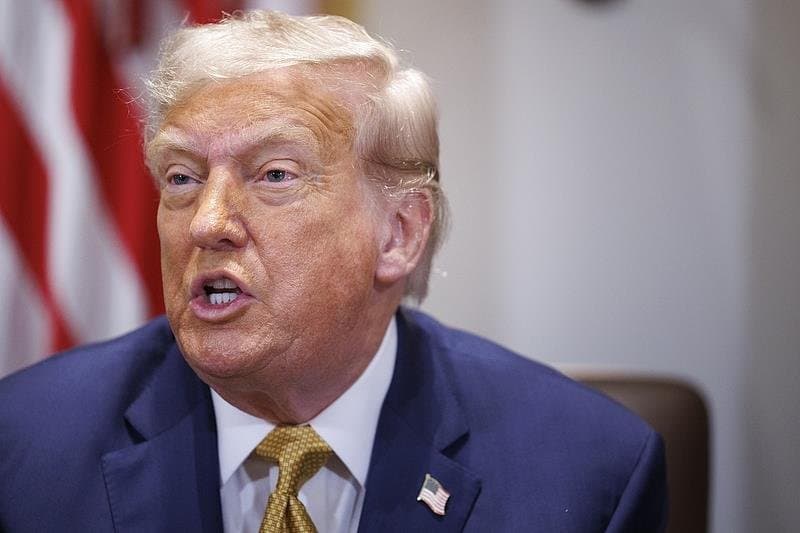
On Monday, U.S. President Donald Trump publicly stated at the White House that he does not rule out the possibility of sending American troops to Venezuela and also expressed willingness to engage in direct talks with Venezuelan President Nicolás Maduro at an appropriate time. This was seen as a complex signal in Trump's Latin America policy — keeping a tough option open while allowing room for diplomatic negotiations.
In responding to reporters' questions in the Oval Office, Trump said directly, "I don't rule out that possibility, I don't rule out anything." When asked if he would meet with Maduro, he added, "Maybe, at a certain time." This statement indicates that the White House is reassessing its policy towards Venezuela, seeking a balance between "deterrence" and "engagement."
Washington's Stance: Coexistence of Toughness and Pragmatism
In recent years, the U.S. has implemented strict sanctions and diplomatic isolation policies against Venezuela to pressure the Maduro government into political reform. The Trump administration hinted at the possibility of military intervention early on, stating "all options are on the table." However, after years of sanctions failed to significantly change Venezuela's political landscape, Trump seems to be exploring a new strategy.
Analysts believe this statement is no coincidence. With Venezuela's domestic economy continuing to deteriorate and oil production plummeting, it has become necessary for the U.S. to reevaluate its strategy in terms of energy security and geopolitical interests. Scholars from the Washington-based Center for Strategic and International Studies (CSIS) noted, "Trump may be trying to force concessions from Maduro in negotiations by creating military pressure, but also wants to avoid a prolonged regional conflict."
Cautious Response from Maduro's Government Emphasizes Sovereignty
So far, the Venezuelan government has not made an official response to Trump's latest comments. However, a Venezuelan foreign ministry official, in an interview with local media, stated, "Venezuela will continue to defend national sovereignty and will not succumb to any external threats." The official also mentioned that if the U.S. is willing to engage in dialogue from a position of "equality and respect," Venezuela's government would not refuse contact.
Maduro has repeatedly accused the U.S. of orchestrating an "economic war," leading to severe inflation and energy crises in Venezuela. Since 2019, the U.S. has frozen the overseas assets of Venezuela's state-owned oil company PDVSA and supported opposition leader Juan Guaidó's attempt to establish an "interim government." Although that plan ultimately did not succeed, U.S.-Venezuelan relations have remained at a low point since then.
International Reaction: Regional Allies Call for Restraint
Trump's comments have elicited widespread reactions in the Latin American region. Governments of neighboring countries like Brazil and Colombia urged the U.S. to avoid military action, emphasizing that any escalation of regional tensions could lead to large-scale refugee movements and security risks. The Mexican foreign ministry expressed hope that the U.S. and Venezuela would "ease tensions through dialogue and political resolution."
A United Nations spokesperson responded in a routine press briefing that Secretary-General Guterres "strongly supports all peaceful efforts" and urged all parties to adhere to the principles of non-interference in internal affairs as stated in the United Nations Charter.
The Political Calculations Behind Trump's Remarks
Domestic political observers in the U.S. generally believe that Trump's statements might be related to reshaping a tough image on foreign matters. As the 2025 election year approaches, the Trump administration hopes to demonstrate a stance of "control and initiative" on international affairs to meet the expectations of domestic conservative voters.
Carol Nelson, a Latin America researcher at the Brookings Institution, pointed out, "Trump's strategy has always oscillated between pressure and negotiation. While he mentioned 'not ruling out troop deployment,' he also sent a message of willingness to negotiate, which is a typical strategic ambiguity."
U.S.-Venezuela Relations May See "Thaw in Freeze"
Although the possibility of military intervention was mentioned, diplomatic analysts believe that in the short term, U.S.-Venezuelan relations will primarily involve tentative engagement. Considering the anti-war sentiment in the U.S. and the cautious stance of Latin American allies, the risks and costs of direct military action are too high.
Over the coming months, whether the U.S. seeks engagement through third-party channels and whether Maduro responds to the "invitation to dialogue" will be key indicators in determining whether the relations between the two countries will see a "thaw in the freeze."
Amid the intertwining geopolitical rivalries and energy interests, Trump's stance of being "both hard and soft" undoubtedly adds new uncertainties to U.S.-Venezuelan relations.