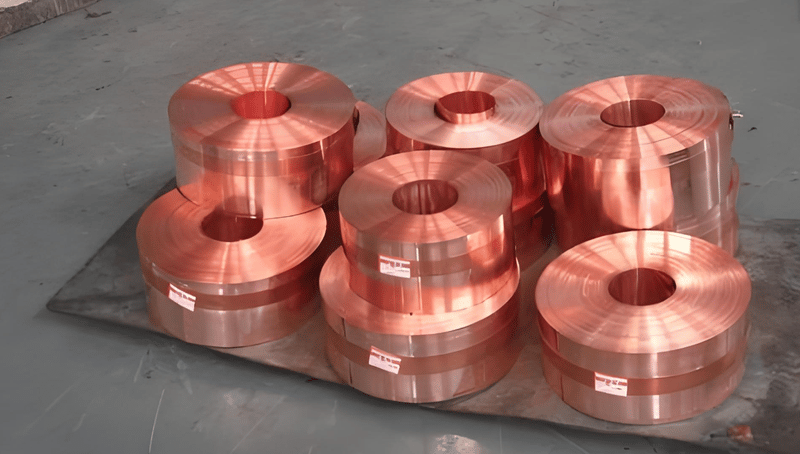
Global Copper Prices Rebound Strongly
After months of volatility, international copper prices have regained their strong upward momentum this week. The London Metal Exchange (LME) copper futures price surged to $10,289.50 per ton, with a weekly increase nearing 2.7%, poised to mark its best performance since April. Investors generally believe that a combination of unexpected supply events is quickly reinforcing the logic behind copper's price surge.
Frequent Supply Chain Disruptions
Recently, the copper market has encountered continuous unexpected supply disruptions. A serious incident at Indonesia's Grasberg copper mine led the operator to declare a force majeure, immediately causing a stir in the market. At the same time, a major concentrator in Peru halted operations, further widening the supply gap. The short interval between these events has heightened traders' concerns about the stability of future supplies.
Analysts point out that, as a key raw material for global industrial production and energy transition, copper is far more sensitive to unexpected events than other metals. Once the production chain is obstructed, prices respond rapidly.
Demand Expectations and Smelting Capacity Dynamics
While tight supply provides support for copper prices, another force is quietly building up: China's expansion of smelting capacity. In recent years, Chinese smelters have continuously increased their share in the global market, and the trend of rapid capacity expansion is pressing down smelting processing fees. This means that even if there is a shortage of raw material supply, competition at the smelting end may still create structural pressure on the overall industry chain.
Industry experts believe that the future trajectory of copper prices may be driven by a continuous tug-of-war between supply and demand forces: short-term supply risks push up prices, while the long-term expansion of smelting capacity may partially dampen this upward trend.
Views from Analysis Institutions
Fitch Solutions' BMI research team points out that the supply-side issues in the copper market have been fermenting since the beginning of the year. Analyst Olga Savvina emphasizes that if mining disruptions and logistics bottlenecks persist, the upward space for copper prices will be further released, potentially extending into 2026.
Market insiders are more cautious, reminding investors to pay attention to the subsequent performance of manufacturing data from China and Europe, particularly given the unstable global macroeconomic growth outlook. Whether the continuous rise in copper prices will be supported by the demand side remains uncertain.
Other Metals and Commodities Linkage
As copper prices rise, other metals are showing divergent trends. LME aluminum prices are moderately rising, while nickel prices are under pressure and sliding. The iron ore market also shows weakness, with futures prices in Singapore and Dalian dipping slightly. Industry insiders believe this divergence indicates a concentrated flow of funds within the metals sector, with copper becoming the preferred choice due to its unique position.
Outlook
Overall, the global copper market is at a critical stage of supply-demand imbalance. Short-term disruptions coupled with long-term investment shortages provide strong support for copper prices. However, expansion in smelting capacity and macroeconomic fluctuations may potentially weaken the upward movement in the future.
Amid a market backdrop of intertwined bullish and bearish factors, copper prices may maintain a high volatility pattern. Investors need to closely monitor mining developments, smelting capacity release pace, and economic data from major consumer countries to assess the future trajectory of the copper market.