High Official Speaks: The Federal Reserve Must Stay Free from Political Interference
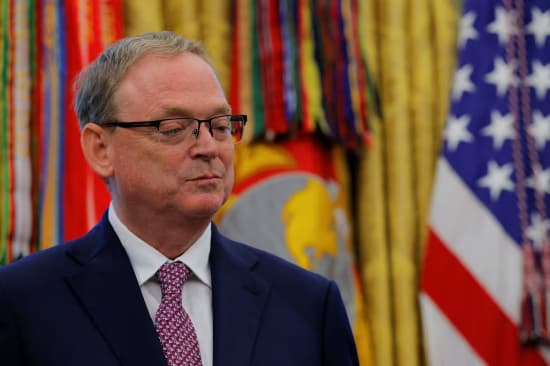
Kevin Hassett, Director of the National Economic Council at the White House, recently stated in a media interview that the monetary policy of the United States Federal Reserve should be completely independent from any political interference, including influence from the President himself. He emphasized, "I can be 100% certain that monetary policy must be independent of politics, as any compromise will lead to economic imbalance." This statement is seen by many as a public response to Trump's ongoing pressure on the Federal Reserve to cut interest rates.
Hassett also noted that numerous countries globally have experienced uncontrolled inflation and costs borne by consumers due to excessive governmental interference with central banks. He warned that the United States must avoid repeating these mistakes.
Trump's Pressure on the Federal Reserve Sparks Controversy
President Trump has repeatedly demanded that the Federal Reserve cut interest rates immediately to stimulate economic growth. However, this move has caused concerns among academia and market participants over the independence of the central bank. Federal Reserve Chair Jerome Powell has maintained a policy of high interest rates over the past year, attempting to curb inflation risks related to tariffs and other factors. Nevertheless, Trump has frequently criticized him for being slow to act and has implied potential personnel changes if policies were not to his liking.
More controversially, Trump has recently attempted to dismiss Federal Reserve Board member Lisa Cook, accusing her of misconduct in a mortgage application. Cook has filed a lawsuit, challenging the constitutionality of the President's actions, and the case is currently under judicial review. This incident has further amplified concerns about the independence of the central bank.
Federal Reserve Leadership Faces Uncertainty
Powell's term as Chair will end in May 2026, and discussions about his successor are already underway. Reportedly, the shortlist of candidates includes Hassett himself, former Federal Reserve Governor Kevin Warsh, and current Governor Christopher Waller. Observers are watching closely to see if political factors will influence future appointments.
In the interview, Hassett responded cautiously, stating that he currently has no intention of pushing for reforms to the Federal Reserve's structure, but rather focuses on his current responsibilities. However, he also acknowledged that if the Treasury proposes a plan to enhance scrutiny of the central bank's powers, he is prepared to implement it.
Subtle Dynamics between the Treasury and the White House
Recently, U.S. Treasury Secretary Scott Besant called for increased oversight of the Federal Reserve, especially regarding its interest rate decision-making powers. Hassett expressed support for this but did not reveal any specific arrangements. Analysts note this indicates a subtle shift in the White House's stance toward the central bank, recognizing its independence while seeking greater influence over its policies.
Experts Warn of Systemic Risks
Scholars and financial market experts generally believe that if the independence of the Federal Reserve is further weakened, it could undermine market confidence. New York University Economics Professor Joseph Steinberg pointed out, "Once central bank policy is subject to excessive political interference, the long-term cost is the loss of credibility in interest rates, which can damage economic stability."
Some commentators have labeled the current situation as a "stress test of the system," suggesting that the American financial system is facing unprecedented challenges.
Outlook
With Cook's legal case progressing and the Federal Reserve's September meeting approaching, the issue of central bank independence is expected to remain in focus. Although Hassett's latest statements are seen as an attempt to reassure the market, whether they will alleviate external concerns remains to be seen.