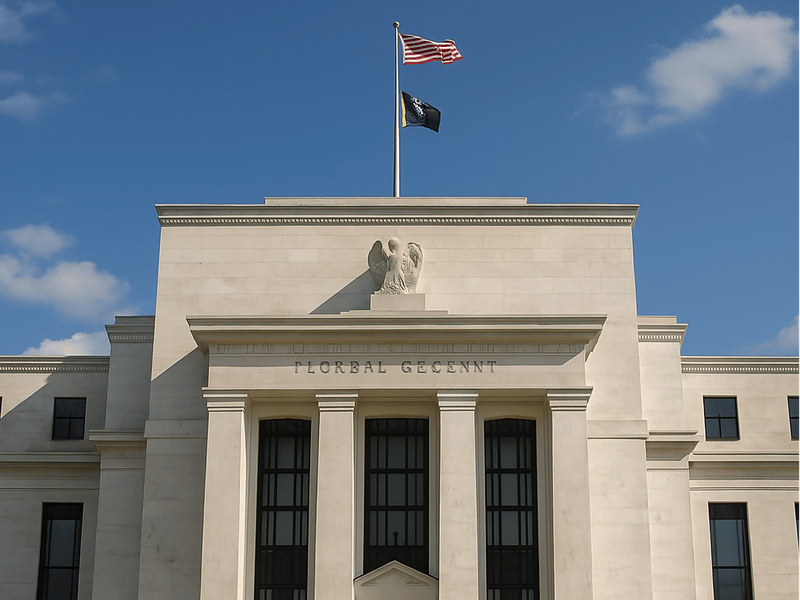
Expectations for Rate Cuts Continue to Rise
The latest data indicates a significant increase in the likelihood of the Federal Reserve taking action to cut interest rates at its October meeting. According to derivatives market trading data, investors now estimate nearly a 90% probability that the Fed will reduce the benchmark interest rate by 25 basis points in October. This is a sharp rise from previous weeks and highlights market concerns over slowing economic growth and a weakening job market.
Meanwhile, the likelihood of maintaining current rates has dropped to less than 20%, demonstrating a strong market consensus towards adopting a policy of easing. Analysts point out that although Fed officials have recently emphasized a "data-dependent" policy framework, investor trading indicates they are largely betting on imminent action from the Fed.
Year-End Policy Path Debates Intensify
Apart from the high certainty of an October rate cut, there is considerable divergence in the market regarding policy direction by year-end. Trading data shows a similarly high probability of further rate cuts by the Fed in December, with over a 60% chance of a cumulative 50 basis point reduction, while a mere 25 basis point cut is seen as about 30% likely.
This distribution reflects an internal market division: some investors believe the Fed will adopt a faster pace of easing to prevent a hard economic landing; others expect the Fed to be more cautious to avoid reigniting inflation.
Dual Challenges of Inflation and Employment
In recent months, although U.S. inflation has eased, it has not fully returned to the 2% target level. The core price index remains stubborn, and prices for some services remain high, keeping inflation risks alive. Conversely, employment market data shows a marked slowdown, with decreasing job vacancies and new job numbers.
This situation, of "slowly declining inflation and weakening employment," exacerbates the Fed's policy dilemma. Focusing too much on employment might lead to renewed price pressures, while concentrating on combating inflation could further curtail economic growth.
Market Reaction and Investor Sentiment
Amid the rapidly rising expectations for rate cuts, U.S. Treasury yields are under downward pressure, especially in short-term rates. Meanwhile, the dollar index has become more volatile, and some safe-haven funds are flowing into gold and yen, traditional defensive assets.
Analysts observe that current investor sentiment leans towards "betting ahead," even though Fed officials remain verbally cautious; they tend to believe that the policy will eventually shift towards more easing.
Data Remains Key
In the coming weeks, inflation data and employment reports will be crucial in determining the extent of the October rate cut and the year-end policy trajectory. Should economic data continue to weaken, the market's bet on more aggressive easing might strengthen further; if price trends rebound, it could compel the Fed to tighten the policy pace.
Regardless, the general market consensus is that the Fed's policy stance over the next six months will gradually shift from "watchful and tight" to "cautiously easing," a transition poised to have profound implications for global financial market asset pricing, capital flows, and risk sentiment.