

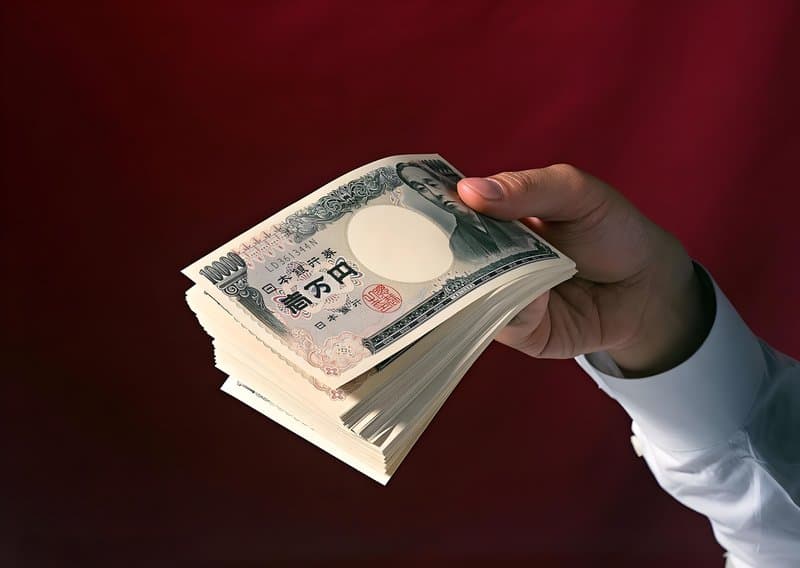
Yen Continues to Weaken, Government and Central Bank Differences Emerge
Japan's financial market is under significant pressure. As the yen continues to depreciate against the dollar, tensions in Tokyo's financial sector are rising. Recently, differences between the Japanese government and the central bank regarding currency fluctuations and inflation strategies have become apparent, raising concerns that Japan might once again face a policy deadlock.
Japanese Finance Minister Katsunobu Kato reiterated at the G7 meeting that member countries should collectively guard against "excessive volatility" in the currency market, emphasizing that stable exchange rates are crucial for Japan's economic recovery. He pointed out that the recent rapid decline of the yen has substantially impacted household spending and corporate import costs, calling for more targeted policy measures.
However, the Bank of Japan maintains a cautious stance, suggesting that although inflationary pressures are high, they are mainly driven by external factors. It warns that a hasty interest rate hike could hinder economic recovery.
Weak Machinery Orders Indicate Declining Business Investment Confidence
Recent government data shows that core machinery orders in Japan fell by 0.9% in August compared to the previous month, significantly below the market's expected 0.4% increase. As a leading indicator of future capital expenditure, this data reflects businesses' cautious approach to investment decisions amid policy uncertainty and weak external demand.
Economists point out that the decline in machinery orders not only signals weakened corporate equipment investment but also suggests that Japan's manufacturing sector may enter an adjustment period. Subsequently, the government lowered its economic assessment, stating that “recovery momentum shows signs of stagnation.”
Against this backdrop, market expectations of interest rate hikes by the Bank of Japan have increased significantly. Analysts believe that if downside economic risks expand while inflation remains high, the Bank of Japan may be forced to adjust its policy ahead of schedule to stabilize the financial and foreign exchange markets.
Political Turbulence Increases Market Uncertainty
Recent instability in Japan's political arena has become a focal point of market concern. A political vacuum, due to the reshuffling within the ruling Liberal Democratic Party, has cast doubts on new leader Sanae Takaichi's governance prospects. As the coalition partner Komeito exits the ruling alliance, progress on government policies has stalled, causing market worries that political turmoil could further impact exchange rate stability.
Analysts believe that political uncertainty is a significant factor suppressing the yen. Investors generally think that if Takaichi fails to stabilize the political situation quickly, capital outflow will continue, leading to further yen weakening.
Interwoven Rate Hike Expectations and Inflation Risks
The weakening yen has pushed up import prices, keeping inflation high. Although the Bank of Japan ended its long-term easing policy at the start of the year and raised the benchmark interest rate to 0.5%, the continuous rise in food and energy prices has generated public discontent. Some hawkish policymakers are calling for further rate hikes to mitigate price pressures and restore public confidence.
U.S. Treasury Secretary Scott Bestner previously remarked that the Bank of Japan might need to respond more actively to inflation risks. He believes that as long as monetary policy is adjusted appropriately, the yen's exchange rate will naturally return to balance.
However, interest rate hikes are not without risks. Japan's public debt level remains high, and rising interest rates could further increase fiscal spending, squeezing the government's budget space for infrastructure and public welfare.
Market Outlook: Policy Direction as a Key Variable
Overall, Japan faces an overlapping situation of political, economic, and monetary pressures. With declining machinery orders, persistent inflation, and mounting depreciation pressure on the yen, policymakers may face tough choices between stabilization and tightening.
Market analysis firm MUFG suggests that if the yen falls below the 152 threshold, the Bank of Japan may be forced to stabilize the situation through rate hikes or forex interventions. Investors broadly expect Japan to reach a new monetary policy turning point in the coming months.
What is clear is that the yen's next move will rely not only on the central bank's policy adjustments but also on whether Tokyo's political sphere can regain stability amidst the turmoil.








