Market Overview: Largest Monthly Gain Since 2001
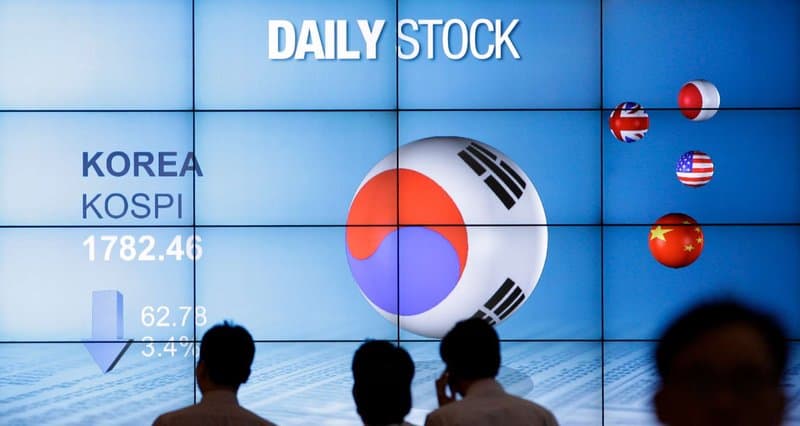
As October drew to a close, the South Korean stock market showed strong performance, with the Korea Composite Stock Price Index (KOSPI) rising by 0.75% to finish at 4,117.38 points, hitting a record high. With a monthly gain of 20%, this marked the most impressive month since January 2001. Investors' sentiment was boosted by positive signals from trade talks, the strengthening of the Korean won, and the inflow of overseas capital, driving the stock market to rise for five consecutive weeks and solidifying its leading position globally.
Sector Performance: Auto Stocks Lead, Tech Stocks Diverge
This month saw notable market rotation, with the automotive sector leading the way. Hyundai Motor surged over 8% in a single day, and Kia Motors rose more than 4%, as the US-Korea trade agreement was widely seen as a medium-term benefit for export-oriented companies. Meanwhile, the semiconductor sector showed divergence: Samsung Electronics climbed 1.3%, while SK Hynix dipped nearly 1%, indicating that tech stocks remain volatile within a high valuation range. The energy and materials sectors were stable, with LG New Energy dropping 1.9%, and steelmaker POSCO Holdings slipping slightly.
Forex and Bond Market Interaction: Korean Won Strengthens, Yields Rise
In the forex market, the Korean won appreciated by 0.42% against the US dollar, trading at 1,429 won per dollar, reaching a one-month high. Analysts noted that the won's rise reflects both capital inflows and optimistic export sentiments, yet it may face pressure from potential capital outflows in the future. At the same time, the yield on South Korea's 10-year government bond edged upwards, signaling increased investor confidence in economic recovery and suggesting a renewed demand for risk assets.
Trade Factors: Agreement Boosts Expectations but Conceals Challenges
The market generally believes that the trade agreement reached between the Trump administration and South Korea provides a short-term boost for the Seoul stock market, particularly in manufacturing and automotive exports. However, analysts caution that the investment commitments included in the agreement could lead to some capital outflows, exerting downward pressure on the won. Investors need to be wary of the challenging balance between a trade surplus and capital outflow.
Investor Behavior and Market Structure
Despite the overall index reaching a new high, foreign investors were net sellers of 341.7 billion won worth of stocks on Friday, indicating a rise in profit-taking sentiment. Market trading data shows that of 927 traded stocks, 388 gained while 465 declined, with individual stocks still showing distinct differentiation. Analysts believe that funds are rotating from high-valuation tech sectors to traditional and consumer sectors to counter potential policy and forex volatility.
Short-term Correction May Be Unavoidable
The KOSPI has climbed more than 70% this year, leading major Asian markets. The Korean won has appreciated about 3% year-to-date, further enhancing the capital market's attractiveness. Looking ahead, the market's focus will be on the details of trade policy implementation and changes in US monetary policy. Analysts generally believe that although there is a risk of profit-taking in the short term, if exports remain stable and domestic consumption continues to recover, the Korean stock market is likely to maintain a strong stance.
Overall, the recent surge in South Korean stocks is driven not only by optimistic trade expectations but also reflects South Korea's re-positioning in the global supply chain. As the year's end approaches with tighter liquidity and an increasingly volatile external environment, the market may enter a new phase of heightened fluctuations.