Jackson Hole Returns as Market Focus
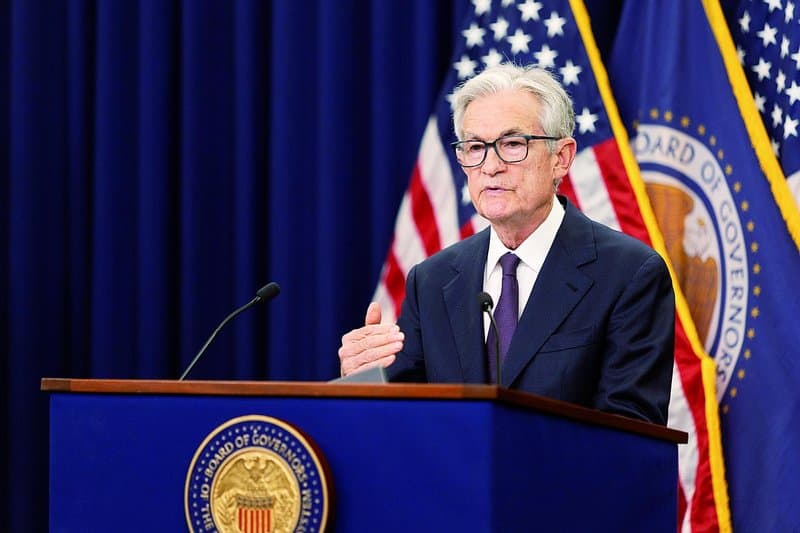
The annual global central bank meeting is about to take place in Jackson Hole, Wyoming, and the speech by Federal Reserve Chairman Powell is highly anticipated. Unlike last year's clear easing signal, the market generally believes he will choose more cautious language this year to maintain policy flexibility.
Last Year's Experience Still Fresh
Looking back at last year, Powell's speech at the same event almost set the tone for the rate cut in September. At that time, the Federal Reserve promptly reduced interest rates by 50 basis points, demonstrating its decisive action in the context of easing inflation. This speech was seen as a critical turning point from "fighting inflation" to "stabilizing growth," strengthening the market's sensitivity to the central bank's communication.
Market Has Already Bet on Rate Cuts
In recent weeks, the bond market has been almost certain that the Federal Reserve will announce a 25-basis-point rate cut in September, with some investors even betting on a more aggressive 50-basis-point adjustment. However, recent economic data presents complex signals: on the one hand, the job market remains resilient, while on the other, there is a risk of inflation rebounding. This situation has made the judgments of the market and policymakers more divided.
"Owl" Stance Becomes a Keyword
Economist Ed Yardeni pointed out that Powell might exhibit an "owl" stance—neither a strong hawk nor a complete dove, but rather a wait-and-see approach. He analyzed that if the inflation figures released before the September meeting are higher than expected and employment data also show strong momentum, the Federal Reserve may delay the rate cut pace to avoid the risk of overheating the economy due to overly loose policies.
Policy Signals Have Far-reaching Impact
The Jackson Hole meeting has traditionally been seen as a window for central bank officials to release policy directions. Whether it was Bernanke hinting at quantitative easing in 2010 or Powell foreshadowing a rate cut last year, both had a significant impact on market trends. If this year's speech leans towards caution, it may lead to a rebound in short-term Treasury yields, while keeping the dollar relatively strong. Conversely, if a dovish tone is released, risk assets may benefit.
Investors Remain Cautious
Faced with uncertainty, investment institutions are adopting a cautious attitude. Several fund managers have stated that they will not fully adjust their positions based solely on one speech, but will instead consider September's non-farm payroll data and core inflation indicators to determine the extent and pace of rate cuts. This suggests that market volatility may intensify after Powell's speech.
Political Factors Cannot Be Ignored
Furthermore, political pressure within the United States is increasing. The White House has frequently expressed dissatisfaction with high borrowing costs, and some members of Congress have called for the Federal Reserve to continue rate cuts to stimulate the economy. While Powell repeatedly emphasizes "policy independence," the political atmosphere undoubtedly adds complexity to his policy communication.
Conclusion
As the Jackson Hole meeting approaches, global financial markets are holding their breath in anticipation. Whether Powell chooses to send a clear signal or adopts an ambiguous stance, it will have a ripple effect on global asset pricing. The final decision of the September meeting will be a key moment to test his "owl-like" cautious position.