

Spanish Minority Government in Trouble
The political situation in Spain is once again turbulent. Prime Minister Pedro Sánchez's Socialist government has lost the critical support of the Catalan separatist party, Together for Catalonia (Junts). The party's grassroots members voted to withdraw support for the Socialist government in parliament, resulting in Sánchez losing the seven seats needed to maintain his governing majority.
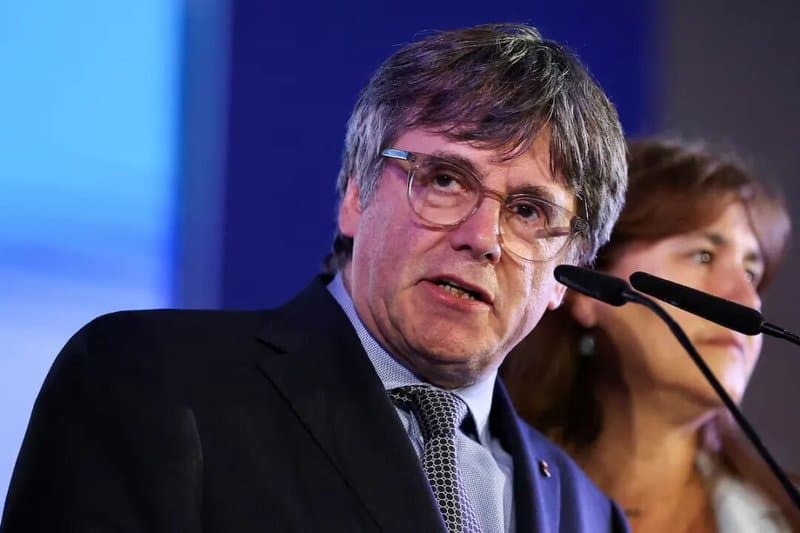
Junts leader Carles Puigdemont, the former Catalan president living in exile in Belgium, accused the government of "breaking promises" regarding political agreements on immigration devolution, official Catalan language status, and fiscal autonomy reforms. Puigdemont stated that the Socialists "have not honored even the most basic autonomy commitments," bringing the Catalan issue back to the forefront of Spanish politics.
While this withdrawal does not immediately cause the government to collapse, Sánchez will face significant obstacles in advancing any budget or reform agenda in parliament. Analysts suggest this situation could lead to a "functional paralysis" of the Spanish government. Juan Lozano, a political scientist from the Autonomous University of Madrid, noted, "Sánchez must seek new temporary alliances, or the Socialists risk early elections before the year’s end."
Opposition parties, the People's Party and the far-right Vox, have called for new national elections, accusing the Socialists of being "held hostage by Catalan nationalism." Meanwhile, internal dissent within the Socialist Party has emerged, with some members advocating for a shift in policy priorities to lessen the reliance on regional separatist forces.
Czech New Government Negotiations Take a Key Step Forward
In contrast to Spain's political fragmentation, the Czech Republic is quickly transitioning power. President Petr Pavel has officially authorized ANO party leader and former Prime Minister Andrej Babiš to form a new government, signaling a potential political shift to the right in the Czech Republic.
Babiš's ANO party secured a relative majority in this month's parliamentary elections and is negotiating a coalition government with the conservative Civic Democratic Party (ODS) and the far-right Freedom and Direct Democracy (SPD) party. If an agreement is reached, the three parties will hold a stable majority in parliament, ending the tenure of the current centrist government.
According to preliminary policy outlines, the new government is expected to implement more lenient fiscal policies, increase public investment to stimulate the economy, and reduce military aid to Ukraine. SPD leader Tomio Okamura has advocated for "prioritizing domestic issues," opposing further sovereignty transfers to the EU, and calling for a halt to some climate agreement obligations.
Despite strong Eurosceptic sentiments, senior ANO party officials have clarified that the Czech Republic will not exit the EU or NATO. Babiš himself has repeatedly emphasized during the campaign, "Czech Europe's identity is unshakable, but Brussels must respect national sovereignty and economic realities."
Europe’s Political Landscape May Be Reshaped Again
The collapse of Spain's governing coalition and the Czech Republic's political shift to the right highlight the multifaceted fragmentation of European politics. On one hand, Southern European social democrats are struggling to maintain internal cohesion; on the other, Central Europe's power landscape may be reshaped by nationalism and conservatism.
Analysts believe Spain's political instability may weaken the EU's internal consistency on fiscal and immigration issues, while the Czech Republic's new government could reduce support for Ukraine, affecting the EU's unified stance on Russia.
Martin Klein, from the European Policy Research Center, pointed out, "These two political upheavals, occurring in different countries, reflect European citizens' dissatisfaction with economic stagnation and immigration pressures. In the coming months, the political center in Europe may further shift to the right."
Europe Under Veil of Uncertainty
Whether it is the fractures in Spain's government or the change in direction of Czech politics, the message is clear: European politics is entering a more fragmented and multipolar era. Faced with economic slowdown, immigration disagreements, and geopolitical security challenges, European governments will be severely tested in their policy coordination.
As the balance of power within the EU continues to change, the political direction in the coming months could determine Europe's policy trajectory through 2026—Spain and the Czech Republic are becoming emblematic of this structural shift.








