
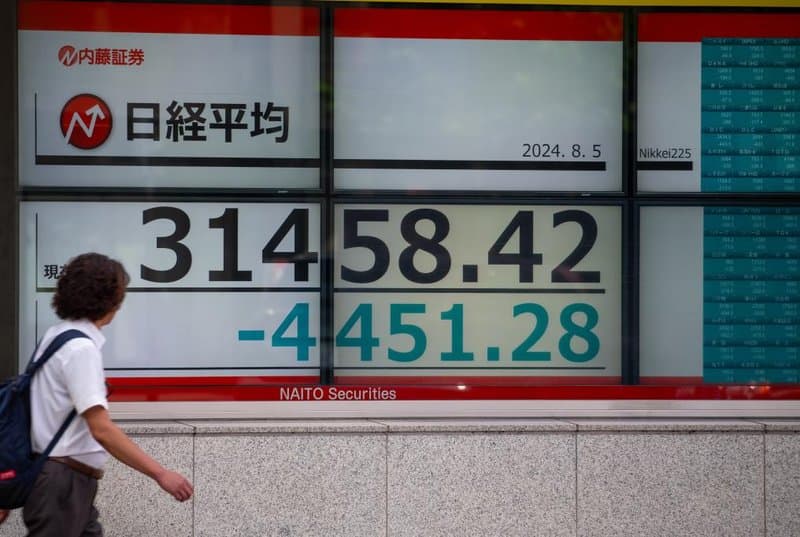
Nikkei 225 Index Reaches New Record High
On August 19, the Japanese stock market experienced a historic moment once again, with the Nikkei 225 Index rising by 0.6% to 43,628.21 points, surpassing its previous high. At the same time, the broader TOPIX Index also strengthened, gaining 0.4% to 3,120.15 points. This trend highlights the global capital's optimism about the growth potential of the Japanese market despite the turbulent international environment.
Fast Retailing Leads Market Uptrend
In this round of gains, Fast Retailing became the core driving force. As the parent company of Uniqlo, Fast Retailing's stock price increased by 1.38%, making it the primary contributor to the Nikkei Index's rise. Analysts believe that the global expansion of consumer brands and stable profitability are encouraging investors to continue increasing their stakes in related stocks.
Technology Sector Faces Pressure
Despite the strong overall index performance, technology stocks dragged on the market. Shares of SoftBank Group and Sony Group both fell by 0.42%. Market participants pointed out that the volatility in the technology sector is closely related to global monetary policy trends. Investors are adopting a wait-and-see attitude toward further statements from the Federal Reserve, which is curbing enthusiasm for high-risk assets in the short term.
Global Market Contrast
In contrast to the strength of the Japanese stock market, the U.S. market exhibited more division. The Dow Jones Index continued to rise mildly after hitting an intraday high last week, buoyed by a significant increase in UnitedHealth Group's stock price, which attracted attention due to Berkshire Hathaway's increased stake. However, the S&P 500 Index and Nasdaq Index both saw varying degrees of decline due to macroeconomic data. Analysts state that the divergent performance of U.S. stocks reflects market uncertainty about the outlook for Federal Reserve monetary policy.
Investor Sentiment and Policy Connection
The market widely believes that the strength of the Japanese stock market reflects not only the steady earnings of companies but also the continuation of the Bank of Japan's accommodative policy. Against the backdrop of significant uncertainty in the monetary policies of major global economies, funds are flowing into the Japanese market seeking relative stability, driving the continued rise in the index. Meanwhile, U.S. tariff policies and fluctuating inflation expectations are making investors more cautious, reinforcing the differentiated performance between U.S. and Japanese stock markets.
Consumption and Export Drive
In addition to Fast Retailing, Japan's export-related companies are also under attention. With increasing fluctuations in the yen exchange rate, some export-oriented companies are expected to improve earnings. This background is redirecting investor focus to the manufacturing sector, though the short-term pressure on technology companies may limit the overall sector's upward potential.
Uncertainty in Future Outlook
Analysts believe that the Nikkei Index may maintain high levels of fluctuation in the short term, but whether it can continue to break through will depend on global macroeconomic signals and corporate performance. In particular, the Federal Reserve's policy direction in the coming weeks will have a decisive impact on global capital flows and investor risk preferences.
Conclusion
The Nikkei 225 Index reaching a new historical high injects strong confidence into the Japanese stock market. Fast Retailing is a major driving force, while technology stocks have dragged down some of the gains. The contrasting global market trends are becoming increasingly evident, and while investors chase opportunities in the Japanese market, they must also remain alert to potential risks from the external environment.









