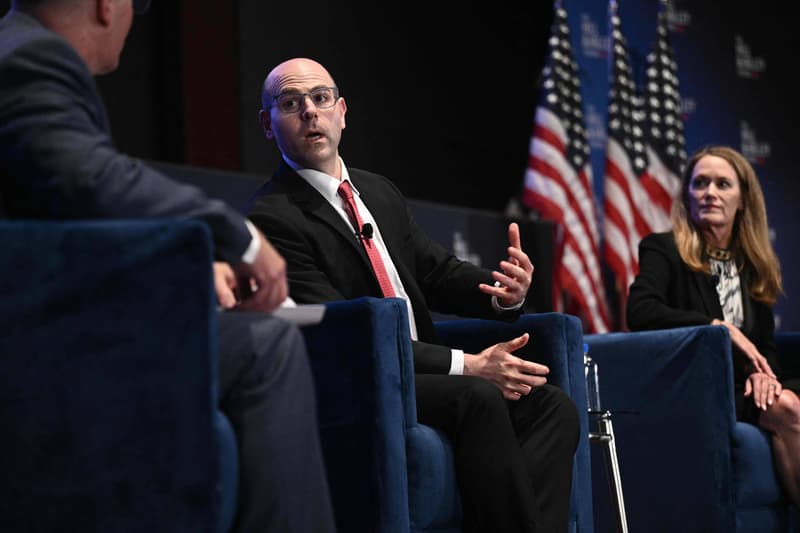
Milan Increases Its Dovish Stance: Advocates for "Larger Steps"
In a recent interview, Federal Reserve Governor Stephen Milan stated that the current monetary policy remains in a "clearly restrictive" zone and expressed his support for an exceptionally large rate cut. He believes that the neutral rate is far below the current policy rate and is more confident about medium-term inflation falling than most committee members, thus finding no reason to maintain a "suppressive" policy stance. In the past two interest rate meetings, Milan voted against a 25 basis point rate cut, instead advocating for a 50 basis point reduction to more swiftly alleviate the constraints of rates on the real economy.
Outlook for Rates Changes: Ease Expectations Shift to "Data Dependency"
Although subsequent meetings have steadily lowered the policy rate to the 3.75%-4.00% range, Chairman Powell has explicitly stated that the actions in December are not "set in stone." This means forward guidance returns to a data-dependent framework: if inflation stickiness and employment resilience are higher than expected, the pace of rate cuts may slow; if the labor market and demand cool more quickly, the threshold for further easing will decrease. Against this background, Milan's statement highlights the debate over the path—whether to rapidly adjust financial conditions with "big steps" or to take "small steps" to guard against inflation resurgence.
Credit Market Warning: Tightening Spillover Effects Gradually Emerge
Milan points to the credit ecosystem in his latest argument. He says that recent widespread financing frictions, defaults, and refinancing difficulties are not isolated noise but a reflection of the cumulative effects of tightening policies. "The apparent unrelated credit issues being exposed indicate that the policy stance is too tight." In his framework, larger cuts and faster pace can alleviate pressure in interest-sensitive sectors, preventing credit fissures from expanding into systemic breaches.
Deepening "Hawk-Dove" Divide: Weighing Inflation and Employment Becomes More Difficult
In contrast to Milan's proposition, some officials emphasize inflation remains above the 2% target, and signs of financial conditions loosening are apparent, worried that overly rapid rate cuts could trigger a rebound in price pressures. Some voting members propose a "wait-and-see" moderate stance, awaiting more confirmation signals from the labor market and inflation. The growing gap in views reflects differing judgments on the economic landing form: whether it is a "gentle cooling" amidst a continued slowdown or closer to a "demand chill" downturn.
Questioning Independence and Policy Credibility: Another Front in Public Opinion
Discussions about Milan's career shift have not subsided—his transition from the White House economic advisory system to the Fed has resulted in some questioning his independence. Milan responds that monetary policy must be based on data and mandates, and the longer the delay remains in the "restrictive zone," the higher the risk of policy-induced economic downturns. Regardless of stance, debates around independence will continue to affect the market's interpretation and trust in forward guidance.
Market Pricing and Risk Indications: Focusing on Three Main Lines
First, watch the stickiness of inflation and the rate of decline in core service inflation; second, see if employment and wage growth continue to cool to reduce the risk of secondary inflation; third, watch the credit spreads and banks' lending willingness to identify if financial conditions are truly tightening. If data indicates faster demand cooling and marginal deterioration of credit, support for Milan's "large rate cuts" may rise; conversely, inflation resilience and strengthening of risk assets will suppress the easing pace.
Path Debate Determines Pace, Not Direction
In the short term, the ongoing internal Fed debate over "how much to cut, when to cut" will continue to influence asset prices. In the medium term, the direction still hinges on the certainty of inflation's decline and the extent of employment slowing. Milan's aggressive position prompts the market to reassess the "steepness" of the interest rate decline curve; meanwhile, broader policy consensus still needs data to provide answers.