U.S. Capital Increases Investment in Japan as Enthusiasm Grows
According to the latest report from Goldman Sachs, American investors are pouring large amounts into the Japanese stock market, with a particular focus on technology and artificial intelligence (AI) sectors. This trend indicates that global capital is gradually shifting from the high-valuation U.S. markets to Japan's more resilient market.
Goldman's chief Japan equity strategist, Bruce Kirk, noted that American investor interest in Japanese stocks has reached its highest level since October 2022. He emphasized, "The influx of U.S. capital is growing at the fastest pace since Abenomics," and revealed that there has been a significant increase in communication with North American institutional investors recently.
Growing Attraction of the Japanese Stock Market
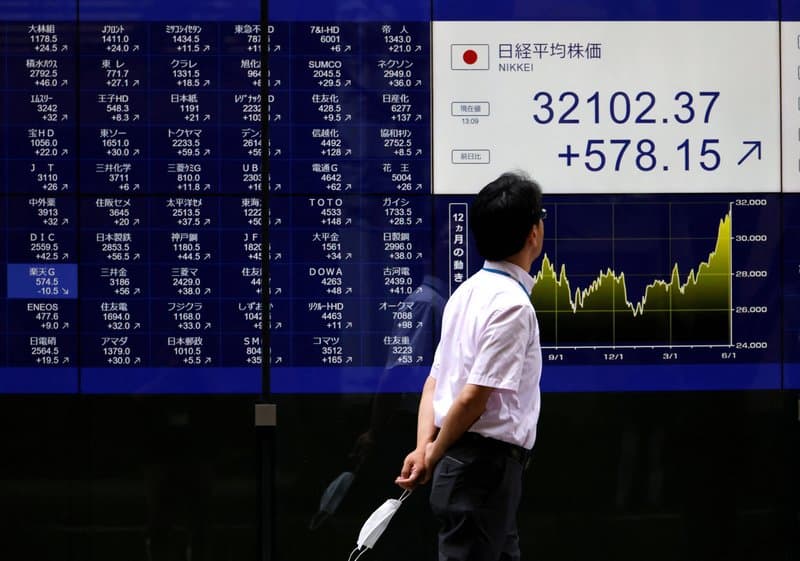
The Japanese stock market has performed remarkably well this year, becoming one of the regions with the highest return rates among major global markets. In dollar terms, the Nikkei 225 index has risen approximately 30% since the beginning of the year, nearly double the gain of the S&P 500 index.
Goldman Sachs analysts attribute the strong performance of the Japanese stock market to three main factors:
First, the appreciation of the yen has brought foreign exchange gains, rising about 2.5% this year;
Second, increased policy support, with Prime Minister Sanae Takaichi’s stimulus plan boosting corporate earnings expectations;
Third, the rise of the AI and semiconductor industry chain has made Japan's technology sector a new focus for capital pursuits.
Kirk believes, "In the context of global asset allocation becoming more diversified, the Japanese market is regaining favor with international investors." He noted that compared to the Abenomics era, the proportion of foreign-held positions remains low, leaving ample room for future capital inflows.
Capital Flows: U.S. Capital Focused on Technology and Manufacturing
Data released by the Japan Exchange Group (JPX) shows that in just the last two weeks of October, foreign investors made net purchases of approximately 384 billion yen (about 2.5 billion dollars) in Japanese stocks and futures combined. U.S. institutional funds dominated, primarily focusing on technology manufacturing, electronic components, and AI application-related companies.
Market observers note that American investors are reassessing the valuation advantages of Japanese technology companies. Compared to U.S. tech stocks, the price-to-earnings ratios of Japanese listed companies are generally lower, and the rapid development of the AI industry chain is narrowing the technological gap. Semiconductor suppliers and robotics manufacturers in Tokyo, Nagoya, and other areas have become key targets for capital allocation.
An analyst at a Tokyo investment bank stated, "As Japanese companies accelerate their digital and AI investments, global investors see that their potential for profit growth has not yet been fully priced into the market."
Risks and Adjustments: Goldman Sachs Warns of Possible Short-term Market Consolidation
Despite the surge in investment enthusiasm, Goldman Sachs still cautions investors about the risk of short-term volatility. Kirk pointed out that at the end of October, the Nikkei index had entered a technically overbought area, with some sectors facing pressure for a pullback. "After continuous gains, market consolidation is reasonable, but the overall trend remains positive."
Goldman Sachs predicts that if the Bank of Japan maintains a loose monetary environment along with fiscal stimulus, the inflow of foreign capital is likely to continue until the first half of next year. Especially with the increasing expectation of a U.S. interest rate cut, the relative yield advantage of yen assets is expected to expand further.
Japan Reclaims Its Place on the Global Investment Map
Industry insiders widely believe that the Japanese stock market is recovering from a prolonged slump and regaining confidence among international capital. Unlike in the past, this round of gains is driven by structural reform and industrial upgrades rather than mere monetary easing.
Professor Masayoshi Nakamura from the University of Tokyo's Economic Research Institute stated, "The current Japanese economy is at a structural turning point. Corporate governance reform, share buybacks, and the rise of the AI industry are shifting the Japanese market from a 'low valuation trap' to a 'value re-evaluation' stage."
Overall, the inflow of American capital reflects not only U.S. investors’ recognition of Japan's economic fundamentals but also symbolizes a rebalancing of global capital flows. As the degree of internationalization of the Japanese stock market increases, its weight in global investment portfolios is likely to rise further, making it a new core growth point in the Asian capital markets.