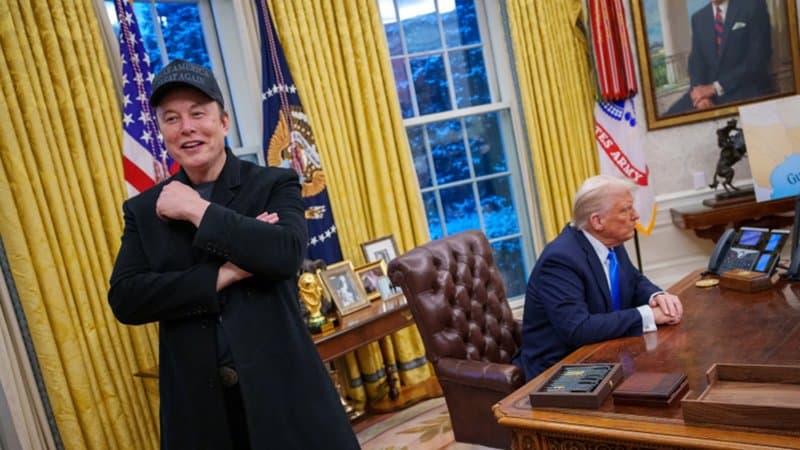
Musk's Request to Remain in White House Position Denied
According to two insiders, American billionaire Elon Musk attempted to extend his term as a "Special Government Employee" in the Trump administration but was denied. Previously, Musk briefly led the "Office of Government Efficiency," responsible for federal budget cuts and reforms, with a term of 130 days.
Last week, Trump held a farewell ceremony at the White House for Musk, announcing his departure. However, it is said that Musk initially wanted to remain in order to push forward with his proposal to cut $1 trillion from the federal budget. The White House, though, explicitly rejected his request.
Criticism of the "Big and Beautiful" Act After Departure
After being denied, Musk took to social media platform X for two consecutive days to fiercely criticize the "Big and Beautiful" tax and fiscal spending bill promoted by the Trump administration. He described the bill as "disgusting" and urged the public to call their congressional representatives to "kill this bill" to prevent America from going "bankrupt."
Musk's comments sent shockwaves through Washington politics, not only intensifying public doubt about the bill but also causing divisions within Trump's camp. Republican Congresswoman Marjorie Taylor Greene publicly opposed the bill, demonstrating that Musk's influence has not waned.
Debate Over Budget Deficit Impact of the Bill
On the 4th, the Congressional Budget Office (CBO) released a report indicating that the "Big and Beautiful" bill will reduce tax revenue by $3.7 trillion over the next decade and increase the U.S. fiscal deficit by $2.4 trillion. While the bill aims to boost the economy, cut taxes, and stimulate spending, its potential impact on the deficit has become a point of controversy.
Business Interests Could Be the Underlying Motivation
Trump allies familiar with the situation believe Musk's anger is closely tied to his personal business interests. On one hand, the "Big and Beautiful" bill reduces the tax credit policy for electric vehicles, directly affecting Tesla's market interests; on the other hand, Musk has repeatedly suggested that the government procure his "Starlink" satellite system for use by the Federal Aviation Administration (FAA), but this has yet to be adopted.
Moreover, Trump last week also withdrew the nomination of Musk ally, billionaire Jared Isaacman, for NASA administrator, further deepening the rift between Musk and the government.
Growing Divisions May Affect Tesla
American media Axios analyzed that the rift between Musk and the Trump administration spans at least four areas: electric vehicle policy, procurement of aerial communication systems, NASA personnel nominations, and Musk's own position at the White House. These events suggest that the once-close billionaires are gradually parting ways.
Currently, Musk is confronted with the pressure of declining Tesla sales as well as challenges at the policy level. The public confrontation with the Trump administration might impact his further positioning in America's political and business arenas. Whether Musk will continue to pressure the government using public platforms or seek new political allies remains to be seen.