ZOZOTRADE positions itself as a "Web3.0 Cryptocurrency Trading Platform," offering spot and perpetual contracts for trading pairs such as BTC/USDT and emphasizes attractions like "AI Trading Tools" and "Quantitative Strategies." Many people, upon first visiting the website, might be misled by its comprehensive interface, thinking it's a normal and mature trading platform.
However, this article emphasizes that when you set aside how "user-friendly" the interface is and look at more critical aspects—regulatory compliance, company and team information, fee and risk control disclosure, traffic and user scale authenticity, contact and dispute resolution channels—you'll discover numerous risk signals. This piece will use public information and simple self-check methods to explain why I do not recommend anyone deposit funds into ZOZOTRADE.
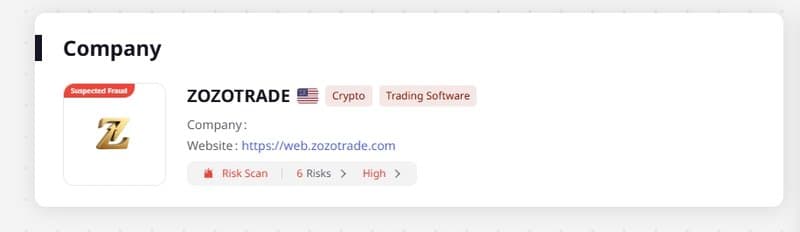
It presents itself as "Web3 + AI + Contracts," but its "credibility foundation" is thin
ZOZOTRADE's external narrative is quite typical:
- Geared towards the Web3.0 era
- Focuses on contract trading
- Augments with AI trading tools
- Includes "chosen by millions" type language
The problem is: The more grandiose the narrative, the more robust transparency is needed to support it. But the deeper you look, the more you find it being evasive in places where disclosure is most needed.
The “professional” first impression can easily make one drop their guard
The ZOZOTRADE trading page is not crude:
- Available on both web and mobile
- Complete with features like K-line cycles, technical indicators, order book depth, and transaction details
- Order logic aligns with common exchange practices (market/limit orders, long/short directions)
This is also a common trait among many high-risk platforms: Looking like an exchange ≠ Being a trustworthy exchange.
True security is never determined by the interface, but by regulatory compliance, fund whereabouts, transparency of risk control parameters, and dispute resolution mechanism.
High-risk signals concerning ZOZOTRADE
Domain lifecycle is too short, yet it loves to narrate "grand stories"
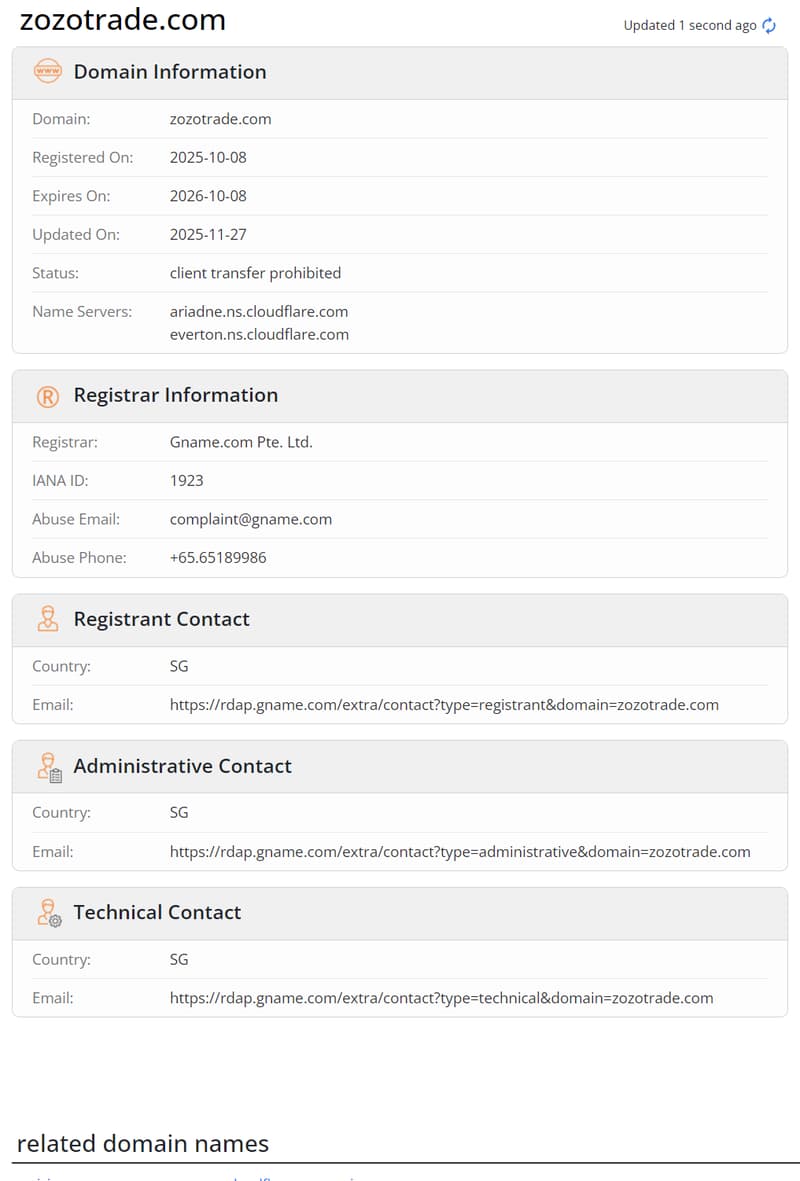
Public Whois information shows its domain zozotrade.com was registered on 2025-10-08 and updated on 2025-11-27, indicating a very recent launch.
A new platform is not inherently bad, but "new + grand slogans + opaque background" is a typical risk combination.
You could think of it like: a newly opened store boasting "global chain, millions of customers" at the entrance, your immediate reaction should be—Where’s the evidence?
Emphasizes MSB registration, but it's not an "exchange compliance passport"
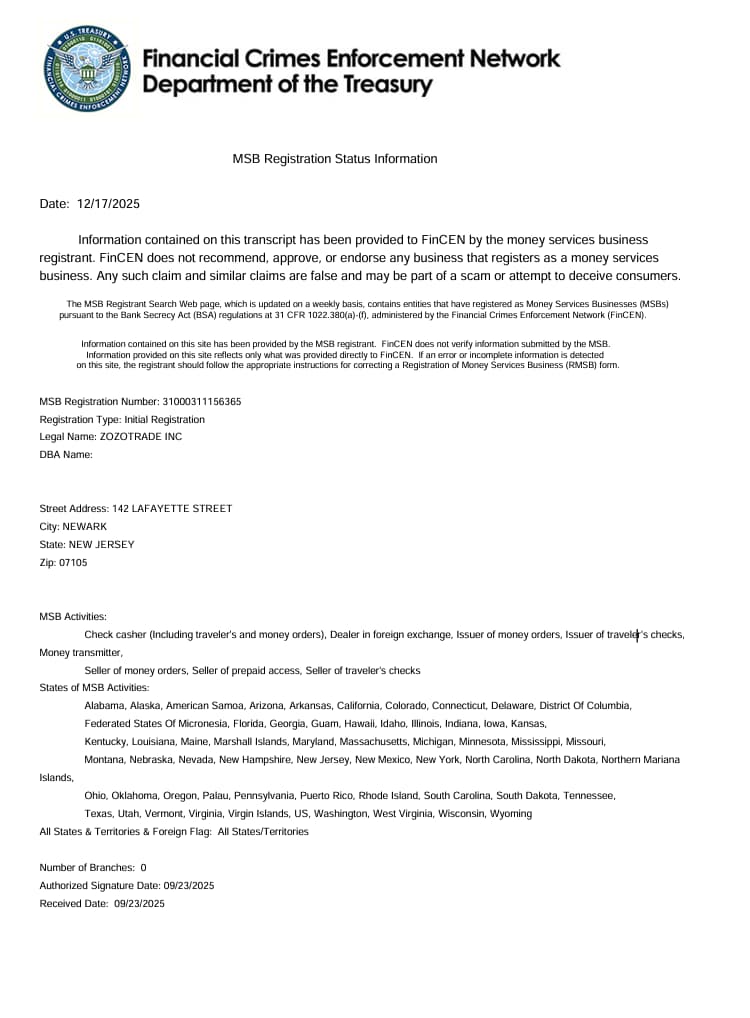
Many platforms flaunt "MSB," giving an impression of "U.S. regulatory certification."
However, in essence, MSB mainly pertains to anti-money laundering registration (AML/CFT) and does not equate to comprehensive regulation and endorsement of the trading platform's business model, investor protection, or trade risks.
More crucially: Available records indicate it cannot be found in the SEC (U.S. Securities and Exchange Commission) registry.
This means, if it implies having a higher level of regulatory credentials in its promotions, it could potentially be misleading.
Simply put: "Registered" does not mean "approved," nor does it mean "your funds are protected."
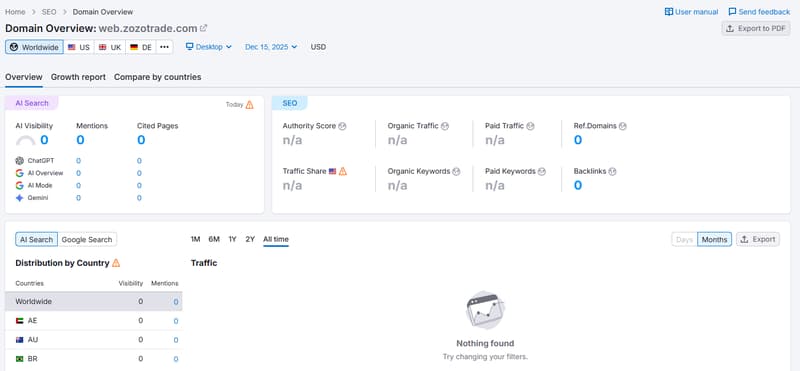
Near-zero website traffic, yet claims "global large-scale users"
Third-party tools show its website's average monthly traffic is close to 0.
This creates a stark contrast to claims of "global users" and "chosen by millions."
This commonly appears in two scenarios:
1) Marketing exaggeration (at the very least, dishonest)
2) Platforms with very few actual users, weak ecosystems, once issues arise, even finding fellow sufferers becomes difficult
Insufficient information disclosure, especially concerning fees, risk control, and account systems
Materials indicate: registration, trading, and risk control information disclosure is lacking; fee structure transparency is also low.
Moreover, on the contract page, leverage multiple, liquidation price, and maintenance margin rate are not intuitively presented.
Contract trading isn't a game.
If a platform is evasive in areas of "risk/fees/rules," user losses often stem not from market volatility, but from unclear rules.
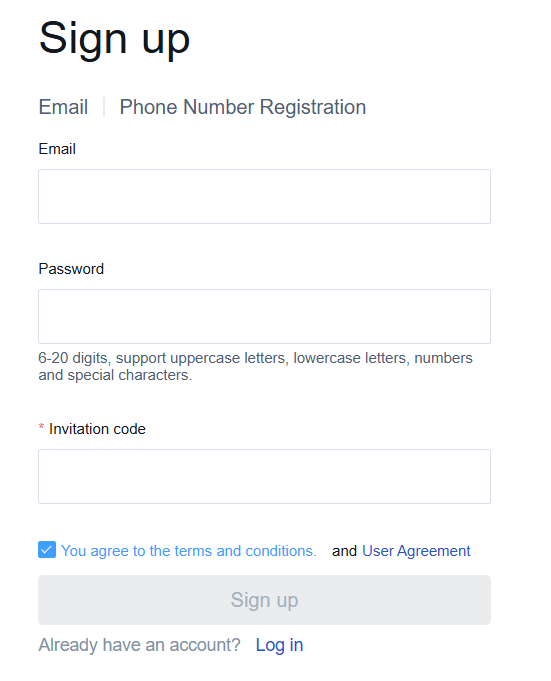
Invitation-only registration + lack of compliance hints at a "closed funnel for acquiring new users"
Registration requires an invitation code as a mandatory field, lacking clear restrictions by region, risk warnings, or suitability explanations in the process.
This design frequently appears in "member-pulling" promotional models: initially filtering people through invitation links, then converting them via rhetoric and communities.
This isn’t to say "invitation code = fraud," but if a platform simultaneously has:
- Mandatory invitation code
- Lack of clear regulatory/entity/team info
- Single contact method
It becomes difficult not to associate it with "if something goes wrong, you can't find anyone."
Single contact method, lack of social media presence, making it hard for outsiders to track
Currently, only a customer service email is visible externally: [email protected].
No phone, no clear office address, no actively maintained mainstream social media matrix like Twitter/Telegram.
Common sense in the cryptocurrency industry is: Platforms truly looking to build a long-term brand usually maintain open communication channels.
If you cannot see their public updates, announcement records, or team presence, it also means judging:
Is the platform still operational? Are they changing rules? Are they delaying withdrawals?
If you have already engaged with ZOZOTRADE, here are three self-check steps you might consider
These three steps require no technical skills, yet can directly filter out many "packaged platforms":
- Verify the authenticity and consistency of MSB registration information
Go to FinCEN's MSB search portal, search for "ZOZOTRADE," and compare whether names, addresses, statuses, and effective periods are consistent.
(Note: Consistency ≠ safety, it only indicates "registration exists.") - Check Whois: domain registration time, update records, active period
Domains that are too new, frequently updated, with registration information suspiciously hidden, are common traits of crypto scam platforms.
At this point, the conclusion already becomes clear: In the context of publicly verifiable information, ZOZOTRADE presents several risk signals that are poorly coordinated or insufficiently disclosed—from platform background and regulatory expressions, to domain and operational sedimentation, to the match between traffic and promotional statements, and finally to fees, risk control details, communication channels, and accountability—all lacking the transparency and trustworthiness expected of a mature trading platform. Though it might mimic "the appearance of an exchange," appearances are never a testament to safety.
For every investor, the most important thing is not "whether you can make money," but "in case of problems, can you find someone and recover your funds." Before you decide to deposit funds, please exercise restraint: conduct basic due diligence, verify regulatory and entity information, read the rules and fees thoroughly, assess the platform's real operations and user feedback, then decide whether to participate. The safety of funds always comes first—be cautious before depositing, thoroughly investigate before making a choice.
Disclaimer: This article is compiled based on user-provided materials and publicly verifiable information, representing a risk warning and experience sharing, not constituting investment advice or legal conclusions. If the platform believes content is incorrect, it can offer verifiable materials (regulatory permits, entity information, audit proofs, fund custody, and risk control parameter disclosures) for public clarification and amendment.