

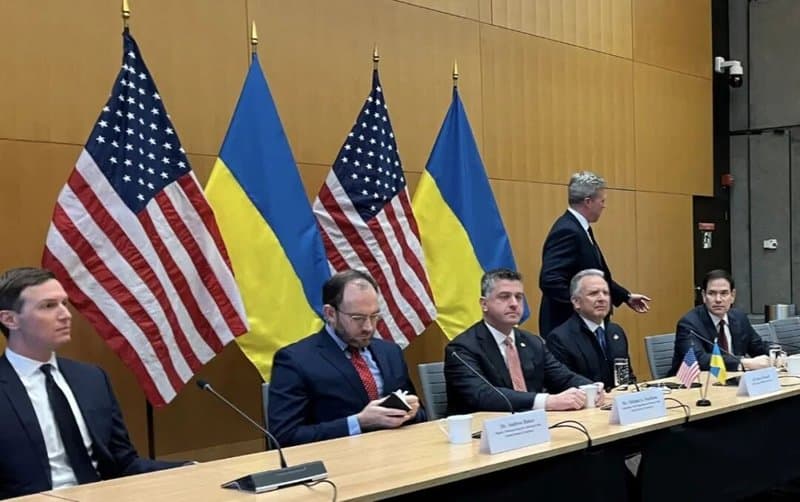
"New Common Text" Emerges After Intense US-Ukraine Consultations
The new round of talks between the United States and Ukraine in Geneva has made significant progress, providing new momentum for the long-stalled peace efforts. After several days of coordination, both sides developed a revised draft of the peace framework based on previously contentious clauses. The framework is described as "closer to both parties' interests," though the specific contents have not been fully disclosed.
Multiple diplomatic sources revealed that the proposal previously put forward by the United States was criticized by Ukraine and several European countries as "overly leaning towards Russia," with some clauses even causing strong unease among allies. In the latest version, the text was reportedly extensively revised to reflect Ukraine's core concerns regarding territory, security assurances, and post-war reconstruction.
While US President Trump stated that the negotiations had made "significant progress," Ukrainian President Zelensky remained cautiously optimistic. He emphasized that any agreement must enhance Ukraine's overall position on both the battlefield and diplomatically and should not force unilateral concessions. The European Union, meanwhile, continues to insist on a "ceasefire first, territory pending" approach and has proposed an alternative draft led by Europe, further complicating the negotiation process.
Ceasefire in Gaza Holds, but Tensions Continue to Rise
The situation in the Gaza Strip has tightened again after a brief lull. Although major hostilities have subsided, border conflicts occur frequently, with the latest incidents involving Israeli forces killing several Palestinians, raising concerns that the ceasefire mechanism may not hold.
Current negotiations revolve around a 20-point peace plan endorsed by the United Nations Security Council, which includes the establishment of international monitoring structures and the formation of a temporary governing body. The composition and mandate of the peace committee and international security forces remain the toughest points in the negotiations.
Israel insists that any international force must take strong measures against Hamas, while Hamas demands that international powers "prioritize civilian protection." Given the divergent positions, a Palestinian official involved in the consultations admitted there is "little sign of consensus on the implementation mechanism."
Analysts believe that in the short term, the Gaza peace process is unlikely to achieve a breakthrough, and the situation is expected to oscillate between tension and ceasefire.
US-Venezuela Relations Deteriorate Rapidly, Sanctions Escalation Raises Regional Concerns
In the Western Hemisphere, the Venezuelan situation has once again become a focal point. The United States has recently designated Venezuela's "Sol Group" as a foreign terrorist organization and imposed new sanctions on several high-ranking officials, accusing them of participating in large-scale drug trafficking.
The Venezuelan government immediately retaliated, accusing the United States of attempting to create a pretext for intervention through "fabricated accusations." Although this designation does not imminently suggest military action by the US, the international community widely fears that tensions between the two countries could escalate further, potentially destabilizing regional security.
Numerous Latin American experts point out that this US move could trigger a chain reaction affecting Venezuela's energy market, regional refugee flows, and the political climate in neighboring countries, further complicating the regional situation.
Multiple Concurrent Tensions Significantly Increase Global Diplomatic Pressure
From Eastern Europe to the Middle East and Latin America, the slight progress in US-Ukraine talks, the fragile ceasefire in Gaza, and the escalating sanctions on Venezuela collectively represent multiple geopolitical risk points globally. Diplomatic analysts believe that any sudden changes in these regions could quickly impact energy, food supply chains, and global financial markets.
As the end of the year approaches, the countries involved and international organizations are under increasing diplomatic and political pressure, and the coming weeks may become critical junctures for the direction of the situation in many regions.








