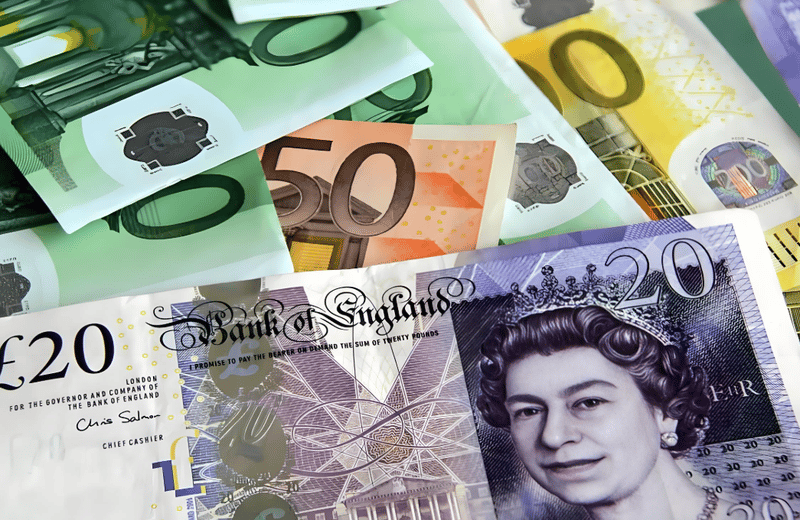
Pound Suppressed by Multiple Uncertainties
On Monday, the GBP/USD hovered around 1.3350, maintaining a weak and volatile pattern. Although the dollar is slightly firm due to safe-haven demand, market focus is shifting to the combined impact of the UK's domestic fiscal outlook and international trade risks. Investors broadly believe that tightening UK fiscal policy and external trade tensions are the main obstacles to a sterling rebound.
Last week, U.S. President Trump threatened to impose a 100% tariff on imports from Asian countries starting November 1, which heightened concerns about global supply chain disruptions. The rise in risk aversion pushed the dollar index to remain strong, but it also fueled expectations of a global economic slowdown.
London forex strategist Stephen Innes noted, “The dollar's resilience isn't from economic fundamentals, but from a safe-haven mentality. In contrast, the internal challenges facing the pound are more structural.”
Concerns Over UK's Fiscal Policy Outlook
Uncertainty in the UK's fiscal policy is becoming a new source of pressure for the pound. Chancellor Rachel Reeves is expected to announce a new round of tax hikes in the November autumn budget statement to address the growing fiscal deficit. The market generally believes that fiscal tightening could further weaken domestic consumption and business investment confidence, affecting the economic recovery process.
A London macro research institution pointed out that the UK economy is facing a "double squeeze"—fiscal tightening and weak demand. The report warned: “If the government raises personal and corporate tax rates again, the pound may continue its weak trend into the fourth quarter.”
Meanwhile, UK government bond yields have risen slightly last week, indicating that investors' concerns about fiscal risks are gradually being reflected in market pricing.
Investors Focus on Bank of England's Statement
Besides fiscal risks, the market is also closely watching the Bank of England's policy stance. External member Catherine Mann will speak this week, and investors are looking for clearer signals on inflation prospects and policy paths.
Recent data shows that while UK inflation has fallen from the start of the year, it still exceeds the central bank's 2% target. Mann has repeatedly emphasized that loosening monetary policy too soon could reignite price pressures. If she reiterates a hawkish stance during her speech, the pound might get short-term support; however, if she hints that a monetary easing cycle is near, it could trigger further selling.
Additionally, the UK will release employment data for the three months ending in August. The market widely expects a slight rise in unemployment and a slowdown in wage growth. If the labor market shows signs of weakness, it could reinforce expectations of an economic slowdown, thereby weakening the pound.
Technical Analysis Shows Short-Term Bearish Trend for Pound
From a technical perspective, the GBP/USD has fallen from last week's high of 1.3450 and is now oscillating in the 1.3340 to 1.3350 range. The exchange rate has fallen below the 20-day moving average, indicating a short-term bearish technical trend. The relative strength index (RSI) hovers around 46, showing a lack of market momentum.
If the exchange rate breaks below the 1.3310 support level, it may further test the 1.3260 level; conversely, if it stabilizes at 1.3390, it might trigger a short-term rebound, with resistance at 1.3440. Overall, the exchange rate remains constrained by policy and fundamental pressures, with limited rebound space.