
Meeting Background and Main Topics
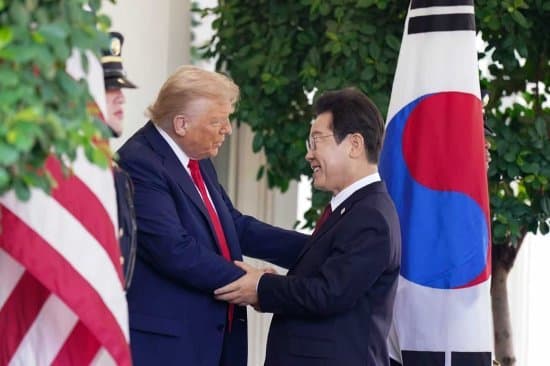
On Monday local time, South Korean President Lee Jae-myung arrived in Washington for his first in-person official meeting with U.S. President Trump. One of the main focuses of this visit was South Korea's hopes to push for adjustments in tariff terms. However, after the meeting, Trump made it clear that the existing 15% tariff agreement between the U.S. and South Korea would remain unchanged and would not be amended through negotiation.
Lee Jae-myung attempted to foster closer ties through positive interaction and goodwill gestures, including emphasizing the joint interests in collective security and South Korea's potential in the shipbuilding industry and U.S. investments. Although the meeting had a rather relaxed atmosphere, no breakthroughs were made on the critical tariff issue.
Trump's Firm Stance
After the talks, Trump told the media that the U.S. would continue enforcing the existing agreement and asserted, "We stand by our views, and they will honor the previously reached agreement." This statement clearly indicated Washington's unwillingness to relent on trade policies.
Earlier, Trump even questioned the stability of South Korea's political situation on social media, suggesting it "might be undergoing a purge or revolution," implying that this could hinder bilateral cooperation. Such publicly sharp comments initially raised concerns that the talks might break down, but ultimately, the meeting concluded in a pragmatic atmosphere.
Charm Offensive Does Not Change Tariff Deadlock
Facing a tough stance, Lee Jae-myung engaged in a "charm offensive" during the meeting, praising Trump's achievements in the stock market, decoration, and peace initiatives, even suggesting the possibility of establishing a commemorative building in Trump's name if regional tensions were resolved. However, these gestures did not sway Trump’s stance on the tariff issue.
Lee Jae-myung hoped to gain more flexibility by emphasizing cooperation and investment. He highlighted that South Korean companies plan to announce approximately $150 billion in U.S. investment in the future, covering manufacturing, shipbuilding, and technology sectors as a show of goodwill.
Shipbuilding Industry Becomes a Highlight of Cooperation
Although the tariff deadlock persists, both parties reached a consensus on cooperation in the shipbuilding industry. Trump promised to purchase ships from South Korea in the future and expressed support for introducing South Korean shipbuilding into the U.S., creating jobs for American workers. Lee Jae-myung acknowledged this move, stating that it would help deepen cooperation on the industrial chain level.
Analysts believe that such cooperation is more symbolic than beneficial in practical terms, but it at least injects positive signals into bilateral relations, providing a relatively positive topic amidst tense tariff discussions.
Market and Political Impact
The news of the fruitless tariff negotiations quickly spread in the market, leading to concerns that future U.S.-South Korea economic relations might not be on a smooth track. Domestic public opinion in South Korea also expressed dissatisfaction with Trump's social media comments, deeming his description of South Korea's political situation as exaggerated or even inaccurate, potentially harming Seoul's international image.
Meanwhile, Trump's firm stance is also viewed as part of his campaign style—under the framework of "America First," he rarely shows compromise on trade issues. For Lee Jae-myung, this visit, despite showcasing diplomatic flexibility, failed to influence tariff policy, reflecting the limited negotiating space South Korea has in U.S.-Korea economic matters.
Outlook
Although progress on the tariff issue was not achieved during this meeting, interactions on shipbuilding cooperation and investment commitments still leave a positive foundation for future relations. Analysts point out that the future direction of U.S.-Korea economic relations may hinge on the Trump administration's overall orientation in trade and industrial policies and whether South Korea can gain more bargaining power through expanded investment.
Overall, this U.S. visit was more of a symbolic engagement, highlighting the complex interplay of political and economic issues between the U.S. and South Korea, and showing that under the "America First" policy, allies find it difficult to secure concessions on key trade issues.









