Different Voices Within the Republican Party
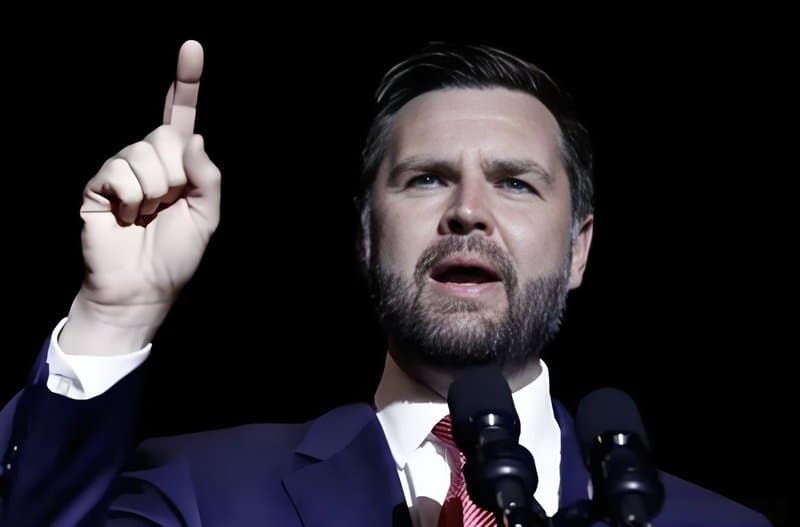
Recently, the Republican Party in the United States has shown clear division over the independence of the Federal Reserve. Vice President JD Vance emphasized that the President should have greater influence over monetary policy, while Senator James Lankford from Oklahoma publicly stated that the Federal Reserve must remain independent to better fulfill its duties. This conflict highlights the party's differing views on the role and boundaries of the central bank.
Trump's Actions Draw Attention
President Trump has intensified his attacks on the Federal Reserve, accusing Chairman Powell of failing to lower interest rates in time and announcing the dismissal of Fed Governor Lisa Cook. This move has been criticized as an attempt to install allies on the board, further increasing concerns about the Federal Reserve's independence being compromised.
Cook has filed a lawsuit to block the dismissal, and the situation has quickly evolved into a legal battle. Observers note that this is not merely a personnel dispute but reflects the President's intention to expand direct control over the central bank.
Opposing Positions of Vance and Lankford
Vice President Vance believes it is "unreasonable" for the President to be excluded from monetary policy decisions, insisting that the President is better equipped than technocrats to make major decisions like setting interest rates.
However, Lankford emphasizes the division of responsibilities. He points out that it is the Federal Reserve's duty to formulate interest rate policy, while the President and Congress should shape the economic environment through taxes, tariffs, and other means. "Allowing each institution to fulfill different roles is the key to achieving policy balance," he said.
Democratic Views and Historical Echoes
Democrats also support the Federal Reserve's independence. Congressman Ro Khanna has reminded that Cook should publicly disclose mortgage documents to dispel doubts, but the core issue is not personal integrity, rather Trump's intervention. He compared this to Nixon's pressure on the Federal Reserve before the 1972 election, warning that such behavior could lead to similar economic and political risks.
Although Nixon's intervention brought short-term political gains, the outcome of his resignation due to the Watergate scandal is seen as a backlash against the system.
Complex Situation Amid Economic Background
Trump's tariff policy has put pressure on inflation, putting the Federal Reserve in a dilemma over interest rate cuts. On one hand, inflation levels demand caution; on the other hand, uncertainty in the labor market and economic growth fuels expectations for rate cuts. Against this backdrop, whether the Federal Reserve can maintain its independence becomes a key issue.
Market analysts point out that if the President has too much influence over the central bank, interest rate policy may lean more towards short-term political goals rather than long-term economic stability.
A Crucial Moment of Institutional Test
The divisions within the Republican Party show that the independence of the Federal Reserve is not only a technical issue, but also a highly politicized one. The opposition between Vance and Lankford indicates that even within the same party, there is a lack of consensus on how the central bank should balance independence with democratic accountability.
In the coming months, whether the Federal Reserve can maintain its independent status will largely affect the stability of U.S. financial markets and the global credibility of the dollar. This is not only an internal debate within the Republican Party but also a significant test for the political and economic systems of the entire United States.