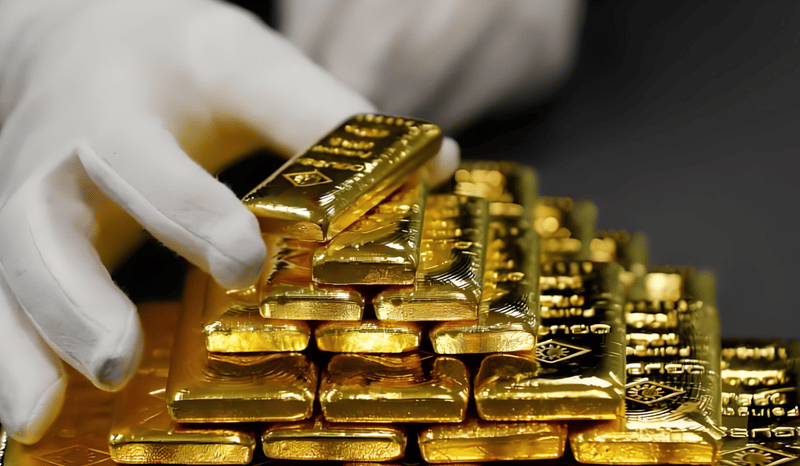
Gold Once Again Leads the Global Market
International gold prices hit a historic high this week, with spot gold briefly surpassing $4,300 per ounce, becoming the focus of global capital markets. Amid trade uncertainties, Federal Reserve rate cut expectations, and intertwined political risks, investors' risk aversion intensified, making gold a core asset for capital pursuit.
Market data shows that gold prices have surged over 60% since the beginning of 2024, making it one of the best-performing assets this year. With the Federal Reserve's dovish signals, investors' bets on easing policies have risen significantly, further pushing gold upwards.
Rate Cut Expectations and Weak Dollar as Key Drivers
Recent remarks by Federal Reserve Chair Jerome Powell are seen as a major catalyst for the recent surge in gold prices. He noted that the US labor market remains in a low hiring state, reinforcing market expectations for a rate cut in October. According to CME FedWatch data, traders expect the Federal Reserve to make two rate cuts by the end of the year, significantly lowering the cost of holding gold due to declining real interest rates.
Meanwhile, the decline in the dollar index further enhances the appeal of gold prices. Analysts believe that in an environment where the dollar weakens and yields decline, gold's "zero-yield characteristic" becomes a safe anchor in asset allocation.
Global Risk Aversion Intensifies
Beyond monetary policy factors, the accumulation of political and geopolitical risks also provides upward momentum for gold. The US government shutdown has entered its third week, delaying the release of key economic data, causing investors to increase their allocation to safe-haven assets amid uncertainty. Simultaneously, recurring trade frictions, European credit rating risks, and instability in the Middle East all contribute to the resurgence of gold's value as a safe haven.
Sam Stovall, Chief Strategist at CFRA Research, points out that political risks and policy opacity exacerbate market anxiety, causing funds to flow from high-risk assets to gold, a typical defensive market reaction.
Financialization of Investments Accelerates Gold Demand
The rapid expansion of gold ETFs (Exchange-Traded Funds) has become an important financial force driving up gold prices. Data from the World Gold Council shows that in the first three quarters of this year, global gold ETFs saw a net inflow of over $64 billion, setting a record high. This indicates that gold is transitioning from traditional physical holdings to financialized asset allocation, diversifying the investor base.
The popularization of ETFs lowers the investment threshold, allowing both institutional and individual investors to conveniently hold gold exposure. This trend is pushing gold from a short-term haven asset to a long-term allocation tool.
Global Central Banks Continue Increasing Gold Purchases
In addition to private capital inflows, gold purchases by global central banks also support gold's long-term upward trend. According to IMF data, since 2006, the gold reserves of emerging market countries have increased by over 160%, reflecting a strategic shift by central banks to diversify foreign exchange risks and counter sanction risks.
Analysts believe that in the context of a highly fragmented international financial system, gold's appeal as a "non-sovereign asset" will further increase, providing solid support for its price.
Gold May Enter a Structural Bull Market
From the perspective of changes in the global economic and political environment, gold's strength is not a short-lived speculative behavior but rather the beginning of a structural bull market. The easing of inflation pressure, policy shift towards easing, and sustained high demand for safe-haven assets make gold the "stable anchor" of global capital.
Analyst Fawad Razaqzada summarized: "Gold prices are just a step away from $5,000, and while there may be technical adjustments in the short term, any pullback will attract new funds into the market."
Gold, this ancient asset, is reclaiming its central position in the new era of financial frameworks.