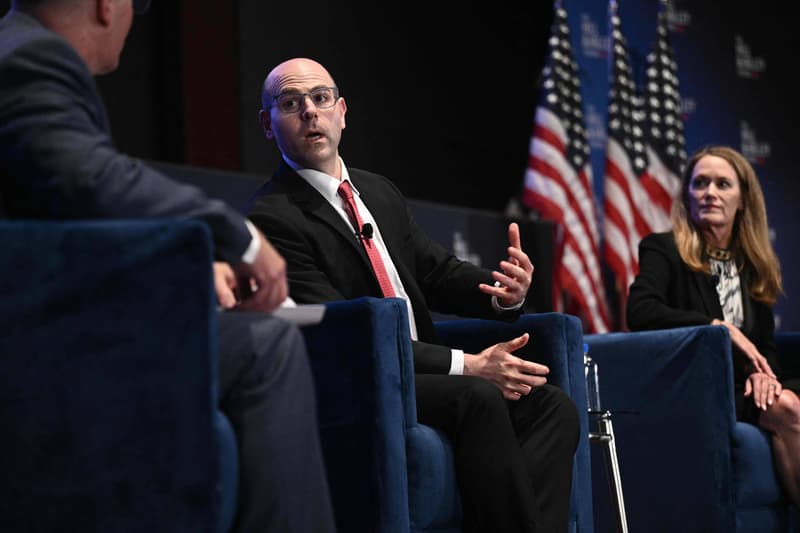
Milan Calls Again for Quicker Easing
Following the Federal Reserve's latest rate cut, board member Stephen Milan again publicly expressed discontent with the current policy stance. He believes that the existing interest rate levels are unnecessarily constraining the economy, and monetary policy should swiftly lean towards neutrality to avoid a delayed impact on employment. Milan pointed out that while households' concerns over high prices are understandable, from a macro perspective, price levels have stabilized, and policy should reflect this change.
Debate Over “Underlying Inflation” and Statistical Bias
Milan's core argument focuses on how inflation is measured. He emphasized that excluding notably lagging components like housing services and distortions from certain statistical estimations, the "underlying" inflation trend is very close to the Fed's target range. In his view, housing inflation reflects supply-demand imbalances from years ago rather than current market conditions, and thus shouldn't be a key reason for maintaining tight policy.
Additionally, he mentioned that some increases in service prices are related to asset prices, reflecting statistical phenomena rather than the real cost pressures faced by average consumers. This structural bias may have amplified the impact of official inflation indicators on policy guidance.
Warnings of Risks to the Labor Market
When discussing job prospects, Milan's tone was more cautious. He warned that the effects of monetary policy often have a long lag time, and if signs of labor market weakening appear, the degradation process could be swift and hard to reverse. If policy remains in the "overly tight" range, the risk of rising unemployment will significantly increase.
He believes that current decisions should not continue to focus on inflation shocks from years ago but rather on the economic environment over the next one to two years to avoid policy responses being too slow.
Clear Division Among Fed Leaders
In contrast to Milan's aggressive rate cut stance, some high-ranking Fed officials are showing a more cautious approach. New York Fed President Williams stated that after the recent rate cut, monetary policy is in a position to address various risks, and further easing requires a higher threshold. He believes the policy has gradually moved from restrictive to neutral, leaving room for future economic changes.
Concurrently, Boston Fed President Collins candidly expressed that supporting cuts was not an easy decision. She remains vigilant about inflation persistence, worrying that premature or rapid easing may undermine anti-inflation efforts. These differing voices highlight significant divisions within the Fed over risk balancing.
Tenure Arrangements Spark Policy Speculation
Aside from policy stances, Milan's tenure plans have also attracted market attention. He stated that he may continue to serve until a new board member is approved after his current term ends. This possibility adds uncertainty to future Fed personnel and policy directions.
Analysts note that with the timing of the chair appointment yet to be clarified, the continuity or adjustment of board seats could affect the committee's voting balance, thus influencing discussions on the pace of rate cuts.
Market Interpretation and Outlook
Overall, the debate within the Fed over the nature of inflation, employment risks, and policy timing is intensifying. Milan's position represents a faction that emphasizes proactive risk management, while other officials lean towards caution until inflation is fully under control.
In the short term, the market expects the Fed to continue with a data-dependent gradual strategy. However, as internal disagreements become more public, the interpretation of signals from each future policy meeting could have a more pronounced impact on financial markets.