Last weekend, just as a new ceasefire agreement between India and Pakistan came into effect, tensions rapidly escalated. The two sides exchanged fire again at the Kashmir border and accused each other of violating the agreement's terms, putting the fragile ceasefire statement to the test.
The Indian military was the first to send out a tough signal. Lieutenant General Rajiv Ghai, Director General of Military Operations, stated that although an agreement had been reached, Indian frontline troops were on high alert and authorized to respond to any violations "as they see fit." This not only sent a deterrent signal but also revealed India's deep suspicion of Pakistan's intentions to honor the agreement.
The Pakistani side quickly denied this. At a press conference, the Pakistani military firmly stated that they did not violate any agreements and instead accused India of continuing military provocations after the ceasefire. The Pakistani Ministry of Foreign Affairs further accused India of "undermining the spirit of the agreement," emphasizing that Pakistan only agreed to the ceasefire due to international mediation.
It is worth noting that U.S. President Trump boldly announced that Washington was the "key driver" behind the ceasefire and claimed that the U.S. was spearheading efforts for broader peace talks at a neutral location. However, India remained silent on this and reiterated its long-standing position against "third-party intervention" in India-Pakistan affairs. This reserved response suggests a complex, perhaps dissatisfied, attitude towards the U.S. role.
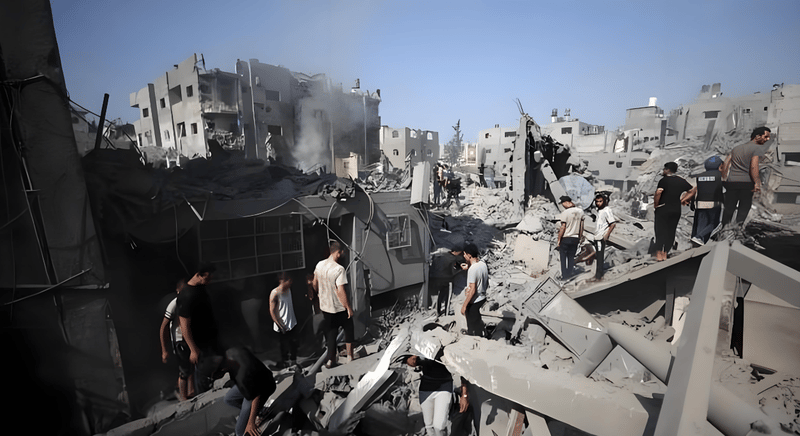
Amid high-level standoff, ordinary residents along the India-Pakistan border bore the brunt of the conflict. The Kashmir region echoed with continuous shelling, and many border towns experienced power outages and evacuations. Although the situation in some areas gradually improved, regions like Baramulla still face unexploded ordnance threats, with civilians living on the edge of danger, entrenched in anxiety and fear.
Despite the ceasefire agreement remaining nominally effective and being generally welcomed by the international community, its enforcement and maintenance face significant challenges in reality. Neither side has demonstrated sufficient mutual trust, and the U.S. mediation efforts have not been fully embraced.
Additional Effects-wise, if the situation does not escalate further in the short term, market risk aversion may temporarily ease, reducing the appeal of gold as a safe-haven asset and applying slight downward pressure on its price. However, in the long run, the Russia-Ukraine conflict, Middle Eastern tensions, and the direction of Federal Reserve policy remain core variables supporting gold prices.
Overall, whether the India-Pakistan ceasefire agreement can genuinely lead to stability still depends on the restraint and willingness for dialogue of both countries' leaders, and it tests the endurance and wisdom of the international community in stabilizing their mediation efforts.