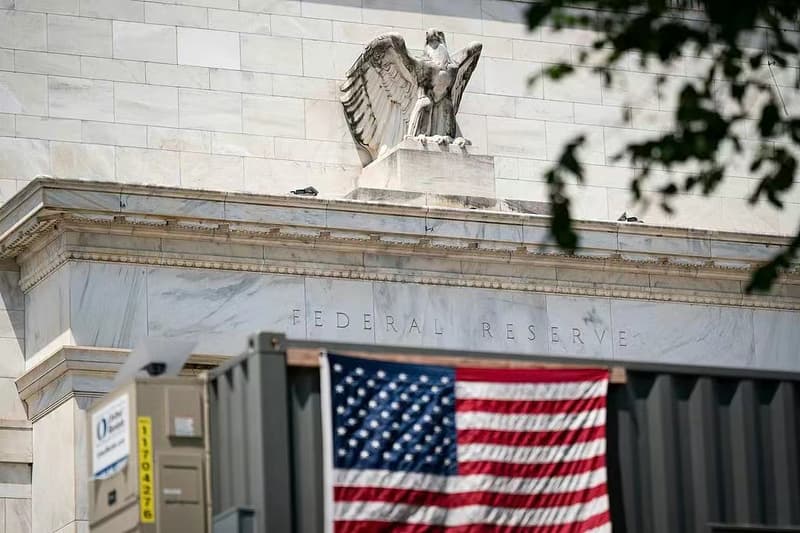
The Federal Reserve Resumes Rate Cut Cycle
In the early hours of September 18, after a two-day meeting, the Federal Reserve announced a reduction in the target range for the federal funds rate by 25 basis points, bringing it down to 4.00%–4.25%. This marks the first policy rate cut since December 2024. The decision statement emphasized that the U.S. job market has shown signs of slowing, the unemployment rate is moderately increasing, and the balance of economic risks has shifted, necessitating a moderate adjustment in monetary policy to maintain economic stability.
The market widely anticipated that the Federal Reserve would take action in this meeting, with 95% of economists previously predicting a 25 basis point cut. Although the magnitude met expectations, there remains significant debate over whether this will lead to a continuous cycle of rate cuts.
Trump's Stance on Rate Cuts
Following the announcement of the rate cut, another focal point of attention was President Trump's stance. Over the past few months, Trump has repeatedly criticized the Federal Reserve for being "slow to act" on monetary policy and has persistently called for swift and substantial rate cuts. His pressure is an important backdrop for market observers.
Although the Federal Reserve ultimately chose to initiate a rate cut, the magnitude was limited, falling far short of the 50 basis points or even more aggressive demands previously put forward by Trump. This has sparked market debate on whether this cut will satisfy the White House or whether Trump will continue to pressure the Federal Reserve to adopt more accommodative policies.
The Logic of Rate Cuts in Historical Experience
Looking back over the past half-century, during every U.S. economic recession, the Federal Reserve has implemented rate cuts to mitigate risks. This was the case during the energy crisis of the 1970s, the bursting of the internet bubble in 2001, the global financial crisis in 2008, and the pandemic shock in 2020, with the Federal Reserve relying on rapid rate cuts and quantitative easing to stabilize the economy.
Similar to history, this rate cut is being conducted against the backdrop of a slowing economy and a weakened job market. The difference lies in the current inflation rate, which remains above the Federal Reserve's long-term target of 2%, thereby limiting their policy space. The challenge for the Federal Reserve is to find a balance between sustaining growth and controlling inflation.
Market Reaction and Asset Performance
After the announcement, U.S. Treasury yields fell sharply, and the dollar index was pressured to retreat. U.S. stocks experienced increased volatility during post-meeting trading, with tech stocks briefly rising, but the overall market continues to digest the policy impacts. Gold prices rose again, benefiting from expectations of a more accommodative monetary environment.
Analysts point out that China's A-shares and Hong Kong stocks may receive a temporary boost from improved liquidity, but their overall performance will still depend on the prospects of the global economy and changes in investor risk preferences.
Outlook for Future Policy Path
While the market generally expects the Federal Reserve to continue cutting rates twice more this year, with a total reduction of possibly 75 basis points, future economic data remains crucial. If employment worsens further or inflation falls faster than expected, the Federal Reserve may accelerate its easing pace; conversely, if inflation rebounds or fiscal stimulus increases, it could prompt a shift towards caution.
It can be foreseen that the Federal Reserve’s future policy will not only affect the United States but also have chain effects on global capital flows, exchange rate trends, and commodity prices. The ongoing tussle between Trump and the Federal Reserve will continue to be an important narrative in financial market interpretations.