
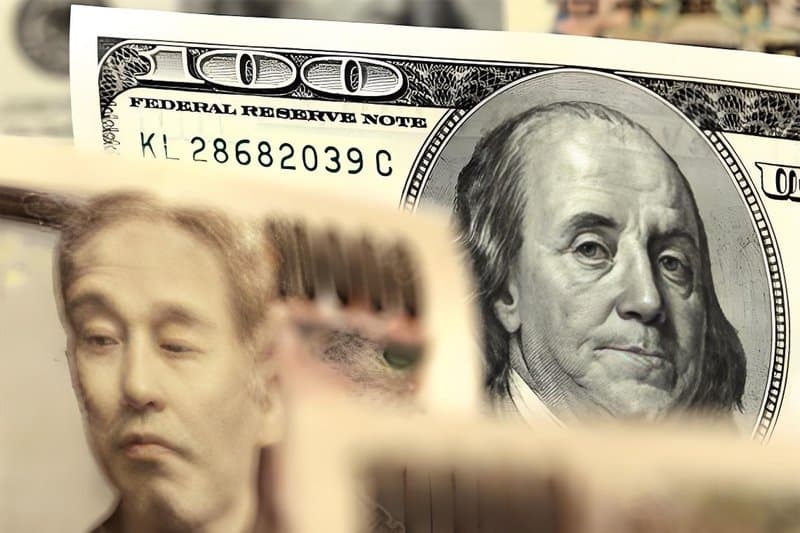
Geopolitical Conflict Escalation Boosts Yen Due to Safe-Haven Sentiment
Recently, Israel has conducted continuous strikes on Iranian nuclear facilities and missile bases, rapidly raising global safe-haven sentiment. Israeli Defense Minister Katz announced a state of emergency and warned that Iran might soon launch missile and drone attacks on Israeli territory. This shift in the situation has directly caused a contraction in market risk appetite, with funds flowing into traditional safe-haven assets, and the yen has become the top choice for investors.
Robert Kaplan, Chief Analyst at Geopolitical Futures, stated, "The situation in the Middle East has entered a dangerous escalation path, and the market tends to use the yen as a short-term safe-haven tool when avoiding uncertainty."
The U.S. Does Not Directly Intervene, Iran Threatens to Expand Attacks
Although U.S. officials stated they were not involved in this Israeli military action, Iranian Defense Minister Nasirzadeh warned that if the situation gets out of control, U.S. military bases in the Middle East might become attack targets. This statement further heightened market tension and strengthened the demand for yen.
Meanwhile, U.S. President Trump announced a new round of tariff measures to be initiated in two weeks, involving various areas including steel and home appliances, with steel tariffs increased to 50%. The renewed escalation of trade frictions has led to concerns about the global economic outlook, further boosting safe-haven demand.
Lisa Shalett, Chief Investment Officer at Morgan Stanley Wealth Management, noted, "The continuously shifting trade policy acts as a significant catalyst driving capital towards the yen and other safe-haven currencies."
Japan's Policy Outlook Increases Yen's Appeal
Although the market expects the Bank of Japan to maintain interest rates unchanged this year, the fact that inflation has been above the 2% target for three years suggests there is still room for gradual tightening.
Nomura Securities Forex Strategist Takeshi Minami commented, "Despite Japan's current policy not being obviously tightened, its policy path is relatively tighter compared to the Federal Reserve, especially when safe-haven sentiments are high. This divergence in policy expectations will further enhance the yen's appeal."
Weak U.S. Economic Data Weighs on Dollar Movement
In the U.S., the latest May PPI increased by only 0.1% month-on-month, below market expectations. Continuing claims for unemployment benefits rose to 1,951,000, the highest since November 2021. Data weaker than expected has heightened fears of economic slowdown and reinforced the market consensus that the Federal Reserve will start cutting rates in September.
Andrew Hollenhorst, Senior Economist at Citigroup, mentioned, "The Fed's policy turning point has been established, and the dollar is under systemic depreciation pressure."
The dollar index recently refreshed its lowest point since March 2022, and the USD/JPY exchange rate has been pressured to decline as a result.
Technical Analysis: USD/JPY Short-term Support Focuses on 142 Level
From a technical perspective, the USD/JPY attempted to break above the 145.00 level multiple times this week without success, leading the market into a short-term consolidation pattern. The current support zone focuses on the 142.65 to 142.35 range; losing this could lead to further testing of the 142.00, 141.65, or even the 140.90-141.00 technical area.
If a rebound occurs, initial resistance is at 143.50-143.55. A successful break above could lead to a test of 144.00 to 144.50. A strong breakout afterward could revisit 145.00 and the high of 145.45.
Geopolitical tensions combined with trade uncertainties have triggered a wave of market aversion, pushing the yen stronger and the dollar under pressure. The USD/JPY is currently in a range-bound movement, with the 142 level as a crucial short-term defense line. Future direction will depend on developments in the Middle East and Federal Reserve policy dynamics.









