
Record High Sparks Market Buzz
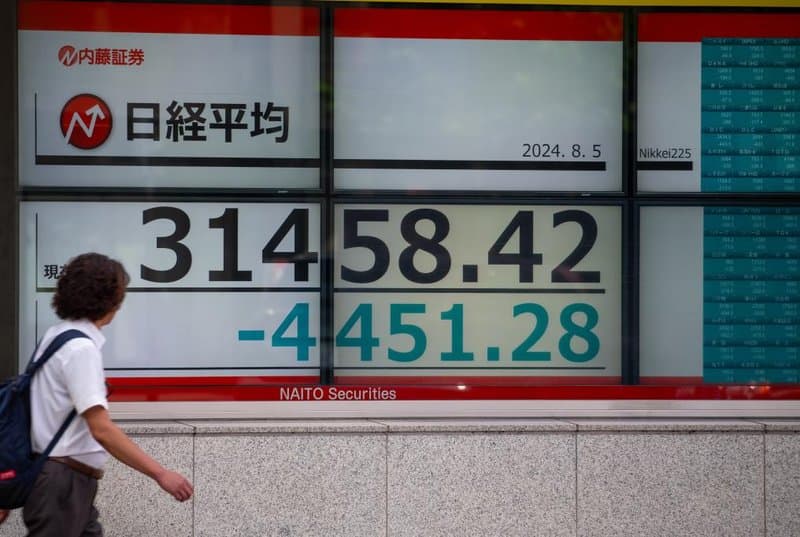
The trading floor of the Tokyo Stock Exchange has once again become the center of global attention. On Monday, local time, Japan's Nikkei 225 index touched 45,004.56 points, surpassing the 45,000-point mark for the first time, with a daily gain of about 0.5%. This milestone not only symbolizes the strong rebound of the Japanese stock market but also highlights international capital's reassessment of Japan's economic prospects. At the same time, the TOPIX index also climbed to a record high, further reinforcing the market's optimistic atmosphere.
Inflow of Foreign Capital as a Main Driver
Analysts have noted that the breakthrough of the Nikkei 225's key point level has been decisively influenced by the inflow of funds from overseas investors. The long-term weakening of the yen has increased the international competitiveness of Japanese enterprises. Combined with generally positive corporate earnings, this has attracted substantial foreign investment in Japanese assets. In particular, the significant rise in stock prices of leading technology, semiconductor, and manufacturing companies has steadily driven the overall index upwards.
Data from financial services institutions indicate that net purchases of Japanese stocks by overseas investors have reached a new high in nearly a decade. Compared with fluctuations in other major markets, the Japanese stock market, with its solid fundamentals and lower valuation advantage, is gradually becoming a safe haven for global capital.
Corporate Performance and Policy Support
Not only external capital but also improved domestic corporate performance and favorable policies have played important roles. During the recent earnings season, many large Japanese manufacturing companies reported profits surpassing market expectations. Particularly in semiconductor equipment, auto parts, and the new energy supply chain sectors, Japanese companies have shown strong growth potential.
Meanwhile, the Japanese government is actively promoting corporate governance reforms to enhance shareholder returns and improve capital efficiency. These measures have boosted investor confidence and laid a foundation for the long-term rise of the stock market.
The Delicate Balance of Inflation and Monetary Policy
The market is generally focused on the monetary policy direction of the Bank of Japan. Although Japan's CPI has recently remained above the target level, the central bank cautiously maintains its loose policy to avoid stifling economic recovery by raising interest rates too quickly. To some extent, this policy mix supports the capital market.
Some analysts warn that if inflation remains high in the future, the Bank of Japan may have to adjust interest rate policies, presenting a potential risk for the stock market. However, at the current stage, the market is inclined to interpret the low-interest-rate environment as continuing to provide momentum for stock market appreciation.
Global Market Ripple Effects
The breakthrough of the 45,000-point mark by the Nikkei 225 index is significant not only for the Japanese market itself but also as a model for the global capital market. As investors seek emerging opportunities, the performance of the Japanese stock market could create a ripple effect on capital flows across Asian and even global markets.
Some analysis institutions point out that if the Federal Reserve initiates an interest rate cut cycle in the coming months as the market expects, the global liquidity environment will further improve, benefiting Japanese stocks from increased foreign investment allocations. At the same time, the uncertainties of geopolitical and trade policies may drive more investors to view Japan as a relatively safe investment destination.
Outlook
Surpassing the 45,000-point mark is not the end but the beginning of a new phase for the Japanese stock market. The subsequent trend will depend on the sustainability of corporate earnings, the extent of central bank policy adjustments, and international capital allocation preferences. If the global economy remains stable, Japan is expected to continue attracting capital inflows, further solidifying its important position in the global capital market.









