Event Overview: Two-Day "Hands-On + Summit" Integrated Design
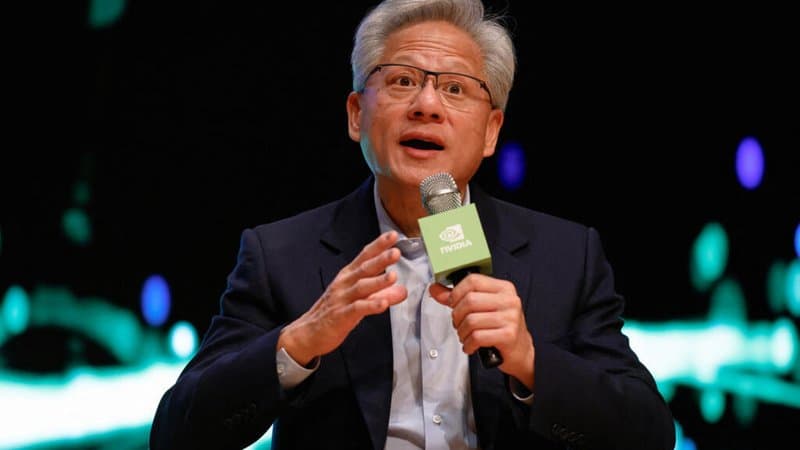
NVIDIA has announced a special "Seoul AI Day" event on November 17-18 at the COEX Exhibition Hall in Gangnam District, Seoul. The event is open to developers, researchers, and industry executives and follows an "integrated structure of practical training on the first day and a forum on the second day". On November 17, the NVIDIA Deep Learning Institute (DLI) will conduct a full-day practical seminar; on November 18, the event will focus on keynote speeches, panel discussions, and expert Q&A sessions, showcasing cutting-edge technology and industry cases.
DLI Training: From Large Model Fine-Tuning to Parallelization and Deployment
The DLI training will offer hands-on training paths based on GPU-accelerated cloud environments, diving into customized generative AI capabilities of the NeMo platform, including fine-tuning, enhanced retrieval, alignment, and deployment of large language models (LLMs). It will also integrate model parallelization and distributed training practices, helping participants complete a full cycle in a real computing power environment. Participants completing the course will receive official DLI certification for internal corporate credentialing and talent assessment.
Technical Topics: Sovereign AI, Intelligent Agents, and AI Factories
The November 18 technical forum will focus on several key areas:
- Sovereign AI: Discussing data residency, compliance governance, and localized inference stacks to build controlled and auditable national and industry-level model capabilities.
- Agent AI: Presenting production-level Agent solutions with tool invocation, task decomposition, and multi-agent collaboration, targeting search, customer service, procurement, and automated operations.
- AI Factory: Discussing enterprise-grade "model production and delivery lines" from an integrated perspective of data, computing power, algorithms, and operations, covering MLOps, observability, and cost governance.
- Industrial AI and Robotics: Releasing applications of vision, time-sequence, and reinforcement learning in manufacturing, logistics, energy, and urban infrastructure, with demonstrations of human-machine collaborative control and simulation verification processes.
Open Source and Ecosystem: CUDA-X Full Stack Capabilities Release
The event will systematically explain the acceleration path of the CUDA-X open-source library in multimodal, graph learning, image, and video inference, vector database acceleration, combined with infrastructure optimization such as TensorRT, distributed communication, NVLink/InfiniBand interconnection, providing a performance and cost curve from "single machine to cluster." Attendees can obtain reference implementations, best practices, and performance test benchmarks to facilitate local environment reproduction.
Q&A and Networking: From "Observing Technology" to "Implementing Solutions"
In addition to keynote speeches, NVIDIA technical experts will conduct face-to-face Q&A sessions, addressing "engineering challenges" such as model alignment security, inference latency optimization, power consumption and heat dissipation, data compliance, red teaming, and content watermarking. The organizers will also facilitate business networking sessions to help technical teams from different industries establish collaboration channels with solution providers, promoting efficient demand-capability matching.
Regional Significance: Strengthening the "Foundational Capabilities" of Korea's AI Ecosystem
As Korean local enterprises accelerate the application of model training, search and e-commerce agency, industrial vision, and robotics, this event is regarded as a "public classroom" for improving computing power and software stack. Through DLI certification and open-source ecosystem diffusion, the industry is expected to form more unified development paradigms and operational standards, shortening the window from proof of concept to large-scale deployment, and achieving optimal computing power efficiency under energy and sustainability constraints.
Attendance Value: "Certain Returns" for Three Groups
R&D teams can obtain replicable engineering solutions and performance baselines; enterprise managers can establish the roadmap and investment-output evaluation framework for AI factory construction; academic institutions and startups can enhance breakthrough capabilities in research and development through open source and certification. Overall, "Seoul AI Day" will provide an actionable public methodology and ecosystem resources for AI deployment in Korea and the Asia-Pacific region through a combination of practical training and real-world scenarios.