Lee Jae-myung: Economy is Rebounding, but Inflation Risks from Recovery Must Be Watched
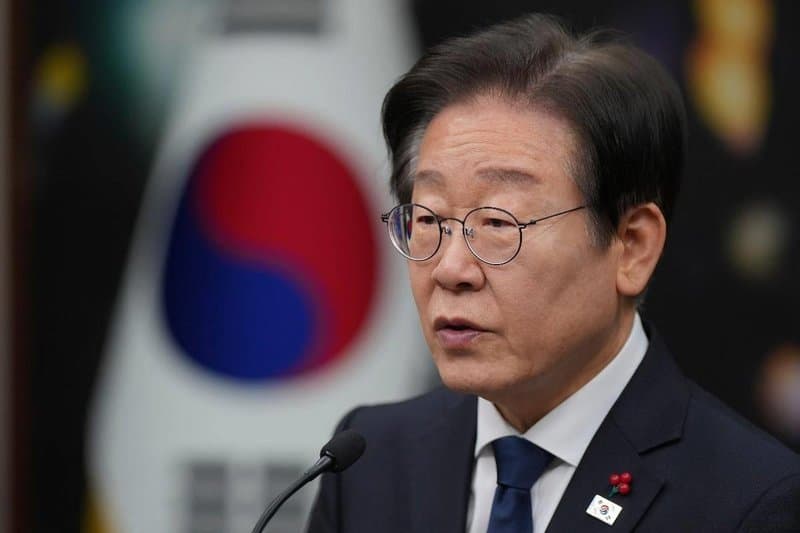
In a national address, South Korean President Lee Jae-myung stated that the country's economy is showing significant signs of recovery, with growth rates, market sentiment, and capital market performance all exceeding initial estimates when he took office. However, he also warned that the revitalization of economic momentum might introduce new inflationary pressures, which require close monitoring by the government and central bank.
Lee emphasized that prices are generally stable at present, but with domestic demand improving, consumer activities heating up, and investment confidence returning, inflation could face renewed pressure. If the economy slows while prices rise, it could lead to complex challenges for livelihoods, a scenario the South Korean government aims to avoid.
Emphasizing Avoidance of High Inflation, Seen as Reaffirmation of Price Stability Policy
In his address, Lee Jae-myung expressed concern over the "economic slump coupled with soaring prices" experienced during the previous administration, noting that such mismatched economic conditions can weaken household consumption capabilities and harm business confidence.
He stressed that ensuring economic recovery and price stability progress hand in hand will be a core macroeconomic policy task. Analysts interpret this speech as an indication that the government is likely to seek a more cautious balance between accelerating economic recovery and suppressing inflation.
Improved Economic Sentiment, Markets Reassess Policy Prospects
Several recent economic indicators in South Korea show an upward trend, from increased capital market liquidity to a rebound in manufacturing sentiment, indicating an improving economic environment. Lee Jae-myung highlighted that the positive reaction from the capital markets and the greater-than-expected improvement in investor sentiment bring more momentum to Korea's exports and emerging industries.
However, with fluctuations in international energy prices and uncertainties due to policy changes by major trade partners, Korea's pricing base may still be affected by external factors. South Korean economists warn that if export demand is pressured again or supply chains fluctuate, cost pressures might once more elevate domestic prices.
National Address Focus on Democratic Values, Proposal to Establish "People's Sovereignty Day" as a Holiday
Beyond economic issues, Lee Jae-myung's address centered on the importance of national unity with "People's Sovereignty" as the core theme. He noted that a year ago, an incident under the previous government severely impacted the nation’s democratic system, but the South Korean people demonstrated the power to uphold constitutionalism and the rule of law at a critical moment.
To commemorate the anniversary of the event's resolution and affirm the significance of citizen-driven democracy, Lee proposed establishing December 3rd as a national public holiday named "People's Sovereignty Day." This move aims to strengthen national identity and remind society to continuously safeguard democratic institutions.
Dual Advancement in Economy and Politics, South Korea Enters Critical Period of Policy Adjustment
With strengthening economic recovery and potential inflationary pressures, the South Korean government will face tougher policy choices in the coming months. Meanwhile, the proposal for a democracy-oriented commemorative day may spark further domestic discussions.
Analysts believe South Korea is at a sensitive stage of dual economic and political progression, where the Lee Jae-myung administration must stabilize prices, maintain growth momentum, and uphold social cohesion, putting its policy execution capabilities and governance flexibility to the test.