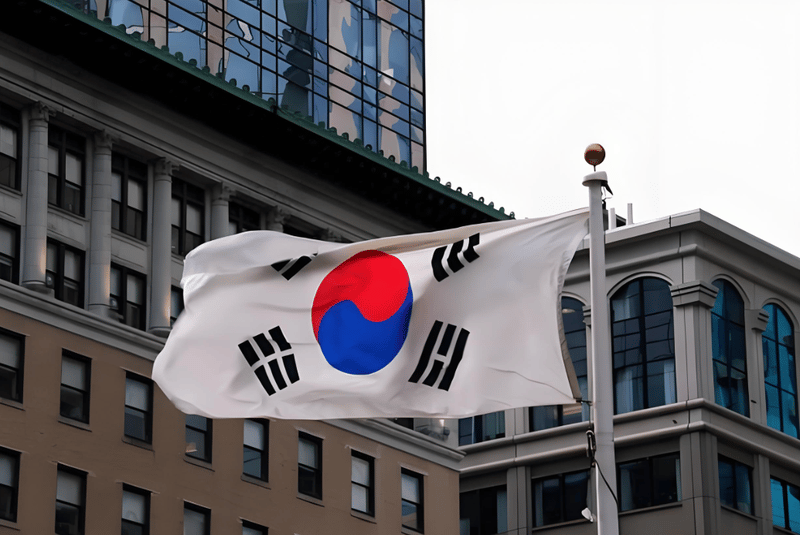
Bank of Korea Keeps Policy Direction Unchanged
On Thursday, the Bank of Korea (BOK) reiterated in its routine policy statement that it will continue to maintain an easing stance to counteract the risks of slowing growth and support domestic demand recovery. The statement noted that in the context of persistent global economic uncertainty, the central bank needs to "alleviate downward pressure on economic growth" through a loose monetary environment while closely monitoring financial stability.
The central bank stated that it will flexibly adjust the pace and magnitude of rate cuts in the future based on economic and inflation trends, but the current policy framework remains centered on stable growth. Analysts believe this statement indicates that Korea will continue its gradual easing policy to avoid harming the recovery momentum by tightening too quickly.
Stable Inflation Offers Policy Room
The Bank of Korea reported that the pace of price increases is largely under control. Although exchange rate volatility has exerted some upward pressure on import prices, overall weak demand and stabilizing international oil prices have kept inflation around 2%.
Central bank officials indicated that current price trends align with long-term target ranges, and a significant inflation rebound is not expected within the year. The moderate level of core inflation provides policy makers room to continue implementing easing measures.
Economists pointed out that, unlike the continuously high interest rates and tightening policies of the US and European central banks, the Bank of Korea places more emphasis on balancing "stable growth and risk prevention," and its strategy leans more towards the mainstream monetary policies in the Asia region.
Economic Growth Moderately Rises, but Uncertainty Remains High
The central bank maintained its previous growth forecasts of 0.9% for 2024 and 1.6% for 2025. The statement emphasized that improvements in consumer spending and exports are the main drivers of growth, particularly the recovery of semiconductor exports, which supports the manufacturing and overall export outlook.
However, the report also noted that the international trade environment, geopolitical tensions, and changes in the domestic real estate market remain major risk sources. The Bank of Korea believes that despite some improvements in macroeconomic data, "the uncertainty of the growth path remains significant," and future policy adjustments will remain prudent.
Seoul Finance Institute analyst Lee Chang-hoon stated: "The Korean economy is currently in the early stages of recovery, with export recovery and consumption rebound bringing positive signals, but the risks from real estate and debt remain potential concerns."
Real Estate and Debt Issues Become Monitoring Focus
In its statement, the Bank of Korea specifically mentioned that it will continue to closely monitor changes in the real estate market and household debt. The central bank noted that despite prior government measures to stabilize the housing market, there are still price fluctuations and speculative risks in Seoul and surrounding areas.
Meanwhile, high household debt levels and changes in loan interest rates significantly impact consumer confidence. The central bank stated it will take macro-prudential policy tools if necessary to prevent financial imbalances caused by excessive credit expansion.
Industry experts believe that this move reflects the central bank's effort to support economic recovery while guarding against potential systemic risks.
Complex External Environment, Policy Space Remains
The uncertainty of the international environment is also a key factor in the Bank of Korea's decision-making. Trade negotiations, changes in global monetary policy, and capital flow risks triggered by a strong dollar could all create external pressures on the Korean economy.
However, with controlled inflation and the supportive nature of fiscal policy, the Bank of Korea has relatively ample policy space in the short term. Analysts believe the bank might opt to maintain the current interest rate levels until the year-end to observe international economic trends and domestic price changes.
Policy Tone Prioritizes Stability
Overall, the Bank of Korea's statement conveyed a policy signal of "stable yet loose," with the core objective being to ensure the continuation of recovery and control risks. As global inflation gradually falls and exports improve, Korea is expected to see a more steady growth pace next year.
The market generally anticipates that unless external shocks significantly intensify, the Bank of Korea will continue on a cautious easing monetary policy path to maintain economic resilience and gradually drive domestic demand recovery.
As emphasized in the central bank's statement: "The most important task at the current stage is not to pursue short-term growth, but to ensure the economy regains vitality on a stable foundation."