

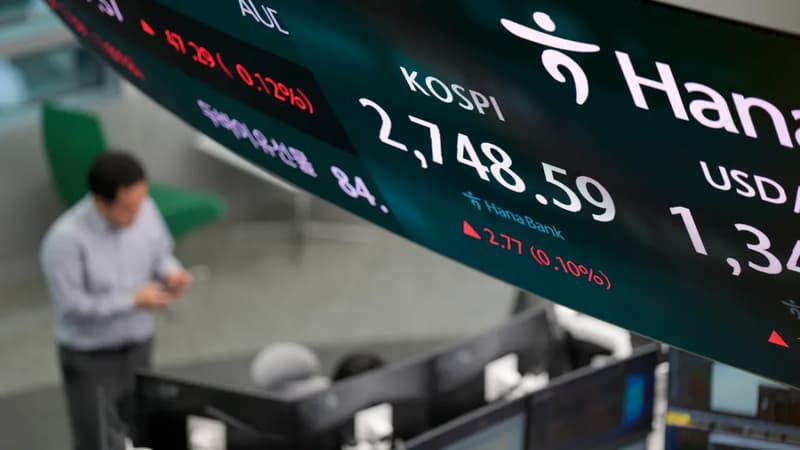
Korea's KOSPI Index Opens Higher, Market Sentiment Significantly Warms
In the Asian session on Friday, the Korean stock market performed strongly with the KOSPI index opening up by 1.6%, standing at 3,915.16 points, making it one of the standout major indexes in the Asia-Pacific market. Analysts point out that the high opening of the Korean stock market reflects a rebound in regional investors' risk appetite, particularly as global market volatility subsides and expectations of U.S. interest rate cuts grow, prompting some funds to flow back into Asian growth assets.
Technology, semiconductor, and large-cap blue-chip sectors rose universally, driving the overall index higher. Institutions believe that foreign capital inflow and a stable Korean Won also provided support for the market.
Japan's Market Closure Damps Asia-Pacific Trading Volume, Regional Trading Sluggish
Meanwhile, Japan's stock market was closed for Labour Thanksgiving Day, reducing some trading activities in the Asia-Pacific market. With significant weight during the Asian trading session, Japan's market closure typically lowers the overall transaction volume in the region, slowing cross-market capital allocation.
Market participants noted that given the high proportion of Japanese investors in regional markets, the closure led to a significant drop in institutional trading, arbitrage, and quantitative strategy participation, thus weakening overall volatility in the Asia-Pacific. Active early trading concentrated mainly in the Korean, Australian, and some Southeast Asian markets.
Global Risk Environment Improvement Provides Short-term Support to Asian Stock Markets
Another key factor driving the high opening of Korean stocks is the market's reassessment of the global policy environment. The latest U.S. economic data appeared modest, coupled with rapidly warming expectations for Federal Reserve interest cuts, leading investors to broadly believe that the global liquidity environment might sustainably improve over the coming months.
Export-oriented economies like Korea heavily rely on the global trade environment, and improved risk sentiment can generally drive up regional tech stocks, manufacturing, and automotive industry chains, with the KOSPI's opening performance directly reflecting such expectations.
Analysts believe that if the Federal Reserve adopts a dovish stance in December, Asian markets could see more capital inflows.
Technology and Semiconductor Sectors Lead Gains, Institutions Focus on Korea's Economic Recovery Pace
As a major global chip exporter, Korea's technology and semiconductor sectors often significantly boost the index. Institutions noted that amidst the gradual recovery of the inventory cycle and signs of a global tech demand revival, Korean corporate earnings forecasts are showing signs of improvement, prompting the market to position early.
Some analysts caution that despite strong short-term gains, Korea's economy still faces structural challenges like an unstable export environment and high household debt. Whether the stock market can continue to rebound will still depend on the extent of sustained fundamental improvement.
Japan's Post-Holiday Movements Await Observation, Regional Markets Focus on Subsequent Data
With Japan's market closed for a day, investors will watch Tokyo's stock market performance when it reopens next week. Recent Yen weakness, mixed corporate earnings, and expectations that the Bank of Japan could turn hawkish inject considerable uncertainty into Japanese stock movements.
Regional analysts noted that although Japan's closure is short-lived, the market will closely observe whether global market volatility during the holiday impacts Japan's opening.
Asia-Pacific Markets Steady With Progress, Likely to Maintain Mild Short-term Rebound
Overall, Korea's KOSPI opening higher reflects a positive rebound in investor sentiment, while Japan's market closure led to relatively calm early trading. As global policy pathways become clearer, Asia markets may maintain a modest rebound pattern in the short term. However, investors need to remain mindful of external economic data, central bank policy statements, and geopolitical risk changes.








