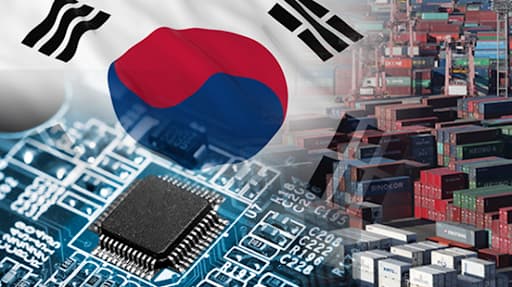
Blueprint for Over 30 Trillion Won Investment Emerges
The South Korean government has recently signaled a strong policy intent: to deploy over 30 trillion won next year to focus support on artificial intelligence and a range of cutting-edge industries. This investment, equivalent to about 20 billion USD, is viewed as one of the most ambitious industry support plans in recent years. Official statements indicate that the funds will mainly be allocated through a newly established large-scale policy fund.
Amid the escalating global technological competition, South Korea aims to leverage this wave of public capital to unlock long-term growth potential and avoid marginalization in key technology areas. Policymakers believe reliance solely on market forces is insufficient to support the next phase of technological advancement; thus, the government sees the need to embrace greater risks in the early stages.
Public Growth Fund as the Main Driver
The investment will rely on the "Public Growth Fund," which has recently been initiated, with a total planned scale of 150 trillion won over the next five years. Its goal is not short-term stimulus but a systematic push for the application of artificial intelligence across industries, while simultaneously channeling resources into semiconductors, secondary batteries, biotechnology, and other critical fields.
The fund emphasizes “public-private synergy” in its design. The government reduces financing barriers through guarantees, low-cost capital, and direct investments to attract private capital participation, thus amplifying the effect of fiscal funds. This model is seen as an important tool for guiding industrial upgrades while controlling public financial risks.
Investment Priorities Focus on Three Key Areas
According to the regulatory plans disclosed, artificial intelligence will be one of the core investment areas, with related funding expected to reach trillions of won next year. Policymakers hope to narrow the gap with leading AI countries globally through a synergistic push involving computational infrastructure, algorithm development, and industry applications.
Semiconductors are also strategically prioritized. In response to the cyclical fluctuations of the global chip industry and geopolitical uncertainties, South Korea aims to reinforce its strengths in memory chips and advanced manufacturing through stable policy funding support. Emerging sectors such as future mobility are also included, reflecting the government's outlook on long-term industrial restructuring.
Diversified Financial Instruments Advance
In terms of fund utilization, South Korea is not limiting itself to traditional subsidy models but is employing a mix of direct investments, infrastructure development, government guarantees, and low-interest loans. Low-cost financing is particularly critical for startups and high-investment industries, alleviating the challenges of long R&D cycles and cash flow pressure.
Regulatory agencies emphasize balancing efficiency and risk control through market-based evaluation mechanisms to select projects, thereby preventing resource misallocation. This approach aims to counter criticisms of "inefficient policy funds."
Increased Market Response and Local Participation
Since the announcement of the fund's launch, there has been an enthusiastic response from local governments and industries. A wide array of investment proposals has been received, ranging from regional AI clusters to advanced manufacturing bases. This reflects local anticipation for a new wave of industrial upgrades and the demand from companies for long-term policy certainty.
Analysts point out that a strong project reserve provides options for subsequent fund allocation, but balancing regional fairness with industrial efficiency in the multitude of applications will test the execution capabilities of the implementing bodies.
A Key Step Towards Long-term Competitiveness
Overall, this investment plan is not just a substantial fiscal arrangement but also represents South Korea's reorientation of its future economic growth path. By focusing resources on AI and high-end manufacturing, the government hopes to secure a favorable position in the global technology landscape reshaping.
However, the policy's effectiveness will depend on execution timing, regulatory coordination, and changes in the global economic environment. Whether the funds can be truly transformed into technological breakthroughs and industry returns will determine if this “weighty layout” can fulfill its strategic ambitions.