Market Nears Adjustment Again Amid Global Uncertainty
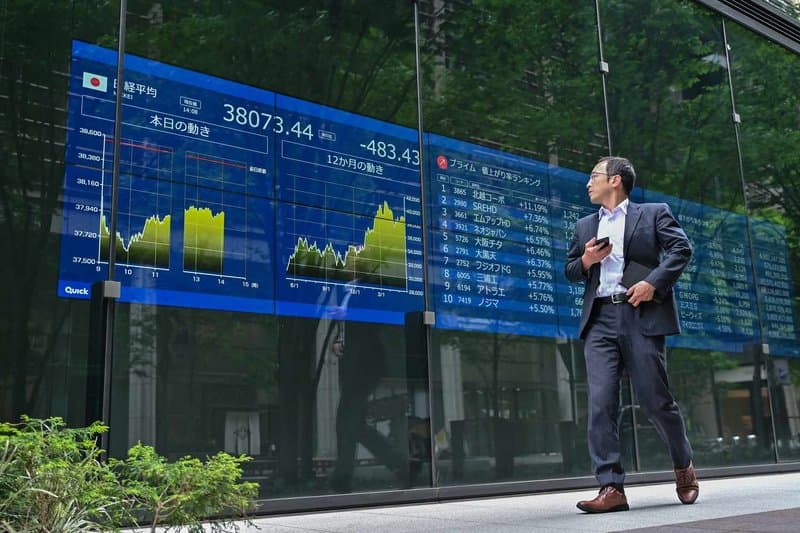
The Japanese stock market faced significant pressure this week, with the Nikkei 225 index unable to sustain the symbolic threshold, further retreating to around 49,982.2 points. Although the decline wasn't large, breaching the integer level has raised investor concerns over the short-term trend. With the external economic environment still uncertain and weaker income prospects for domestic Japanese companies, market risk appetite has significantly decreased.
Recently, fluctuating U.S. economic data has repeatedly swayed global funds' assessment of a soft economic landing. Japanese investors are keenly observing U.S. manufacturing activity and the performance of tech stocks, as these often provide sentiment guidance for Asian markets. When overseas growth expectations are inadequate, Japanese export companies often bear the brunt, becoming a source of pressure.
Electronics and Pharmaceutical Stocks Lead the Decline
In this round of adjustment, the electronics and pharmaceuticals sectors have been the main drags. The outlook for orders from several large technology and component companies is unclear, putting pressure on related stocks. The pharmaceutical sector has faced stronger selling pressure due to expectations of industry regulation and high R&D costs, with several pharma stocks registering significant declines.
Investors point out that the recent rebound in demand for some electronic products has not generated sustained momentum, with companies still facing challenges such as inventory reduction and global supply chain adjustments. Amid increasing competition in the tech field, Japanese businesses' profit improvement has been slower than expected, limiting stock performance.
Regarding the pharmaceutical industry, the market remains skeptical about the future speed of drug approvals and cost control policies, leading investors to generally reduce their weight in this sector. Pharmaceutical companies have substantial investments in R&D, but short-term returns are uncertain, making the sector a sensitive one for capital flight during market fluctuations.
Focus on Government Economic Policies Becomes Market Spotlight
In the current environment of weak economic recovery, investors are increasingly focusing on the Japanese government's commitment to advancing growth strategies. The market is closely watching for the details of Prime Minister Sanae Takaichi's economic stimulus package, especially potential measures in industrial transformation, fiscal expenditure arrangements, and corporate tax reforms.
Analysts believe that if the policies focus on enhancing corporate investment willingness, improving labor structure, and accelerating innovation in the tech industry, the market could gain new momentum. However, policy details have yet to be announced, leaving the market in a wait-and-see state, with short-term sentiment remaining cautious.
Short-Term Fluctuations Likely to Continue, External Economic Signals in Focus
Looking ahead, institutions generally predict that the Nikkei 225 index may continue to fluctuate within several technical zones. U.S. inflation and employment data remain core indicators determining the global flow of funds. Should the U.S. economy present a new directional signal, it will directly impact Japanese stock market performance.
Meanwhile, if the upcoming quarterly reports from companies show stable or improved profitability, it could offer temporary support to the market. The key for the current market is whether the global economy and domestic policies can provide clear direction. If uncertainty persists, investors may continue to maintain a defensive allocation.