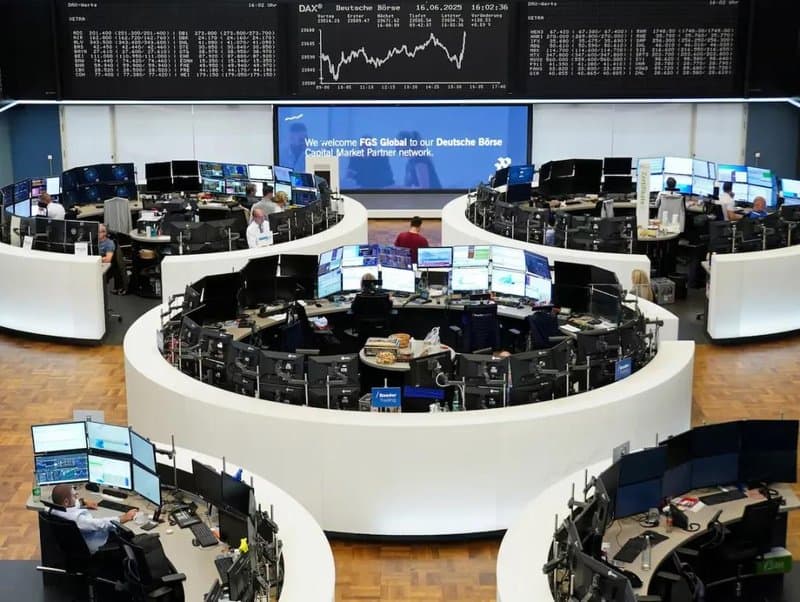
U.S. Stock Market Faces Collective Sell-Off
The U.S. stock market saw a broad decline on Thursday, with the Dow Jones dropping nearly 300 points at one stage, while the Nasdaq and S&P 500 also followed the downward trend. Continued selling pressure in the tech and AI sectors was the primary force weakening the market. Analysts noted that investors are reassessing the valuation of high-priced AI companies, coupled with combined employment and policy risks, leading the market into a new adjustment phase.
AI-related stocks were the biggest losers of the day. Chip giant Qualcomm fell more than 4% despite its quarterly earnings surpassing market expectations; AMD reversed previous gains and plummeted 7%; software giant Oracle dropped around 4%; Nvidia and Meta were also under pressure. Industry insiders noted that as the hype around AI transitions to a cooling phase, funds are shifting away from high-risk tech stocks towards defensive assets.
Surge in Layoffs Sparks Employment Concerns
Recent data shows a sharp increase in layoffs in the U.S. for October. Employment consultancy Challenger, Gray & Christmas reported that companies announced layoffs of more than 150,000 employees, surging over 180% from the previous month and marking the highest for the same period since 2022. Layoffs were mainly concentrated in the tech and warehousing industries, indicating that companies are cutting costs and addressing weak demand.
Institutions indicated that 2025 might become the worst year for layoffs since 2009. Andy Challenger, an executive at the firm, stated that the layoff trend is similar to that during the smartphone boom in 2003, suggesting a new industrial restructuring is underway. Meanwhile, independent data from Revelio Labs also showed a decrease in U.S. non-farm employment by 9,100 in October, further diminishing market confidence in the labor market.
Washington's Moves Influence Market Expectations
In addition to economic data, investors are closely watching policy developments. The U.S. Supreme Court is examining the legality of tariff policies from the Trump administration, with several justices questioning the White House's justification for imposing global tariffs. The market generally believes that if the Supreme Court ultimately overturns these tariff measures, it could relieve some inflationary pressures and give a short-term boost to the stock market.
Analysts noted that if the trade tariffs from the Trump era are rescinded, it would reduce costs for import and export businesses, potentially providing a reprieve for the manufacturing and tech industries. However, as the verdict has not been announced yet, the market is fluctuating amidst uncertainty.
Federal Reserve Adopts a Cautious Stance
In terms of monetary policy, Chicago Fed President Austan Goolsbee stated that in light of missing inflation data due to the government shutdown, policymakers are approaching future interest rate cuts with caution. He pointed out that private sector inflation indicators are limited, and if prices rise again, the Fed might be forced to delay rate cuts.
Goolsbee emphasized that the slight rebound in core services inflation shows that price pressures are still spreading, particularly in areas not directly affected by tariffs. He said, "When economic visibility declines, policy should be more cautious." This comment cooled market expectations for short-term easing, with U.S. Treasury yields slightly rising, further depressing stock market risk appetite.
Market Outlook: Volatility May Become the New Normal
Analysts believe that the high valuations of tech stocks, deteriorating employment data, and policy uncertainty have collectively caused significant volatility in the U.S. stock market. In the short term, the market may continue its adjustment pattern, with funds tending towards safer assets.
Although some institutions predict that if tariff disputes are resolved favorably for the market and inflation continues to decline, there could be room for a market rebound at the year's end, investors' confidence is being tested anew under the dual pressures of the AI sector's valuation bubble and layoff shadow.