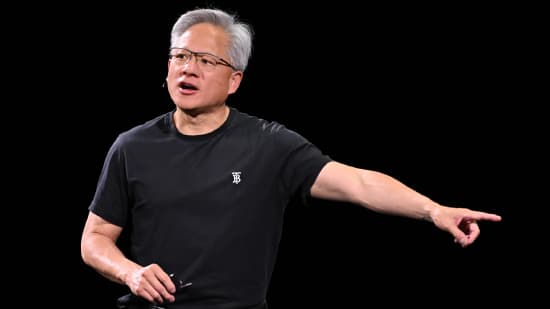
Jensen Huang Emphasizes AI Infrastructure Competition Entering a Strategic Phase
NVIDIA CEO Jensen Huang recently highlighted in a public discussion that the global artificial intelligence industry is at a critical window for infrastructure development. He pointed out that the differences in construction speed, energy capability, and project organization between the US and China are influencing the future landscape of computing power competition. Using specific time discrepancies as an example, he compared the US's lengthy data center construction cycle with China's rapid project execution efficiency, urging industry professionals and policymakers to be aware of potential competitive pressures.
Industry insiders believe that Huang's remarks not only reflect technological challenges but also reveal the increasing importance of infrastructure building capabilities for AI competitiveness.
The US Has Longer Construction Cycles, While China Exhibits Speed Advantages
Huang noted that it typically takes years for the US to complete a data center with AI computing power, involving long cycles from land development and approval processes to energy allocation. He emphasized that such prolonged processes can hinder companies from rapidly transforming innovative capabilities into actual productivity, causing computing power supply to lag behind the pace of AI technology development.
In contrast, China's efficiency in large infrastructure projects remains significantly superior. Using the "weekend hospital construction" as an extreme example, he highlighted China's comprehensive speed in engineering organization, project coordination, and land approvals, enabling it to complete major construction tasks in a short time. If this ability is applied to AI infrastructure, it would enhance China's potential growth in computing power scale.
Analysts point out that China's engineering efficiency stems not only from systemic advantages but also from structural factors such as the completeness of the supply chain, high industrial concentration, and strong regional collaboration capabilities.
The Growing Importance of Energy Capacity in AI Development
In addition to construction speed, Huang specifically mentioned energy supply as another critical variable influencing AI development. He stated that China's overall energy capacity is continuously rising, providing higher supply capabilities for supporting large-scale AI training and data center operations; whereas the increase in the US's energy capacity is relatively stable, which might limit the pace of computing power expansion in the future.
Data centers demand high electricity, especially as AI models continue to grow in scale, making energy costs and supply stability important factors affecting the price of computing power. Huang cautioned that the US cannot overlook the importance of its energy strategy, as it might lose its early lead in AI infrastructure competition.
Industry experts indicate that future AI industry competition is not just about developing chips and model algorithms but also about building the three major infrastructure systems: energy, computing power, and data. The US is facing pressure from being overtaken in this aspect.
NVIDIA Remains Technologically Ahead but Needs to Beware of Competitive Pursuit
While acknowledging China's capabilities in infrastructure, Huang also emphasized that NVIDIA maintains its lead in AI chip design and performance. He asserted that NVIDIA still possesses the strongest general-purpose AI accelerator ecosystem globally, but this lead is not unshakable, warning, "Underestimating competitors would be a strategic error."
He further noted that China's industrial system has strong manufacturing capabilities, with foundations for catching up or even surpassing in areas such as semiconductor packaging and testing, hardware supply chain, and engineering implementation. He urged the US tech industry and government to take China's systemic competitiveness in AI seriously, rather than measuring overall strength by single chip performance alone.
The Global Competition in the AI Era Extends from Technology to Infrastructure
Huang's remarks have sparked widespread discussion within the global tech community. Analysts believe this signifies that AI competition has expanded from training models and developing algorithms to a "contest of infrastructure and energy capabilities." The speed and scale of future computing power construction will largely determine the global competitiveness of AI companies.
As countries accelerate data center layouts and promote energy system transitions, global AI infrastructure competition may enter a more intense phase. Huang's warning is seen as a realistic reminder to the US tech industry facing a new competitive landscape.