• Home
  • Categories
  • News
  • Community
EN
EN
Home
CategoriesNewsGlossaryCommunity
Contact Us
Social Media
Region
🌏International
Region
🌏International
Contact
Home
/
News
/
Mideast Tensions Spark Oil Rise as Emerging Asian Markets Decline

Mideast Tensions Spark Oil Rise as Emerging Asian Markets Decline

TraderKnowsTraderKnows
2 hours ago
Summary:US airstrikes and Iran's closure of the Strait of Hormuz pushed oil prices higher, dragging the MSCI EM Asia index down by 0.8% and pressuring tech giants.
  • The geopolitical situation in the Middle East has escalated again, causing turbulence in the energy and technology sectors. The United States launched a new round of airstrikes on Iran, and Iran announced the blockade of the Strait of Hormuz, leading to an increase in crude oil prices by more than $1 per barrel. The MSCI Emerging Markets Asia Index fell by 0.8 percentage points.
  • Major semiconductor manufacturers in Asia are facing valuation adjustment pressures. The Taiwan stock market fell by 2.3 percentage points overall, with TSMC down by 1.1 percentage points. Both Samsung Electronics and SK Hynix saw intraday declines of more than 2 percentage points, reflecting the transmission of risk aversion to high-valuation technology assets.
  • In the foreign exchange market, currencies of emerging Asian economies are generally under pressure. The Indonesian rupiah weakened to 17,970 against the US dollar, giving back some of the gains previously driven by the Bank of Indonesia's unconventional rate hike. The Korean won, New Taiwan dollar, and Indian rupee also saw varying degrees of decline against the US dollar.

Geopolitical Deterioration Drives Up Energy Costs

The direct impact of the United States launching a new round of airstrikes on multiple targets in Iran has significantly worsened the security situation in the Middle East. As a countermeasure, Iran officially announced the blockade of the Strait of Hormuz, a crucial international oil transport route. This latest development in geopolitical conflict quickly spread to the commodities market, pushing international crude oil prices up by more than $1 per barrel. The rising risk of energy supply disruptions not only exacerbates the uncertainty of global inflation expectations but also imposes dual pressure on Asian emerging market economies that heavily rely on energy imports. The trend of capital flowing into safe-haven assets has noticeably strengthened in the short term.

Core Technology Assets Face Valuation Adjustments

The sharp escalation of geopolitical risks has rapidly spread to the global semiconductor and artificial intelligence supply chains. After accumulating significant gains in the previous period, core technology stocks in Asia are facing profit-taking. The Taiwan Weighted Index fell by 2.3 percentage points overall, with the stock price of chip manufacturing giant TSMC (2330:TW) down by 1.1 percentage points. The Korea Composite Stock Price Index (KOSPI:KS) initially plummeted by 4.4 percentage points at the opening, then narrowed its decline to about 0.3 percentage points. Leading Korean technology companies Samsung Electronics (005930:KS) and memory chip manufacturer SK Hynix (000660:KS) both saw declines of more than 2 percentage points, highlighting the vulnerability of high-valuation technology sectors in the face of macroeconomic uncertainty.

Regional Currency Assets Under General Pressure

In the foreign exchange market, alongside the phased strengthening of the US dollar index, Asian emerging market currencies have generally weakened against the US dollar. The Indonesian rupiah softened to the level of 17,970 rupiah against the dollar. Previously, the Bank of Indonesia (BI) had taken unconventional rate hike measures, which had driven major bank stocks to rise for two consecutive days and led to a cumulative rebound of 10 percentage points in the Jakarta Composite Index (COMPOSITE). However, due to the impact of this round of geopolitical shocks, the Indonesian stock market fell by 1.5 percentage points, ending the previous rebound trend. Meanwhile, although the Korean won fell to 1,526 won against the dollar, it maintained an overall upward trend this week; the New Taiwan dollar fell to 31.702 against the dollar, and the Indian rupee also weakened to 95.63 against the dollar.

Market Fatigue Shows as Reactions Gradually Stabilize

Although geopolitical conflicts have caused asset price fluctuations in the short term, many market analysts point out that investor sentiment has not spiraled into panic. Lloyd Chan, Senior Currency Analyst for Asia at MUFG Global Market Research, stated that the slight declines in major Asian stock indices and exchange rates indicate that investors, after experiencing the intense volatility at the beginning of the week, have shown a certain degree of fatigue towards ongoing geopolitical changes. The marginal reaction to negative shocks is gradually stabilizing. If the Middle East situation does not further deteriorate, market pricing mechanisms may refocus on the fundamental data of various countries. If core inflation pressures rebound due to rising oil prices, the policy paths of major economies' central banks may face reassessment risks.

Risk Warning and Disclaimer

The market carries risks, and investment should be cautious. This article does not constitute personal investment advice and has not taken into account individual users' specific investment goals, financial situations, or needs. Users should consider whether any opinions, viewpoints, or conclusions in this article are suitable for their particular circumstances. Investing based on this is at one's own responsibility.

The End
Previous
Next

Comments

0/1000

You Missed

Why are fewer and fewer people trading? Perhaps this article can provide you with the answer.

Why are fewer and fewer people trading? Perhaps this article can provide you with the answer.

According to data provided by brokers, 40% of traders give up trading after one month, and only 7% remain active after five years.

亚伦_TK_LOXmv
亚伦_TK_LOXmv
2024-06-04
Investment
Investment
2024-06-04
U.S. elections and Middle East conflict boost uncertainty, driving gold prices higher.

U.S. elections and Middle East conflict boost uncertainty, driving gold prices higher.

With the US election nearing and Middle East tensions rising, risk aversion keeps gold prices high as markets watch Fed rate decisions and US economic data.

TraderKnows
TraderKnows
2024-10-30
Foreign Exchange Trading
2024-10-30
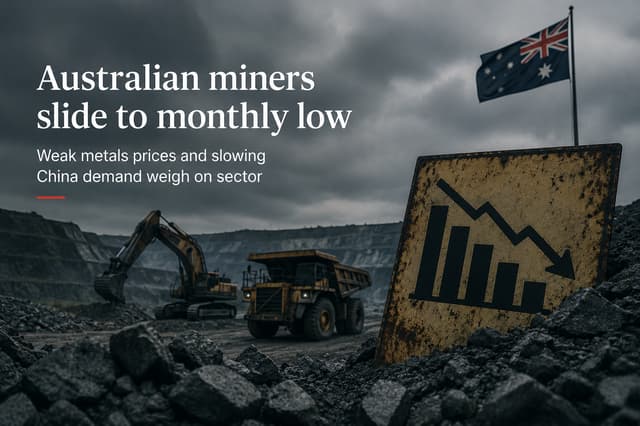
Australian Mining Stocks Hit One-Month Low on Weak Metal Markets and Soft China Demand

Australian Mining Stocks Hit One-Month Low on Weak Metal Markets and Soft China Demand

The Australian mining stock index fell up to 2.8% to its lowest level since May 5, pressured by rising iron ore shipments amid soft Chinese steel demand and global growth worries sparked by escalating Middle East conflicts.

TraderKnows
TraderKnows
2 hours ago
Macroeconomics
Macroeconomics
2 hours ago
Indonesia's central bank to continue forex intervention, rupiah to strengthen next year.

Indonesia's central bank to continue forex intervention, rupiah to strengthen next year.

Recently, the Governor of the Bank of Indonesia, Perry Warjiyo, publicly stated that they will continue to intervene in the foreign exchange market to stabilize the rupiah.

TraderKnows
TraderKnows
2024-06-05
Foreign Exchange Trading
2024-06-05
Theo Broker Review:High Risk(Suspected Fraud)

Theo Broker Review:High Risk(Suspected Fraud)

Theo (Theo Technology Co., Ltd) is an online forex trading platform. This article evaluates Theo from perspectives like corporate entity, domain registration, regulatory licenses, staff, software, and trade types.

TraderKnows
TraderKnows
2024-05-14
Pig Butchering Scam
Pig Butchering Scam
2024-05-14

Wiki

Macroeconomics

Macroeconomics is the study of the overall economic activities of a country or region, focusing on the aggregate behavior and performance of the economy.

Recent Post

Commercial Space Sector Undergoes Valuation Recomposing as Retail Investors Leverage Satellite Data

an hour ago

Euro Zone Yields Edge Lower: Oil Calm Mid US-Iran Clash; US CPI, ECB Loom

an hour ago

US Treasury Yields Edge Higher Amid Iran Tensions and Slowing Core CPI

an hour ago

US May CPI Rises 4.2% In Line with Expectations as Cool Core Inflation Backs June Fed Pause

an hour ago

WMO Warns 80% Chance of El Niño This Summer Threatening Global Commodities

an hour ago

Jim Chanos Questions SpaceX Valuation and Warns of Data Center Risks

an hour ago

US Iran Maritime Conflict Escalates as Strait of Hormuz Closes Completely

an hour ago

US Stocks Fall Over 1% as Tech Enters Correction and Iran Tensions Escalate

an hour ago

Iran Attacks US Bases in Jordan and Closes Strait of Hormuz, Oil Prices Spike

2 hours ago

Unitree IPO Highlights Valuation and Competition Realities in China Robot Sector

2 hours ago

Australian Mining Stocks Hit One-Month Low on Weak Metal Markets and Soft China Demand

2 hours ago

KOSPI Drops as Middle East Tensions Escalate; Foreigners Offload 1.8 Trillion Won

2 hours ago

Mideast Tensions Spark Oil Rise as Emerging Asian Markets Decline

2 hours ago

A-Share Lithium Miners Surge as Supply Disruptions Trigger Valuation Rebound

2 hours ago

Global Markets Fall as Tech Correction and Middle East Tensions Lift Oil

2 hours ago

You Missed

Why are fewer and fewer people trading? Perhaps this article can provide you with the answer.

Why are fewer and fewer people trading? Perhaps this article can provide you with the answer.

According to data provided by brokers, 40% of traders give up trading after one month, and only 7% remain active after five years.

亚伦_TK_LOXmv
亚伦_TK_LOXmv
2024-06-04
Investment
Investment
2024-06-04
U.S. elections and Middle East conflict boost uncertainty, driving gold prices higher.

U.S. elections and Middle East conflict boost uncertainty, driving gold prices higher.

With the US election nearing and Middle East tensions rising, risk aversion keeps gold prices high as markets watch Fed rate decisions and US economic data.

TraderKnows
TraderKnows
2024-10-30
Foreign Exchange Trading
2024-10-30
Australian Mining Stocks Hit One-Month Low on Weak Metal Markets and Soft China Demand

Australian Mining Stocks Hit One-Month Low on Weak Metal Markets and Soft China Demand

The Australian mining stock index fell up to 2.8% to its lowest level since May 5, pressured by rising iron ore shipments amid soft Chinese steel demand and global growth worries sparked by escalating Middle East conflicts.

TraderKnows
TraderKnows
2 hours ago
Macroeconomics
Macroeconomics
2 hours ago
Indonesia's central bank to continue forex intervention, rupiah to strengthen next year.

Indonesia's central bank to continue forex intervention, rupiah to strengthen next year.

Recently, the Governor of the Bank of Indonesia, Perry Warjiyo, publicly stated that they will continue to intervene in the foreign exchange market to stabilize the rupiah.

TraderKnows
TraderKnows
2024-06-05
Foreign Exchange Trading
2024-06-05
Theo Broker Review:High Risk(Suspected Fraud)

Theo Broker Review:High Risk(Suspected Fraud)

Theo (Theo Technology Co., Ltd) is an online forex trading platform. This article evaluates Theo from perspectives like corporate entity, domain registration, regulatory licenses, staff, software, and trade types.

TraderKnows
TraderKnows
2024-05-14
Pig Butchering Scam
Pig Butchering Scam
2024-05-14

Risk Warning

TraderKnows is a financial media platform, with information displayed coming from public networks or uploaded by users. TraderKnows does not endorse any trading platform or variety. We bear no responsibility for any trading disputes or losses arising from the use of this information. Please be aware that displayed information may be delayed, and users should independently verify it to ensure its accuracy.